Media Explorations – Still Image

I originally had a sketchbook but due to the circumstances have decided to use this blog to act as a critical journey, which will follow my independent researching, learning and establishing my conceptual development skills. As I have not got all the resources I originally would have used within my sketchbook this will be a journal of me uploading my notes from my sketchbook but also a journal for me to gather and reflect on my ideas for and of my final project proposal.

First Brief:

ASS/CRITERIA – Engagement/ research in chosen module, Effective communications (blog) whether or not it is a success, try and be experimental

I have decided to create a list on what I need to achieve awards the end of this module (still image). 

1. Final concept have to be three or four colour portraits using a DSLR Camera (preferably in a studio) 2. Have to shoot in Raw, this is because the quality is better and you have more to work with in terms of post production. 3. Post production making the images look like they are infrared images.

2. Final concept idea two, have a collage/ photomontage that has an important message which is relevant today. I would use different types of images or work from my own and maybe others and would be more of a post production concentrated piece.

Overall from this module I want to refresh and further develop my technical skills on lighting, using DSLR cameras as well as post production and establish if this is a pathway I want to pursue in the future.

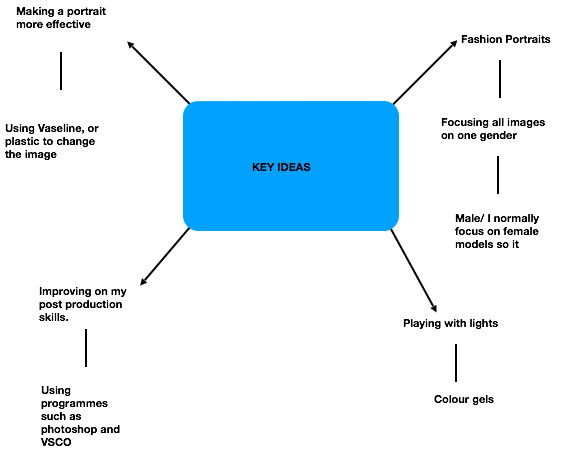
Initial Ideas Mind Map –
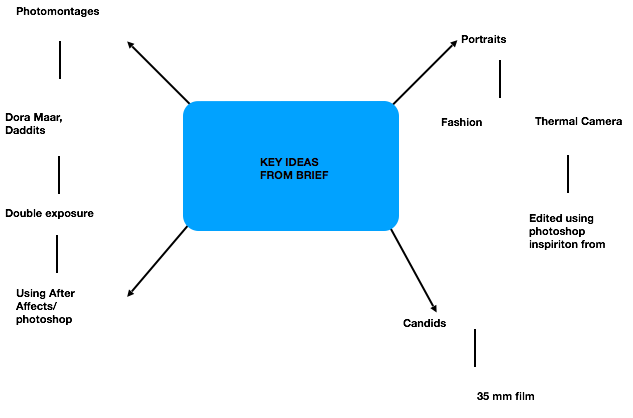

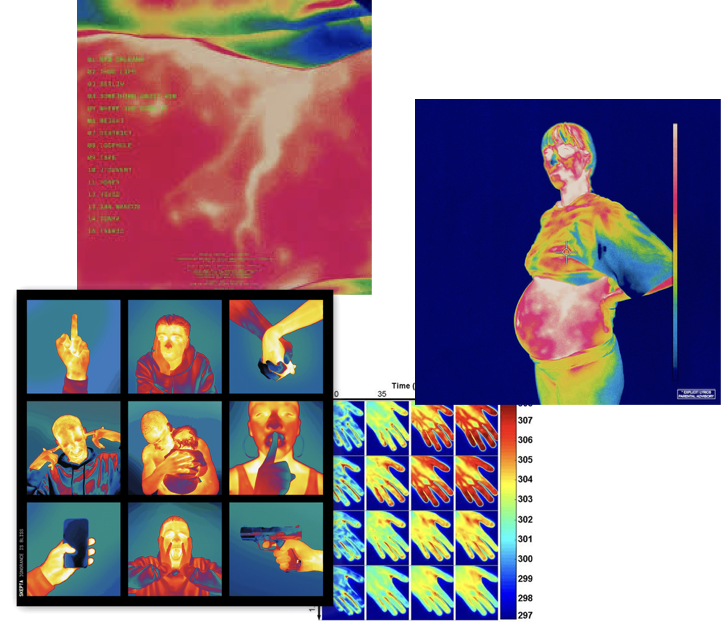
A collage of the first pictures I brainstormed for my proposal ideas.

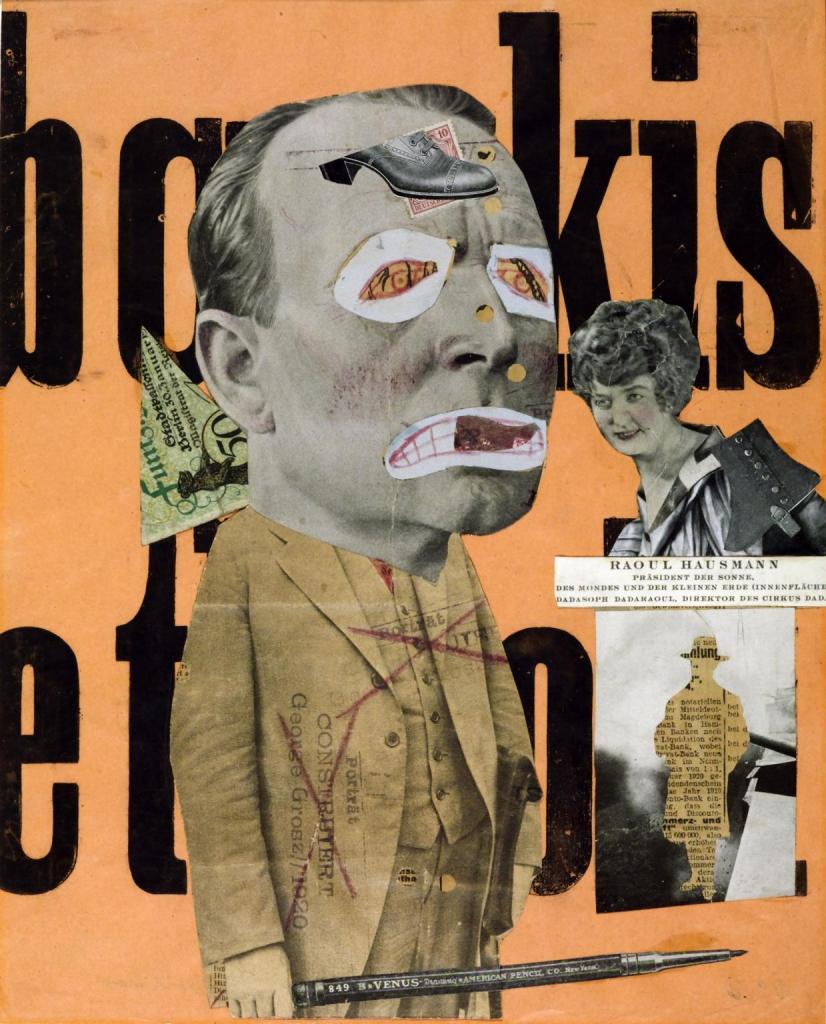
The Art Critic 1919-20 Raoul Hausmann 1886-1971 Purchased 1974
An example of a photomontage I was inspired by.

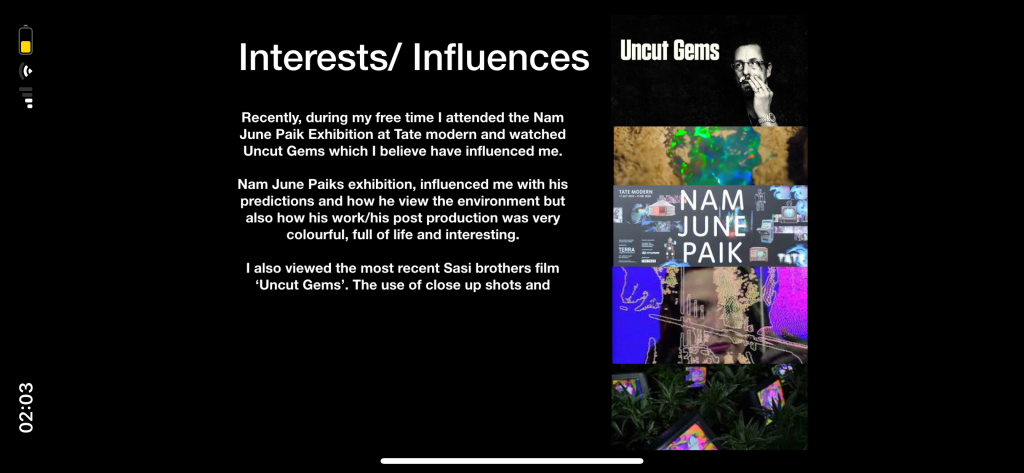
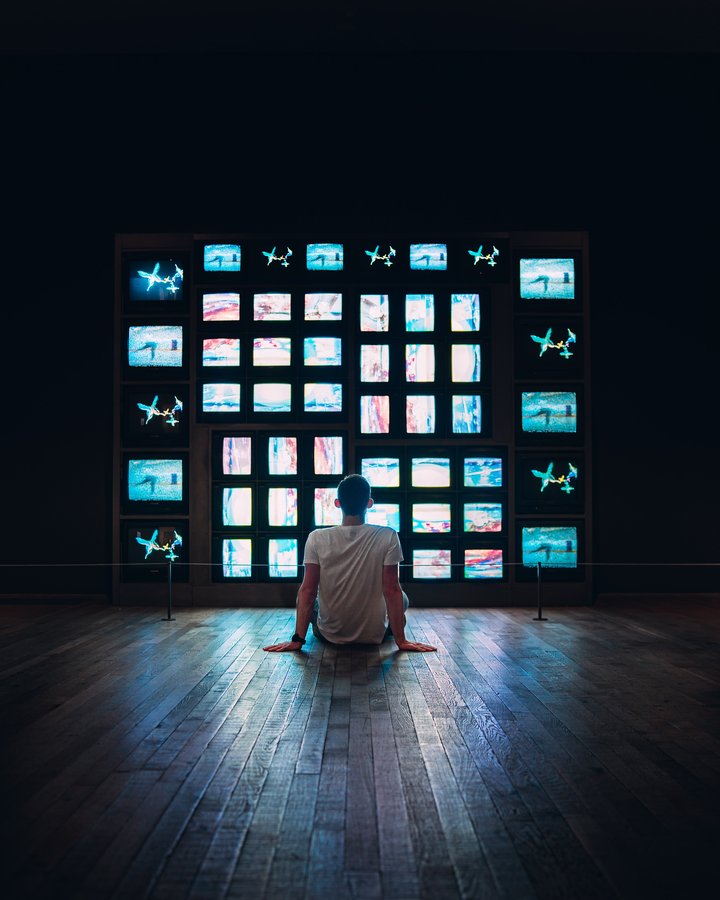
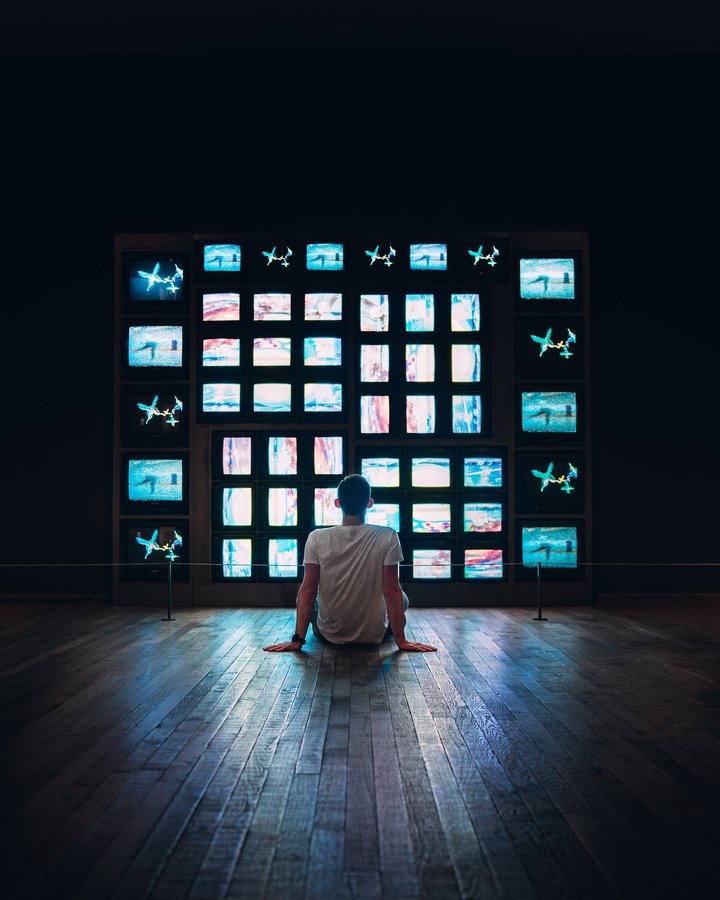
Nam June Paik – EXHIBITION AT TATE MODERN 
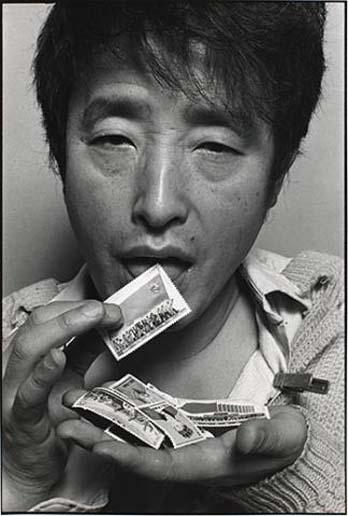
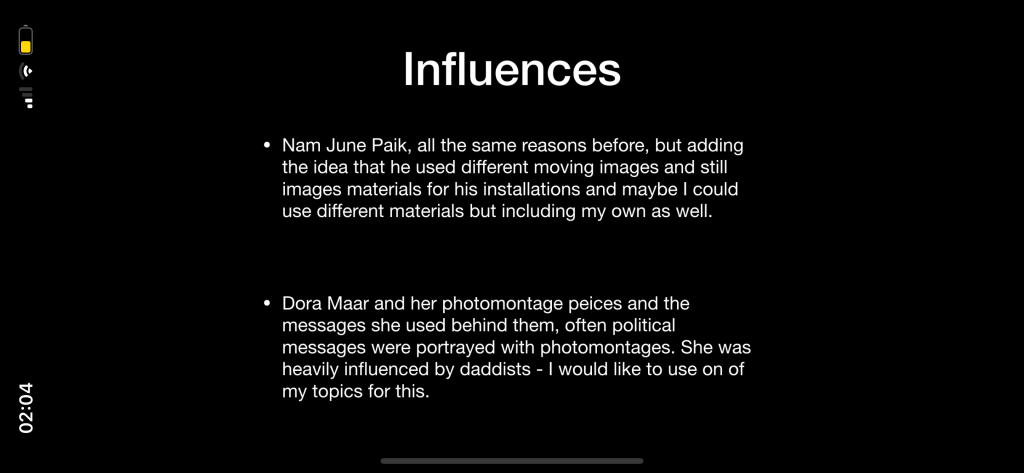
Nam June Paik, Nam June Paik was a Korean American artist. He worked with a variety of media and is considered to be the founder of video art. He is credited with the first use of the term “electronic super highway” to describe the future of telecommunications. What I learnt from this ? During this exhibition I was enlightened towards Nams approach to things and how he embraced, predicted and visioned society, such as mass media and new technology. I especially enjoyed his 1971 TV Eye glasses piece, the use of overlapping different mediums/images, almost like a collage. Which has made me consider that it could be interesting overlapping images or using different materials to interpret into my own ideas for my final project proposal.
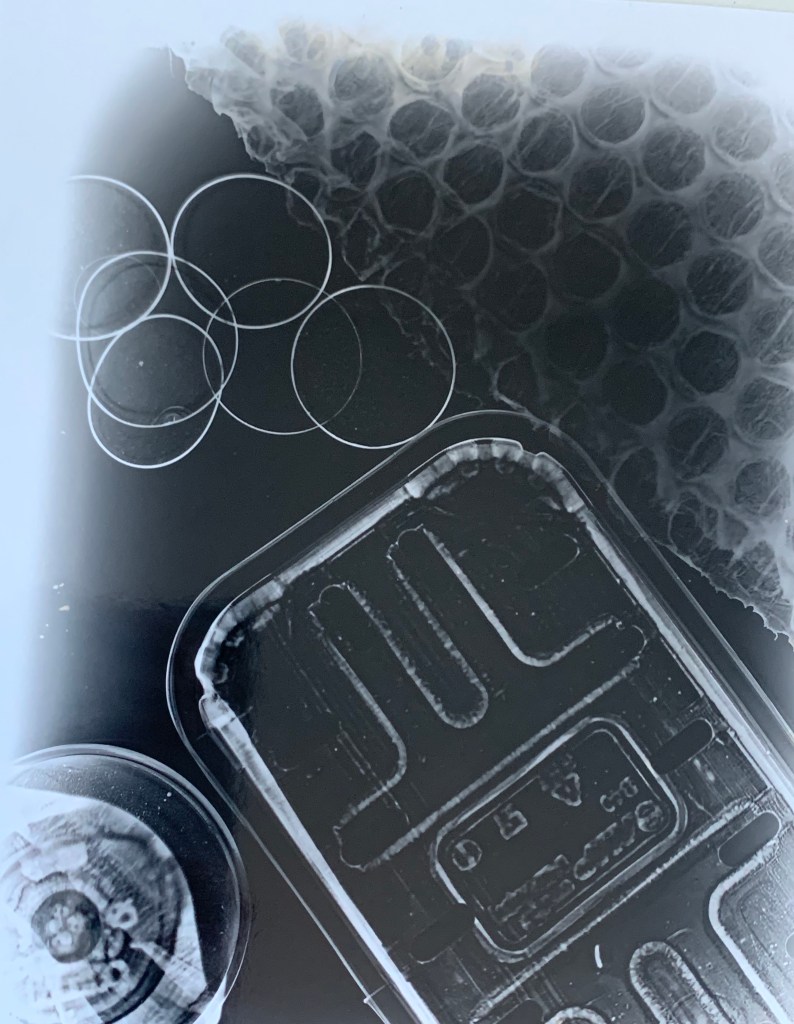
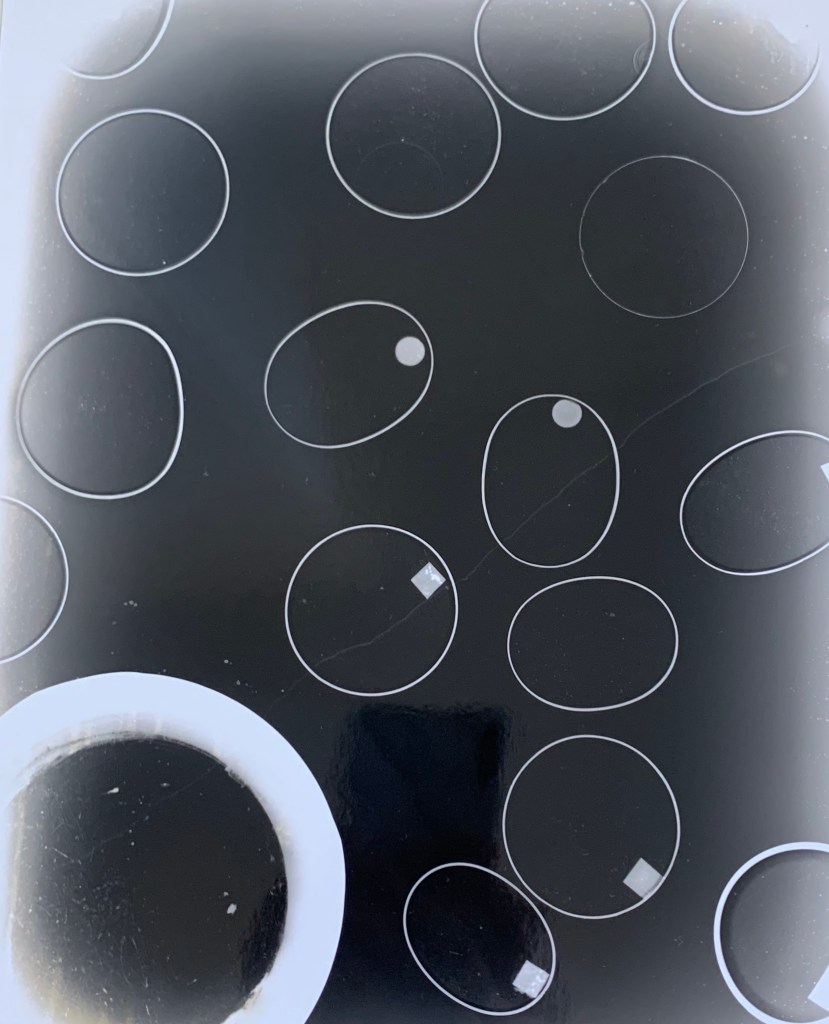
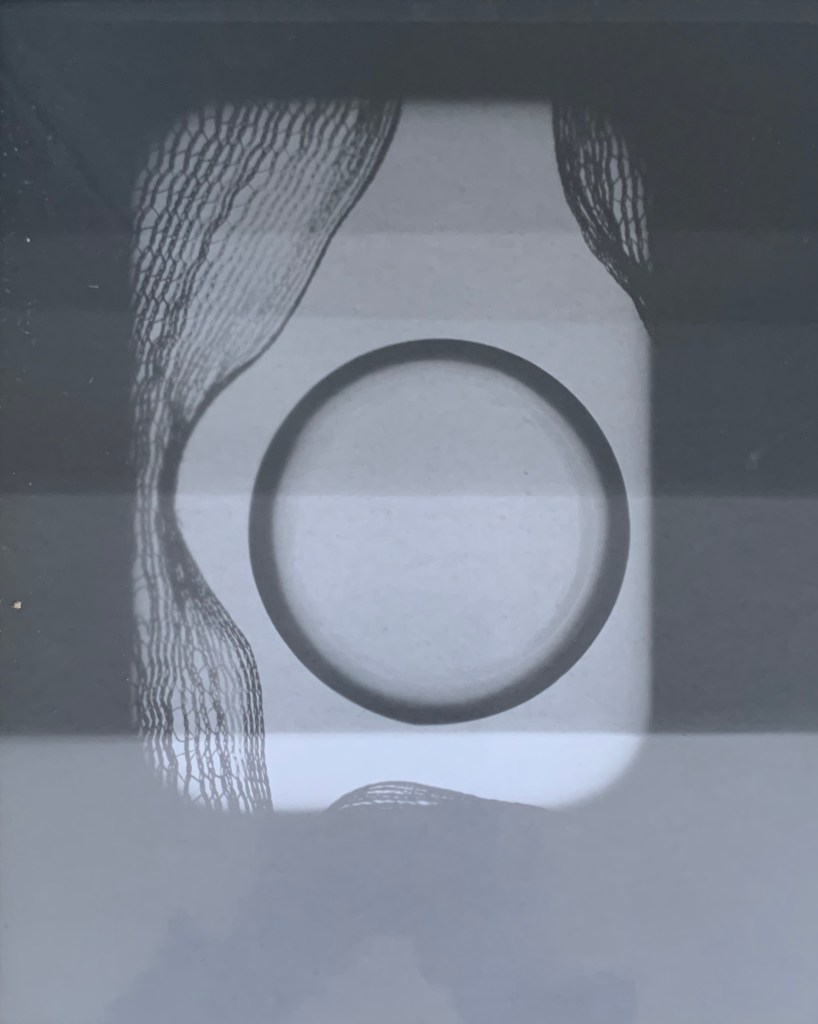
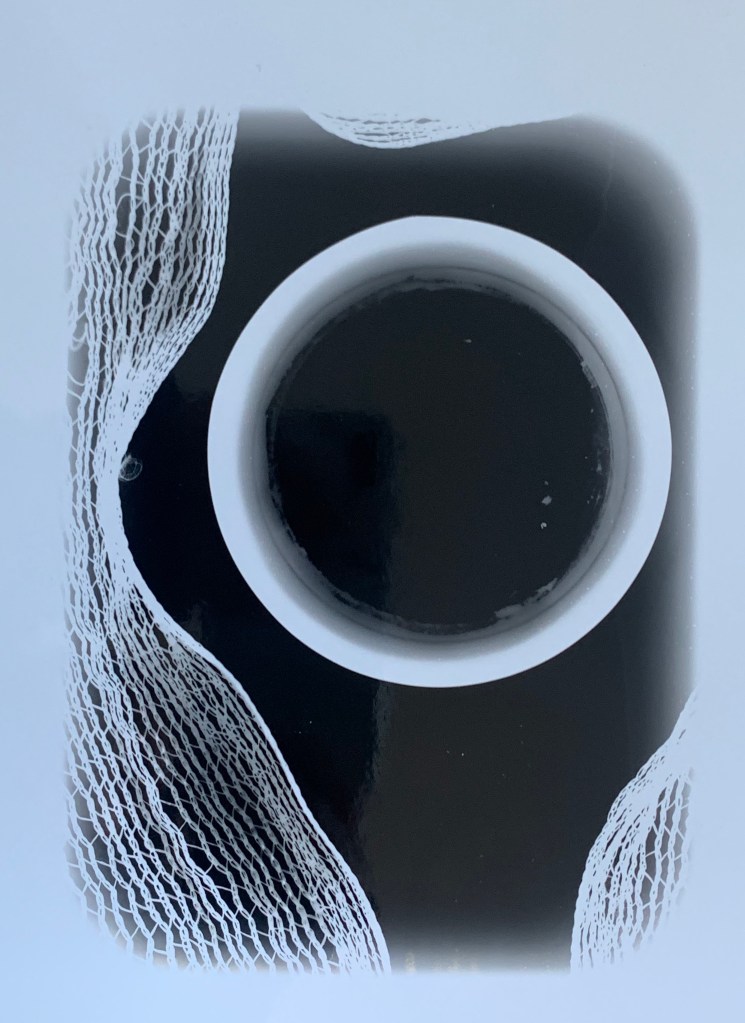
Black and white Photograms – 27/01/20

Taking/ making our first black and white print, was the lesson we had. I have some previous experience with Black and white film and photograms from A levels. However, it has been a few years since I had done them. Therefore, this session was quite significant to me as I was able to refresh and improve my skills.

Preparing the printing equipment, any enlarger to make the prints on, printing paper, I think the one I used was the ILFORD one, darkroom accessories. Your negatives.

After you have taken your prints, you need to use chemicals in order to get the final result. For instance Ilford Multigrade, developer makes the image/ print appear on the paper. Ilford Ilfostop, or acknowledged as stop bath brings development to and end, and prolongs the life of the fixer.

Next you put your prints into the Milford raps fixer, this makes the developed image permanent.

You can make up and use the fixer and stop for more than one image

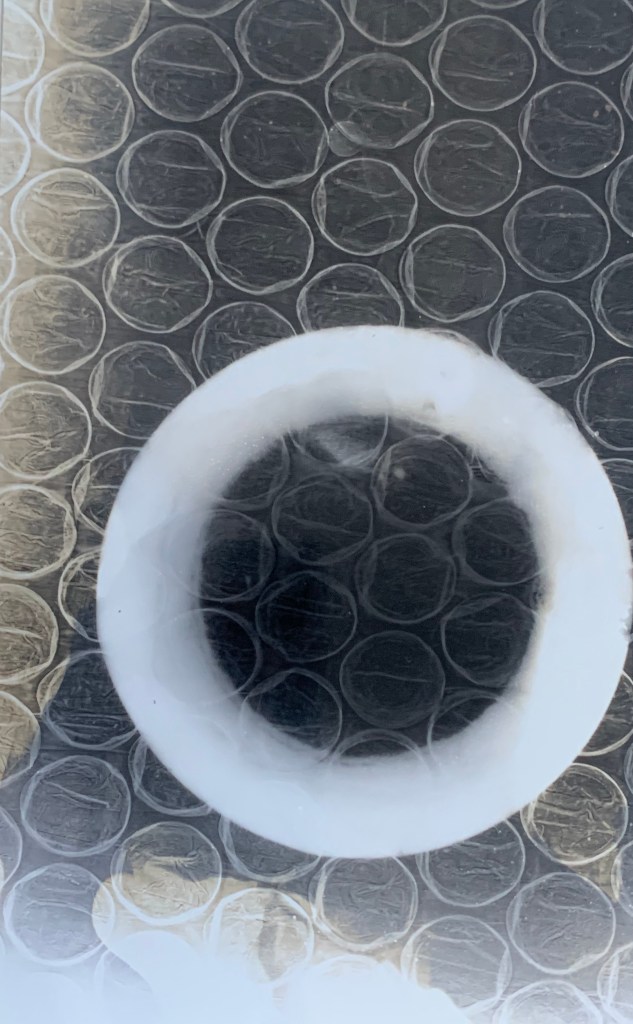
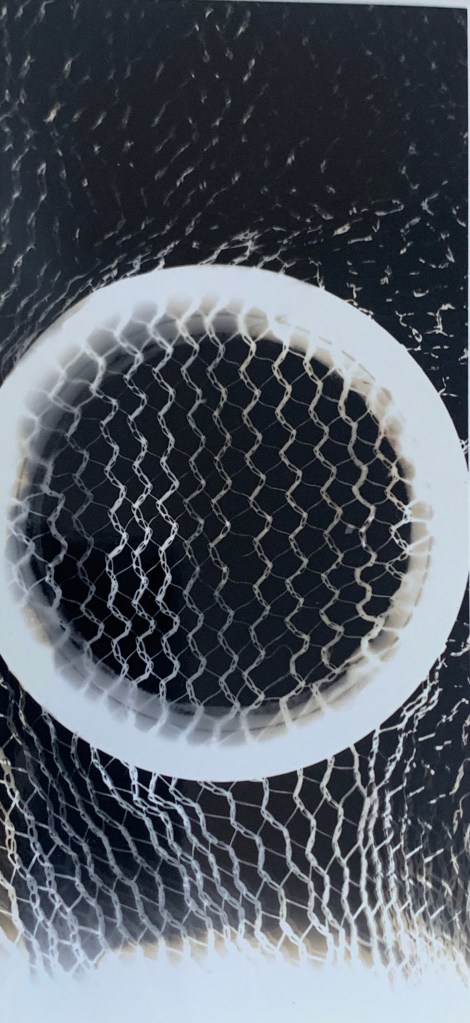
Things I used and things, plastic bottles, glasses lenses and strings from scarves. If I had the chance to do this again I would use jewellery maybe Petri dishes with different things in them.

Below I have inserted my prints.
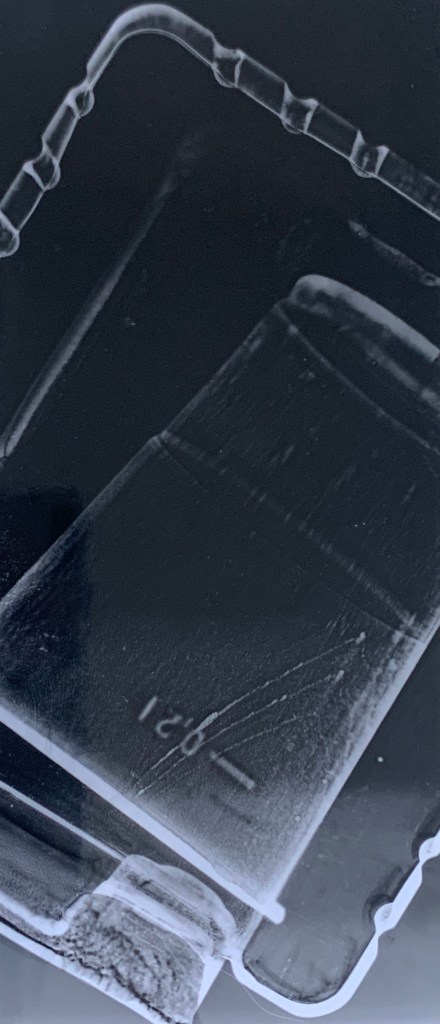
What I learnt from this was that printing a negative is trial and error and you cannot expect to get a perfect outcome just like that. I recalled enjoyed this lesson as it was a refresher for my to improve my skills and I would like to explore this more in the future.

Anna Atkins –
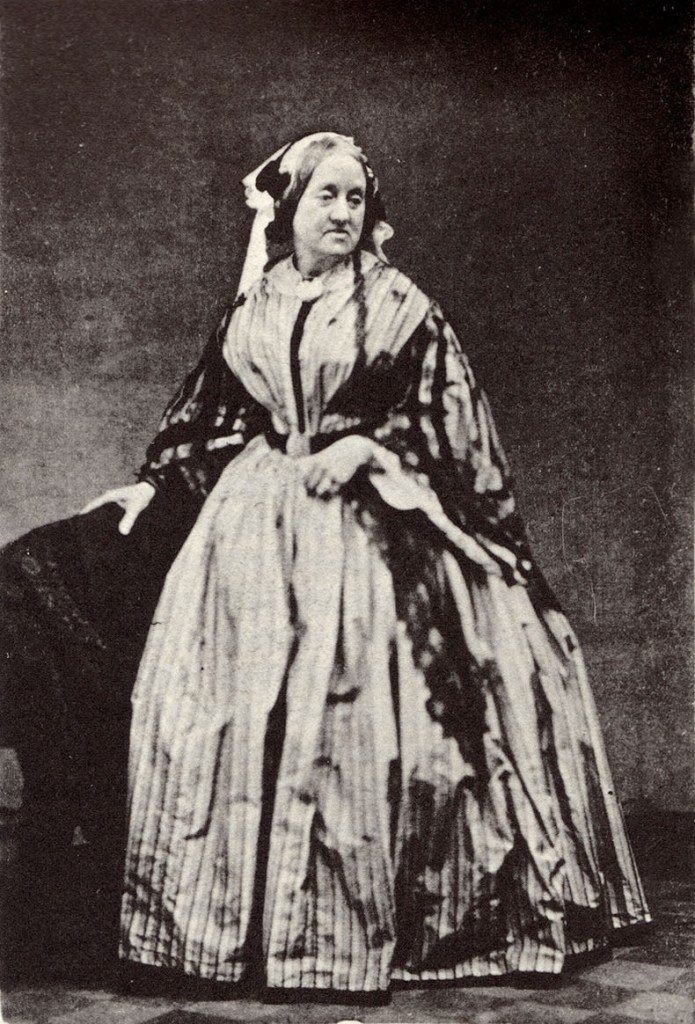
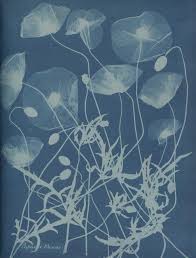
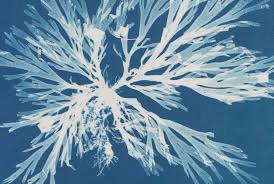
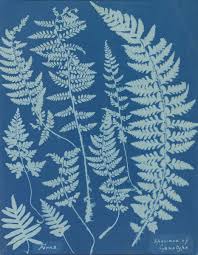
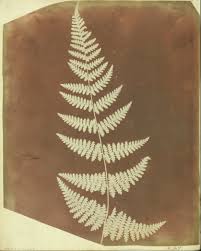
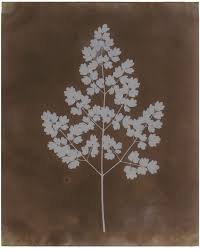
Anna Atkins was an English botanist and photographer. She is often considered the first person to publish a book illustrated with photographic images. Some sources claim that she was the first woman to create a photograph. Atkins came to know both William Henry Fox Talbot, a pioneer of early photography who invented a process of creating photographs on paper treated with salt and a solution of silver nitrate, and Sir John Herschel, the inventor of the cyanotype printing method. She became interested in the cyanotype process which produced images through so-called sun-printing. The object is placed on paper which has been treated with ferric ammonium citrate and potassium ferricyanide, after which it is exposed to sunlight and then washed in water, leading to the uncovered areas of the paper turning a dark blue. The process, known as blueprinting, was later used to reproduce architectural and engineering drawings, but Atkins chose to use it for what is considered to be the first work with photographic illustrations, namely her Photographs of British Algae: Cyanotype Impressions (1843).
William Henry Fox –
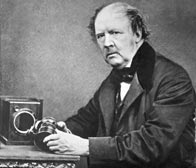
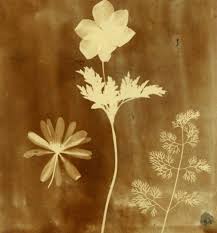
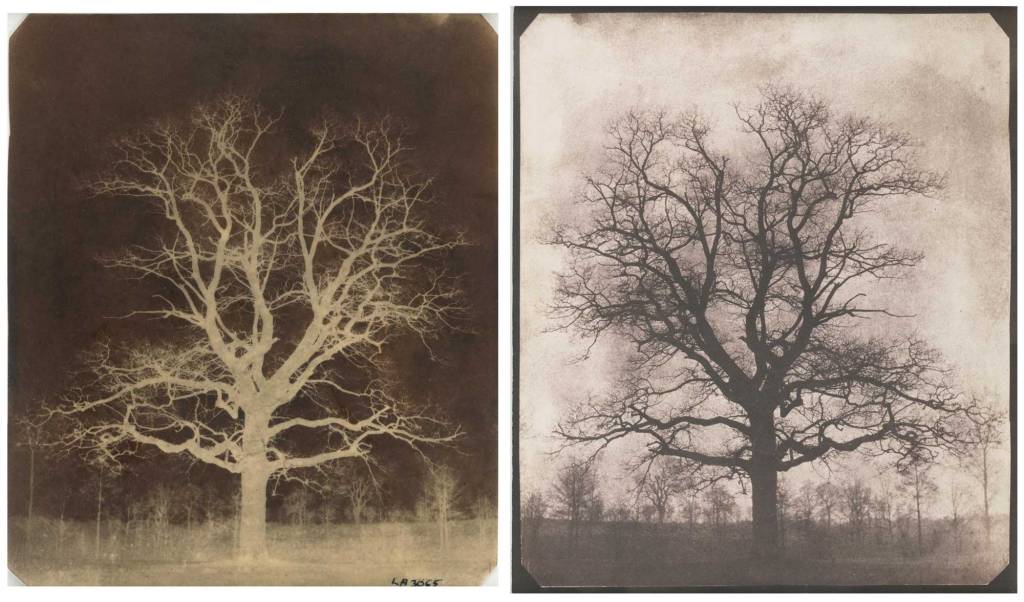
Was an English member of parliament, scientist, inventor and pioneer of photography. Fox Talbot reported his ‘art of photogenic drawing’ to the Royal Society. His process based the prints on paper that had been made light sensitive, rather than bitumen or copper-paper.

Fox Talbot went on to develop the three primary elements of photography: developing, fixing, and printing. Although simply exposing photographic paper to the light produced an image, it required extremely long exposure times. By accident, he discovered that there was an image after a very short exposure. Although he could not see it, he found he could chemically develop it into a useful negative. The image on this negative was then fixed with a chemical solution. This removed the light-sensitive silver and enabled the picture to be viewed in bright light. With the negative image, Fox Talbot realised he could repeat the process of printing from the negative. Consequently, his process could make any number of positive prints, unlike the Daguerreotypes. He called this the ‘calotype’ and patented the process in 1841. The following year was rewarded with a medal from the Royal Society for his work.
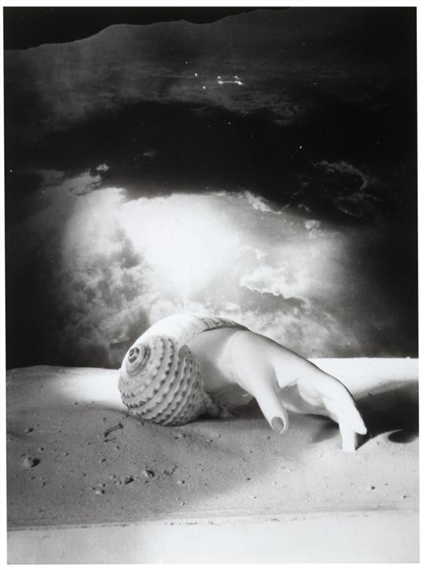
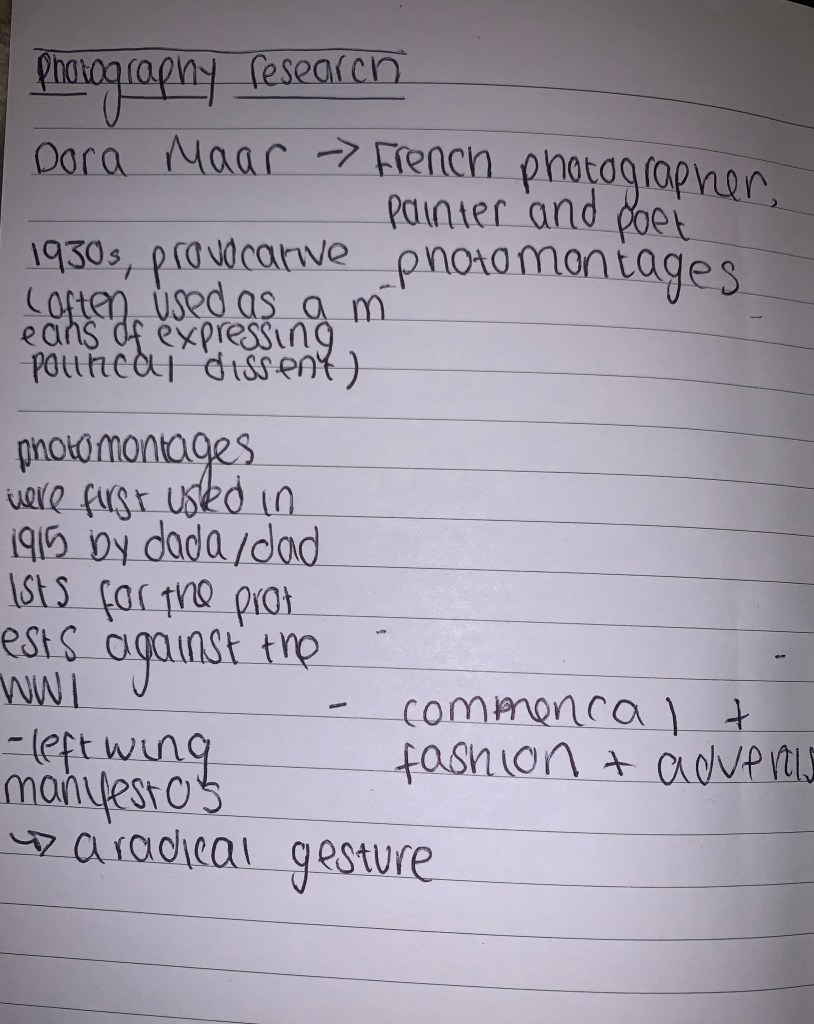
Dora Maar, Exhibition

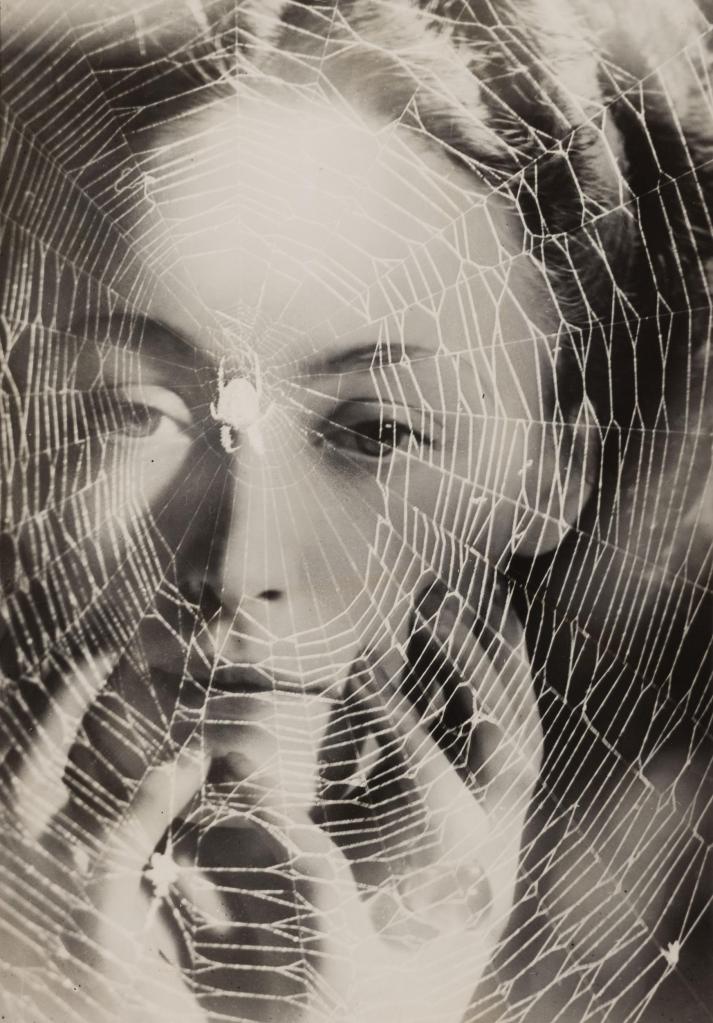
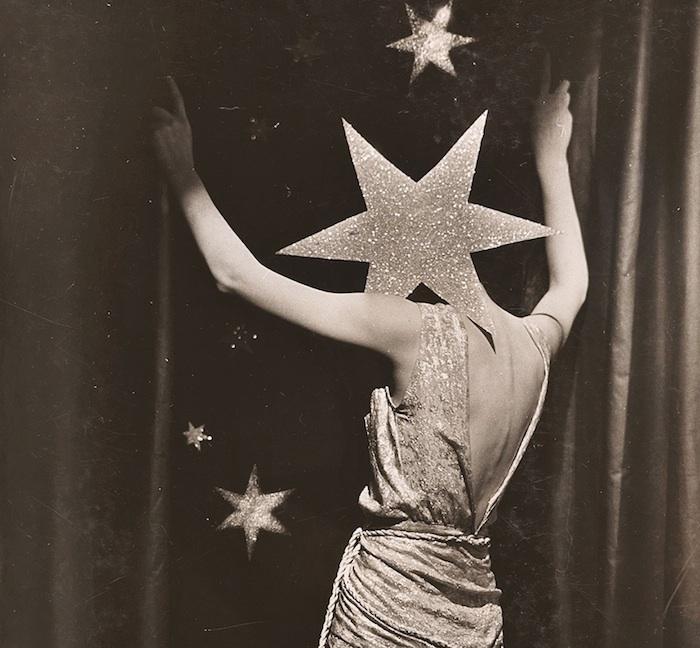
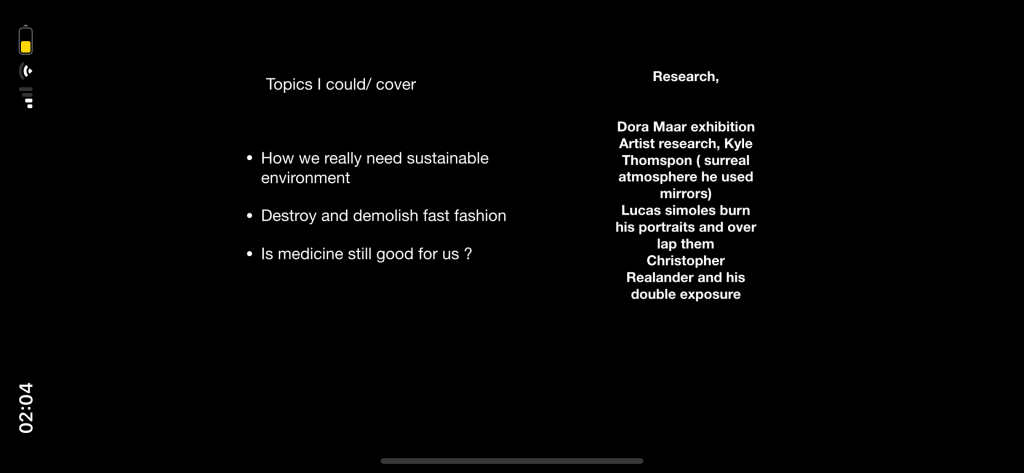
Dora Maar’s work had messages behind them, often political messages were portrayed with these ‘photomontages’. She was heavily influenced by daddists – I would like to use on of my topics for this.

The french photographer and Surrealist artist whose career and accomplishments were overshadowed during her lifetime by the details of her affair with Pablo Picasso. Her work was resurrected and reexamined more thoughtfully after her death.

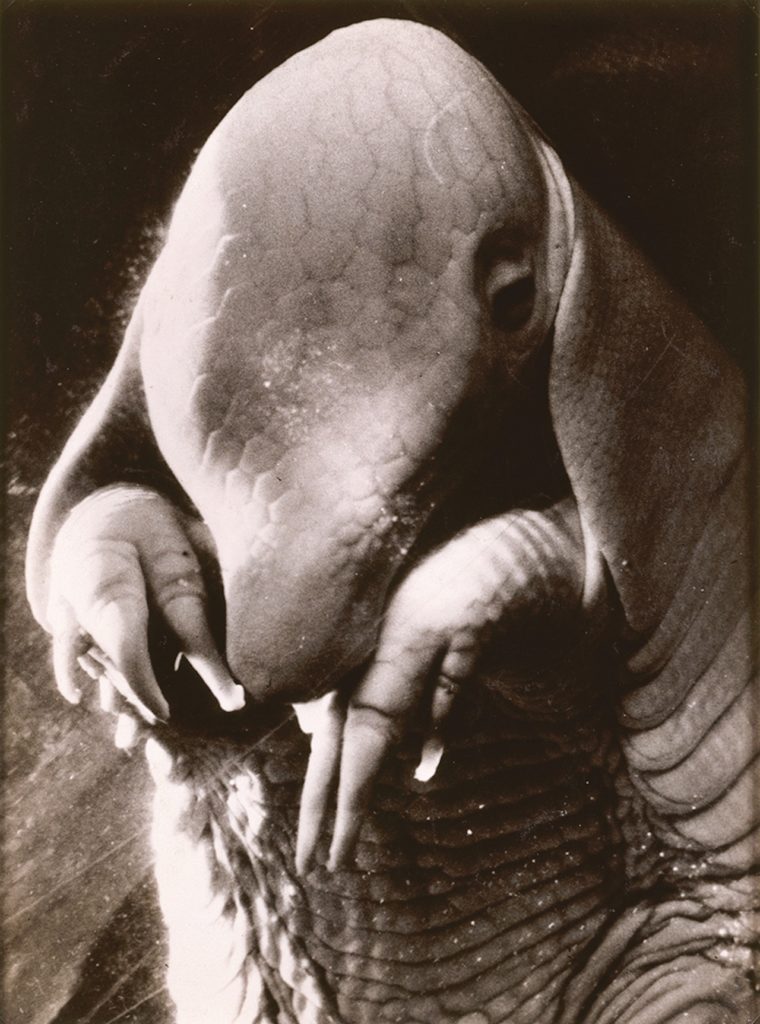
She photographed many of the Surrealists and exhibited with them. Her work began to take on more of the absurdist and dreamlike qualities characteristic of Surrealism. She made dark photomontages composed of disturbing and ambiguous juxtapositions. Portrait of Ubu (1936; also called Père Ubu), a monstrous close-up image by Maar of what may be an armadillo fetus (she would never confirm), became an icon of the movement.
Vivienne Maier –

Vivian Dorothy Maier was an American street photographer whose work was not discovered and recognized until after her death. She worked for about forty years as a nanny, mostly in Chicago’s North Shore, while she pursued her photography. I admired her black and white pictures and it inspired me, that if I was unable to do a photomontage, I would shoot some studio portraits or candids and turn them into thermo images.
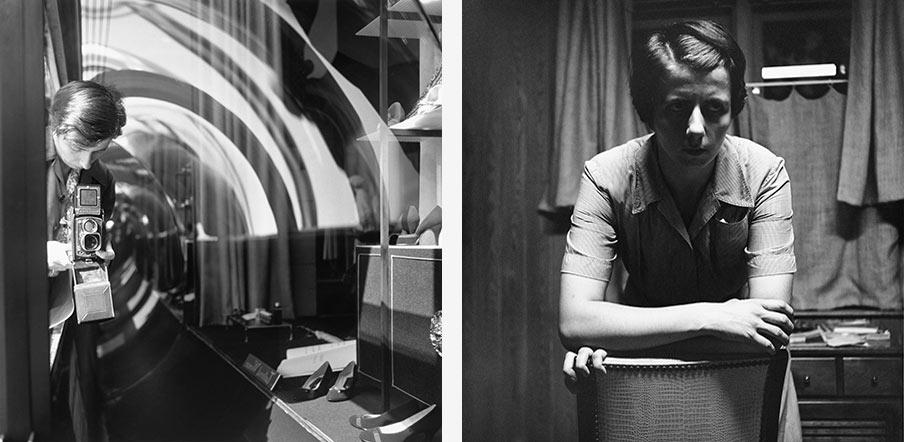
Experimenting with Film + DSLR

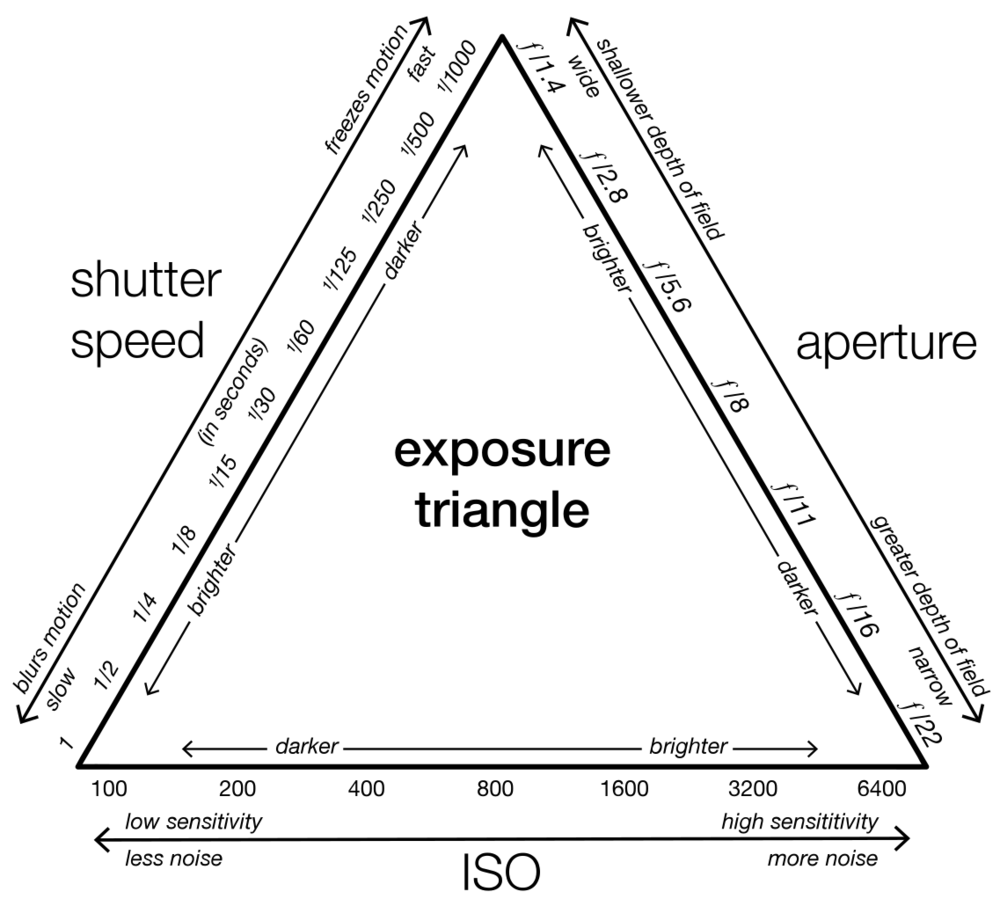
During this period I was given the task of exploring the campus and shooting in a DSLR. It was decided that we all had to shoot in black and white. Beforehand, I was given a refresher in using a DSLR and other significant factors such as considering the apeture, iso and shutter speed. This can also be acknowledged as the exposure triangle, One must balance all three of these to achieve a desired result, an adjustment of one requiring adjustments of at least one of the others.
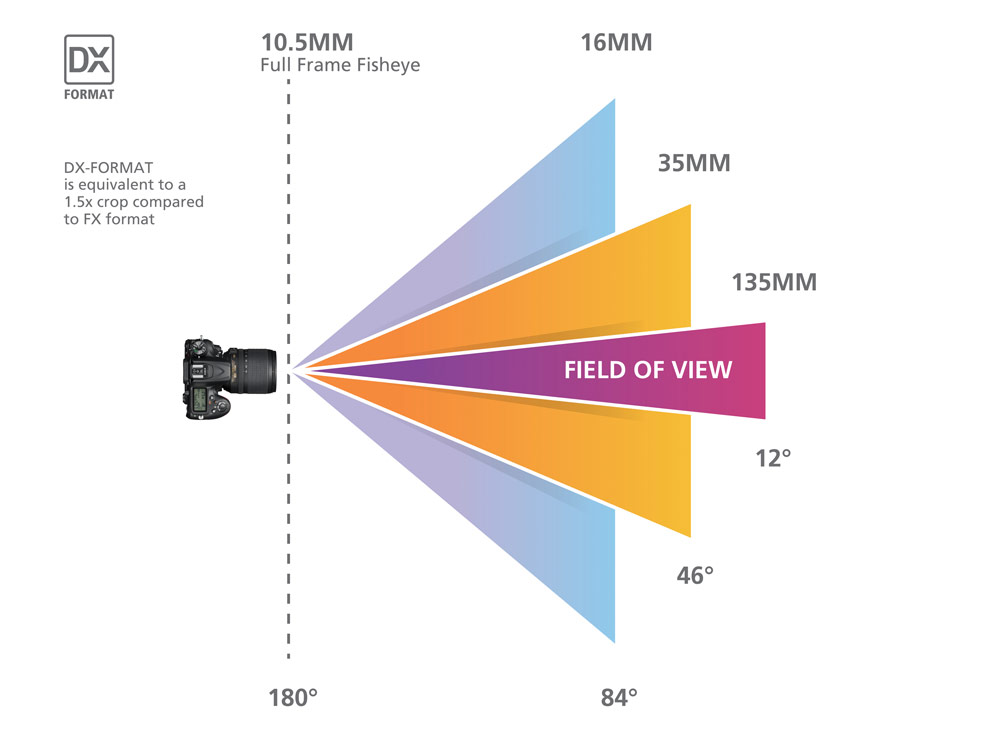
Other elements to consider whilst shooting with a DSLR would be, Focal length – is the distance between the center of a convex lens or a concave mirror and the focal point of the lens or mirror — the point where parallel rays of light meet, or converge.
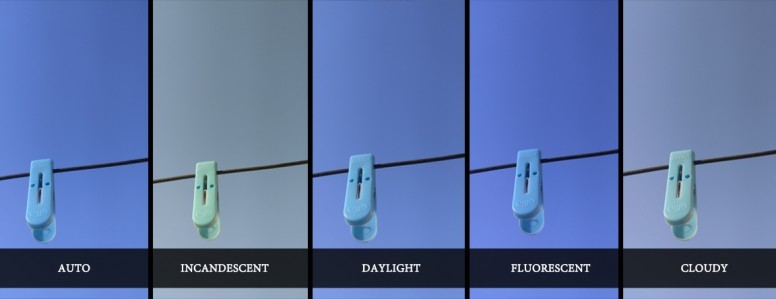
White BalanceWhite balance (WB) is the process of removing unrealistic color casts, so that objects which appear white in person are rendered white in your photo. Proper camera white balance has to take into account the “color temperature” of a light source, which refers to the relative warmth or coolness of white light.
Final File Format – Choosing the right file format is important, and can be critical depending on the level of quality, and also the level of post-processing you intend to do. For example JPEGs positives are that it is a small file size, which means more can be stored on a memory card, quicker file transfer times, due to smaller file size it is a compressed image. Wheras RAW is the best quality image file is captured, extensive options in post-processing and image manipulation. However, time needed to convert and edit photos (you must edit raw files). Bigger file sizes mean more storage needed and longer post-processing times.
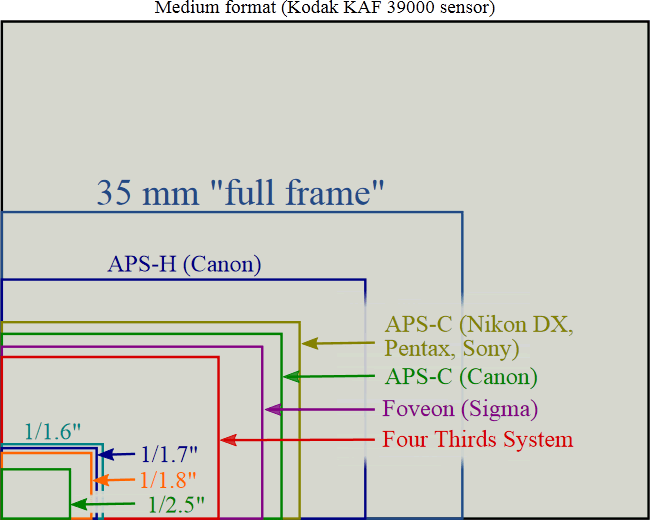
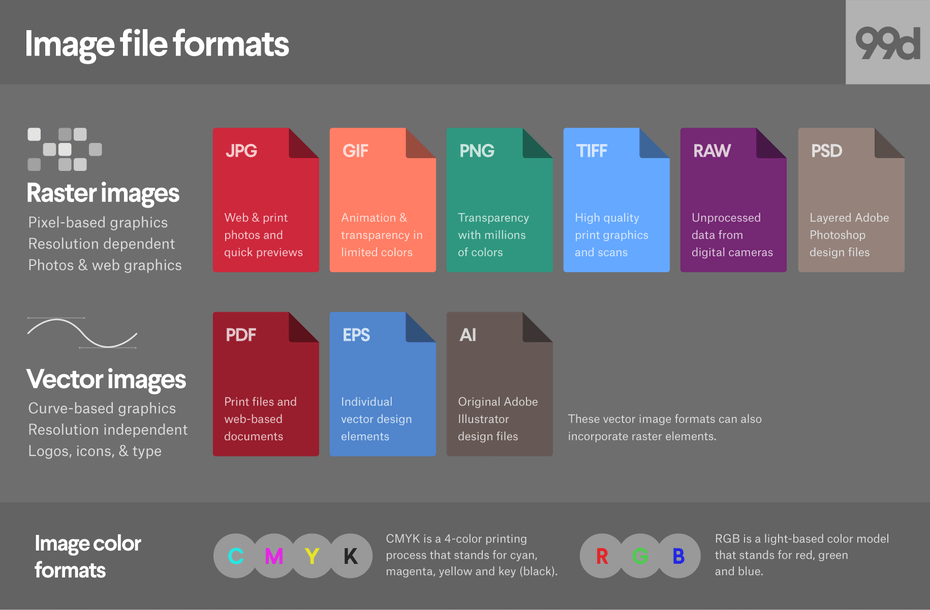
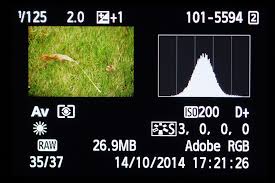
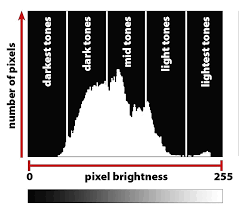
Histogram – A histogram is a graphical representation of the tonal values of your image. In other words, it shows the amount of tones of particular brightness found in your photograph ranging from black (0% brightness) to white (100% brightness). During this shoot I found looking at the histogram and understanding better, it aided me to take a better picture.
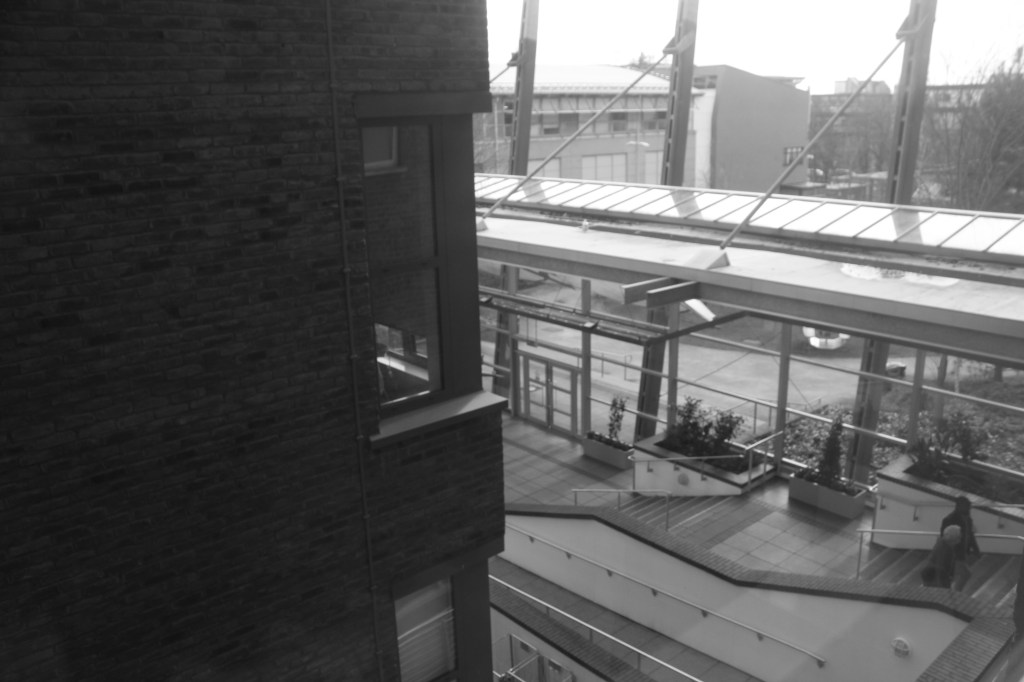
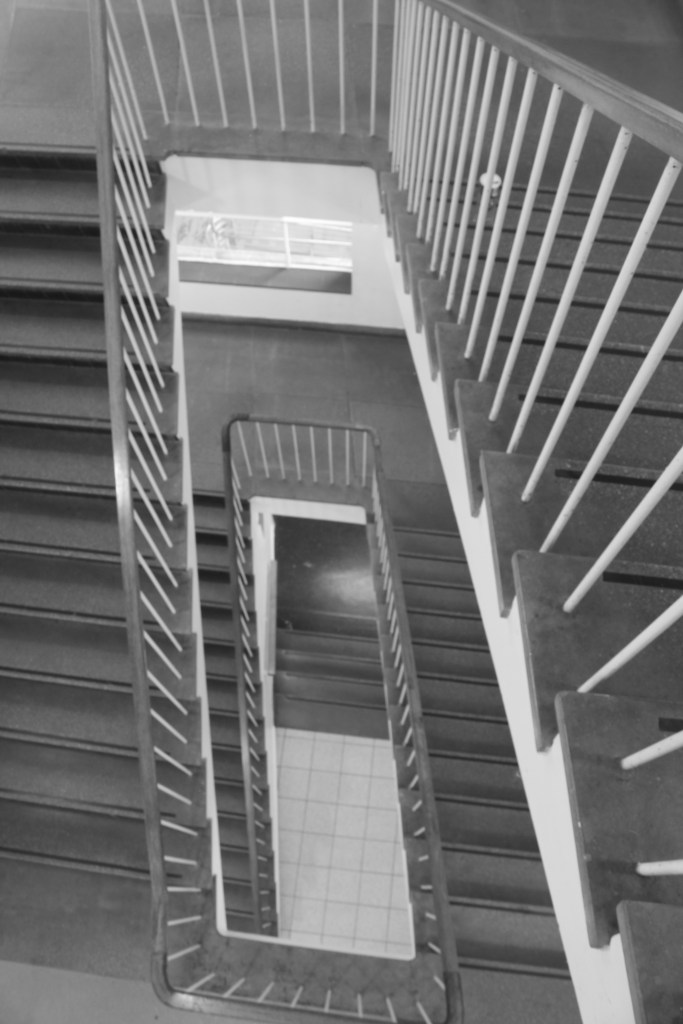
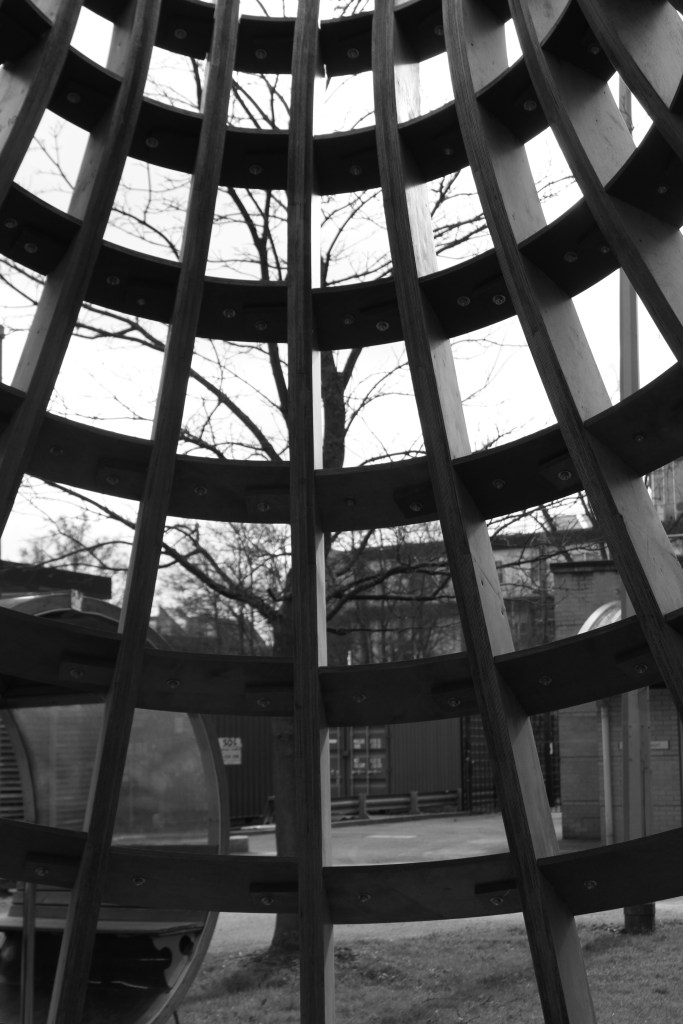
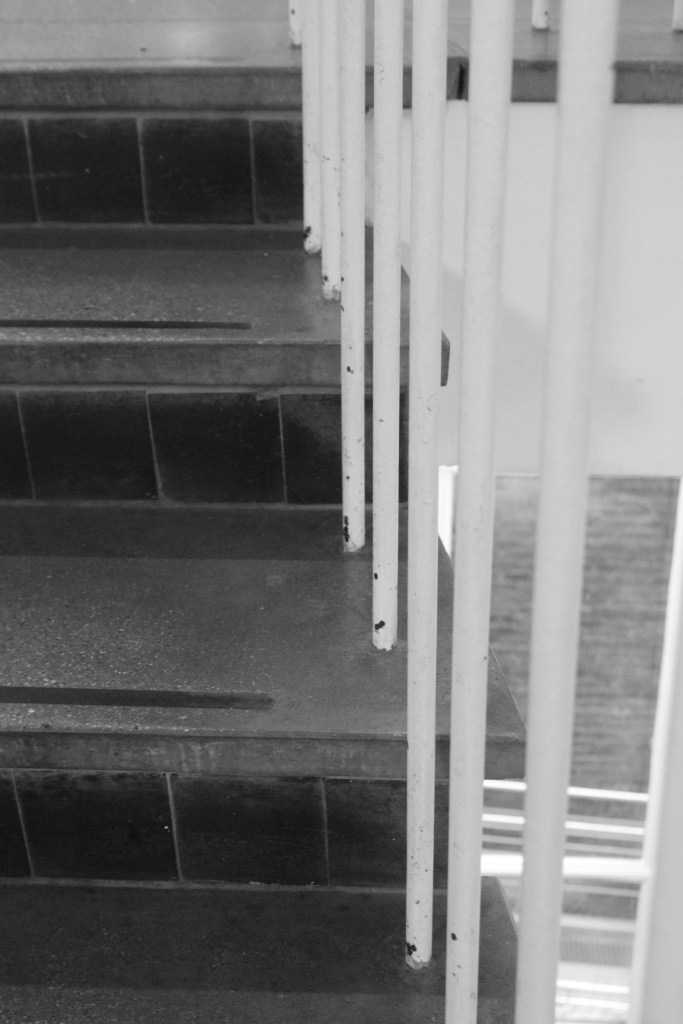
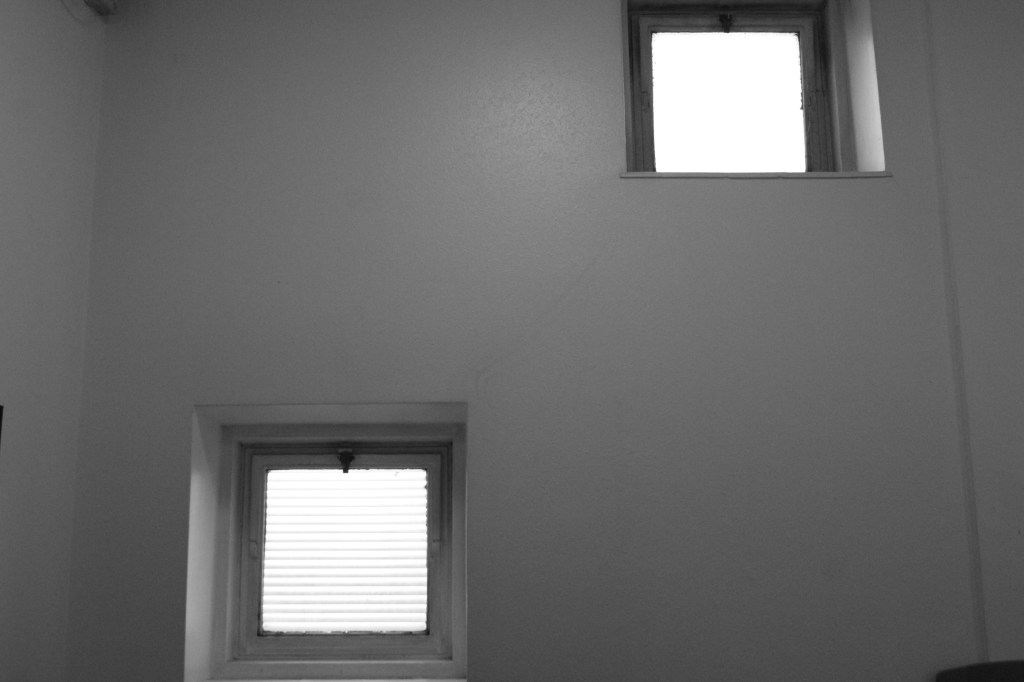
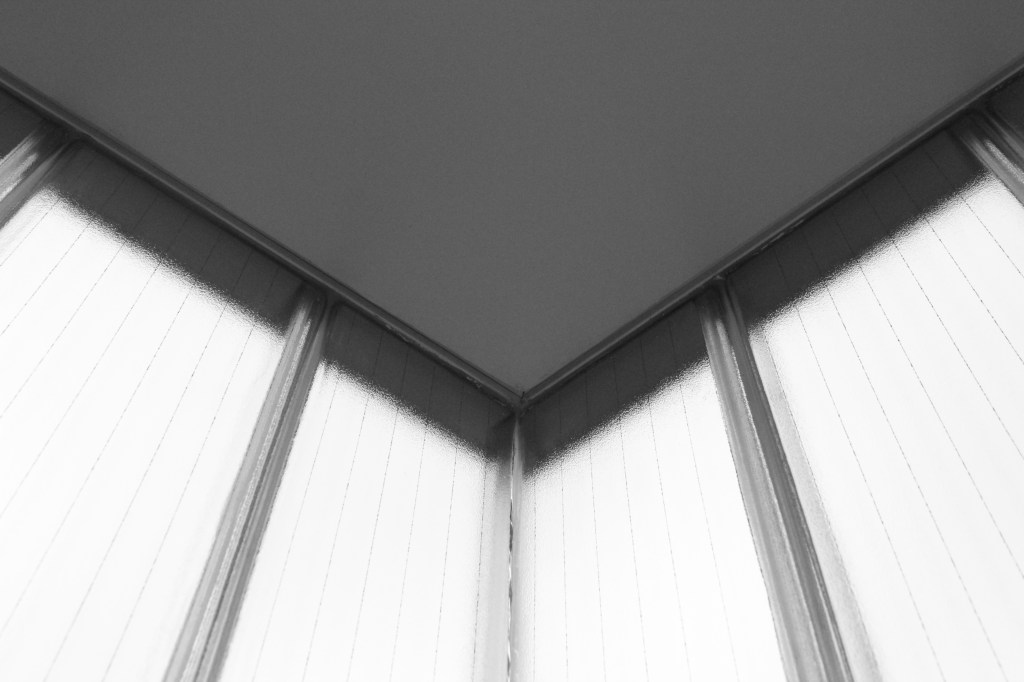
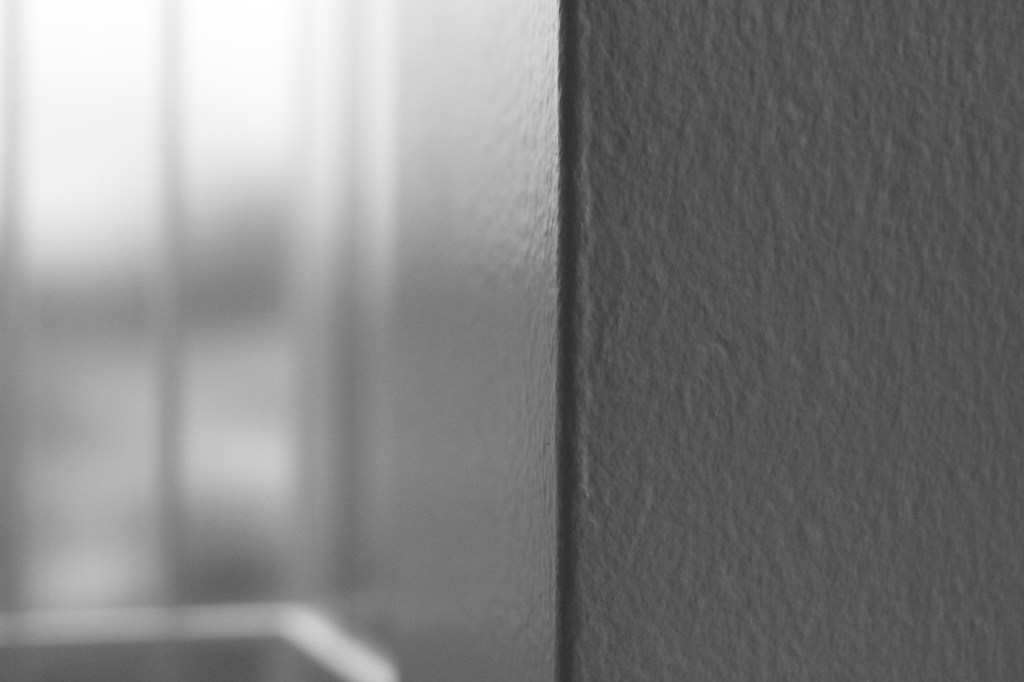
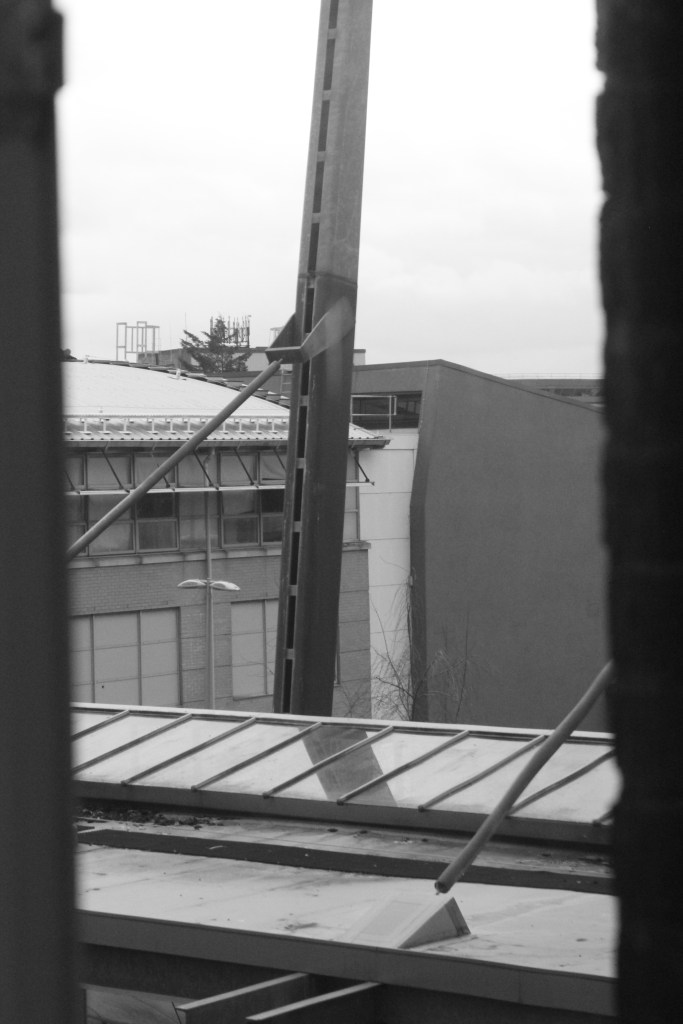
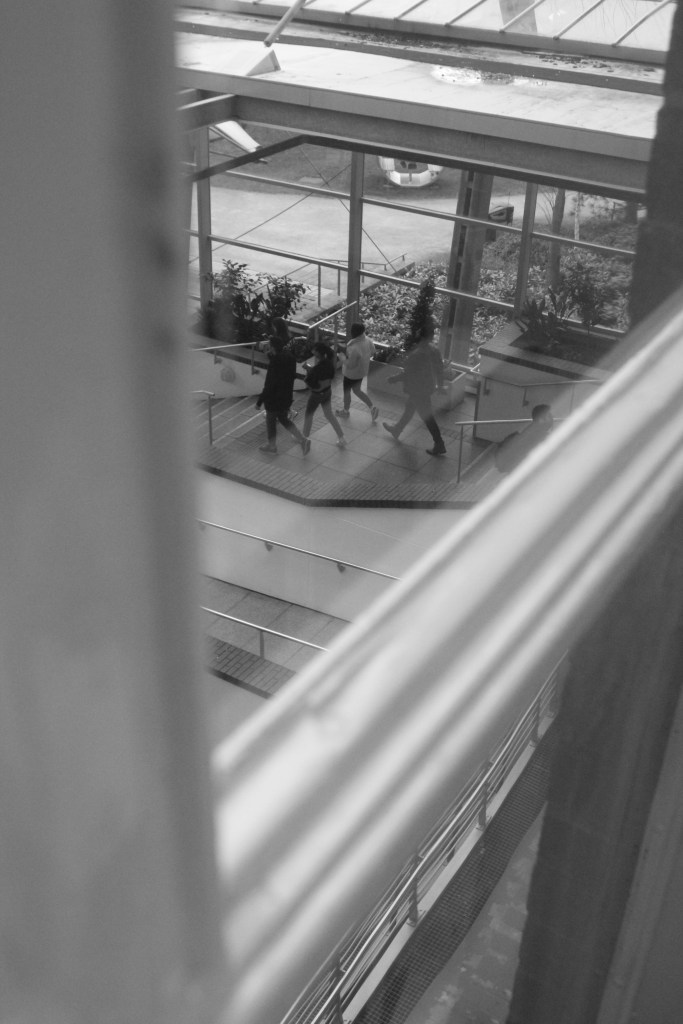
Here are my images from the task of shooting in Black and white with a DSLR Camera below.
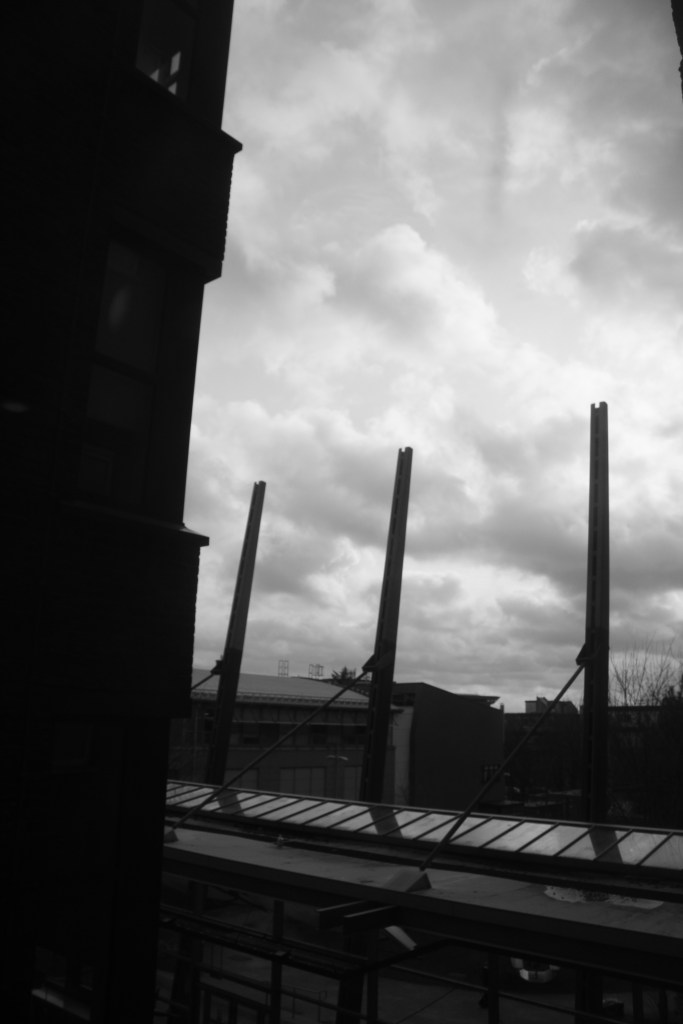
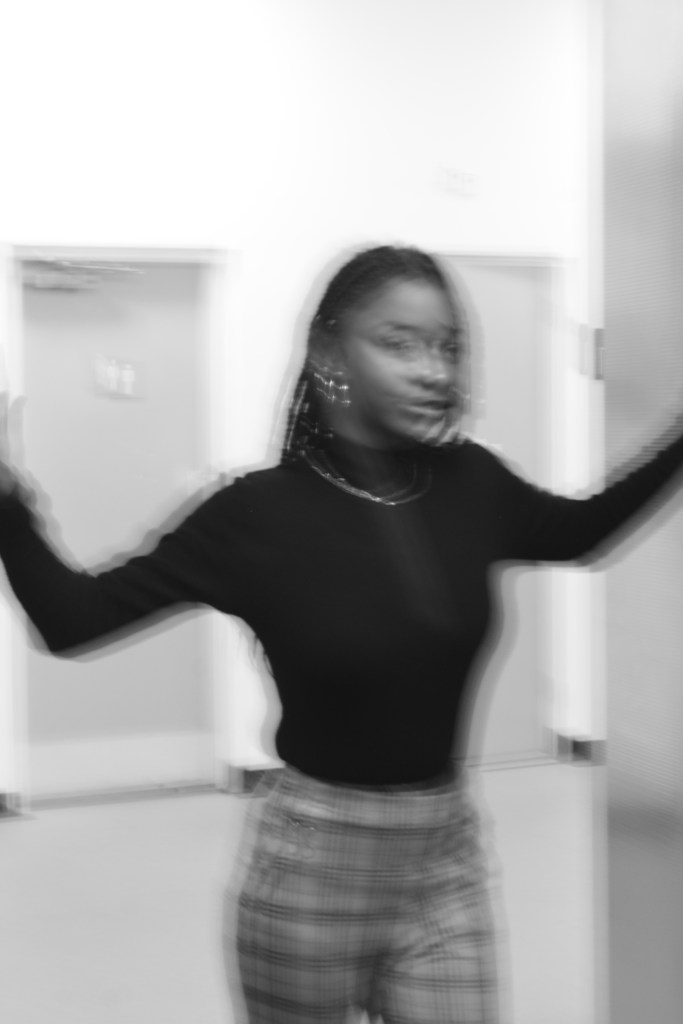
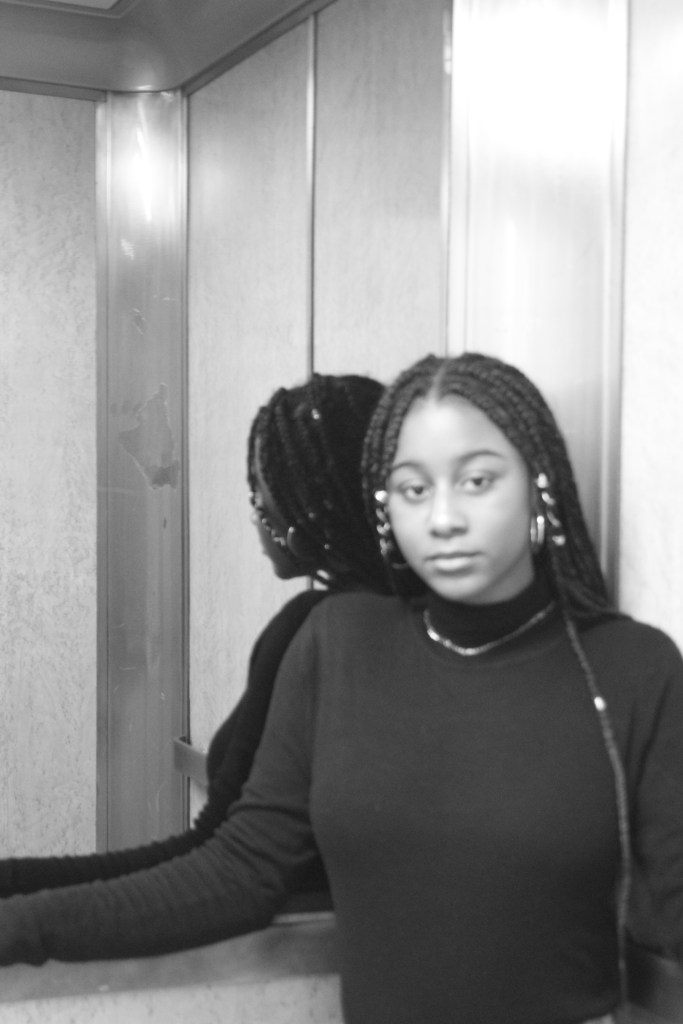
Overall from this session, I liked that instead of me taking portraits of people ( which is the medium I am used to and love) I thought u would try and challenge myself to take more landscape images and focus on the details of them. I liked that because it was shot on black and white you could really focus on the details of the picture. However, at first I did struggle to use the camera and get it to focus, just like the examples below.
The photographers gallery + The national portrait gallery –

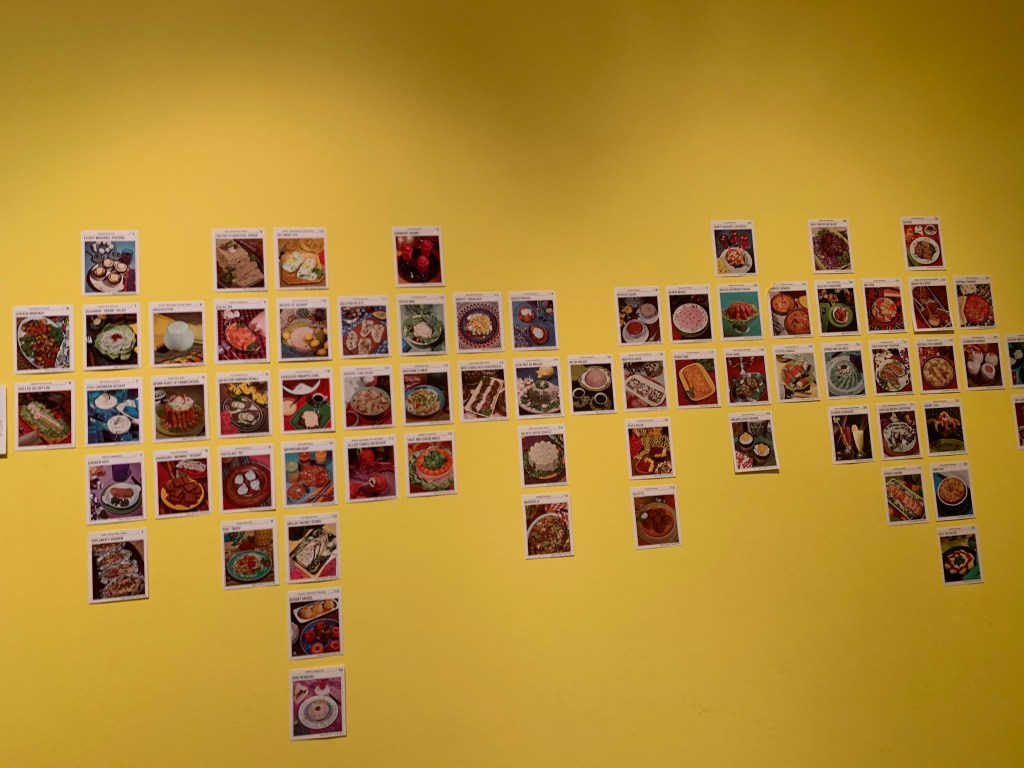
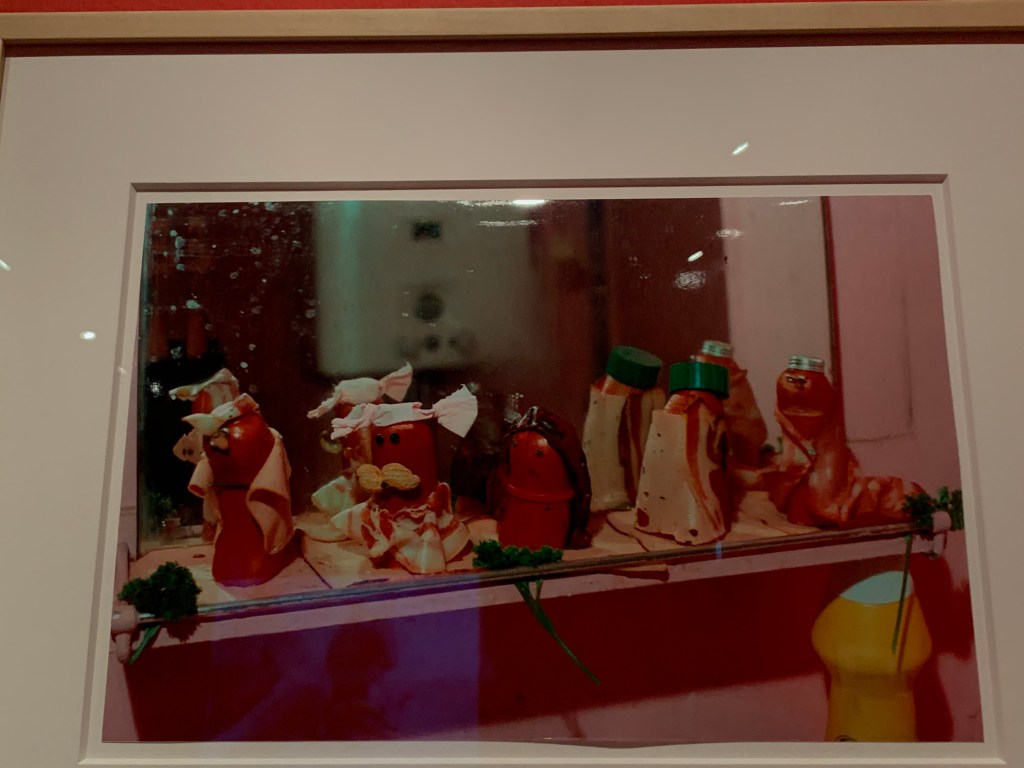
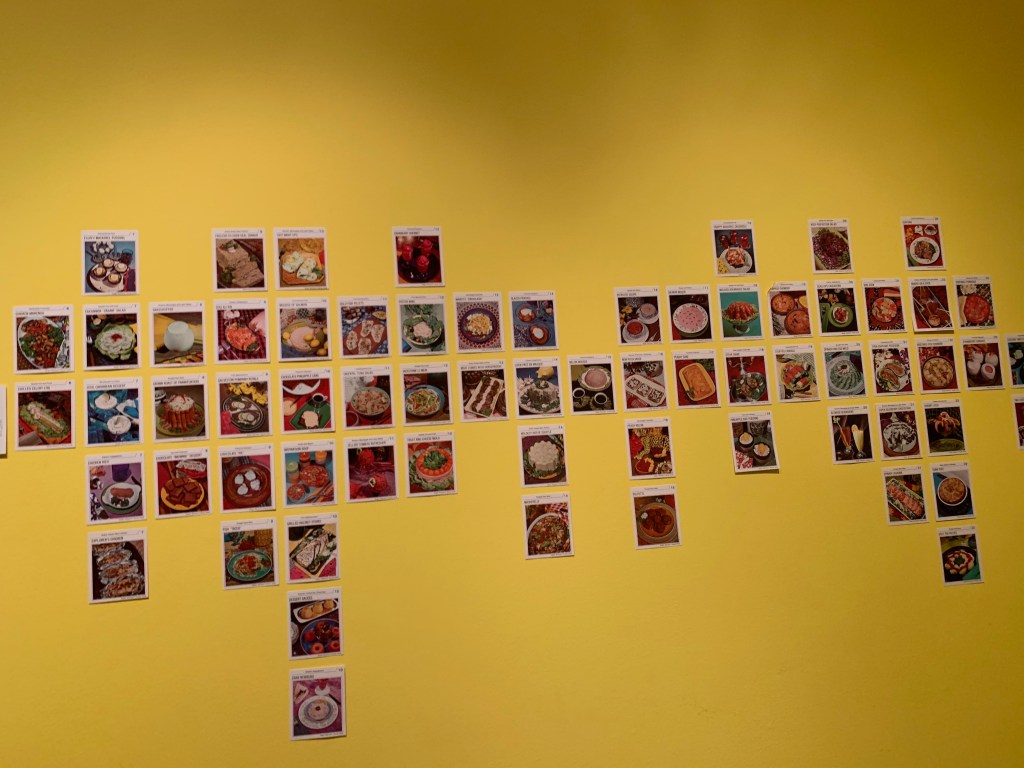
Before this trip I had the thought that I wanted to gain some inspiration, as I was starting to struggle with what I wanted to do. This is because I felt my creativity was limited within a and I wanted to see if I could explore what I had in from of me further. From this trip I managed to gather some inspiration as well as deciding what was for me and what was not. For example, the Photographers gallery held an exhibition which was all to do with food. In my opinion I did not feel inspired or thought it was relevant for this particular model. However, I considered that it might aid me in the future.

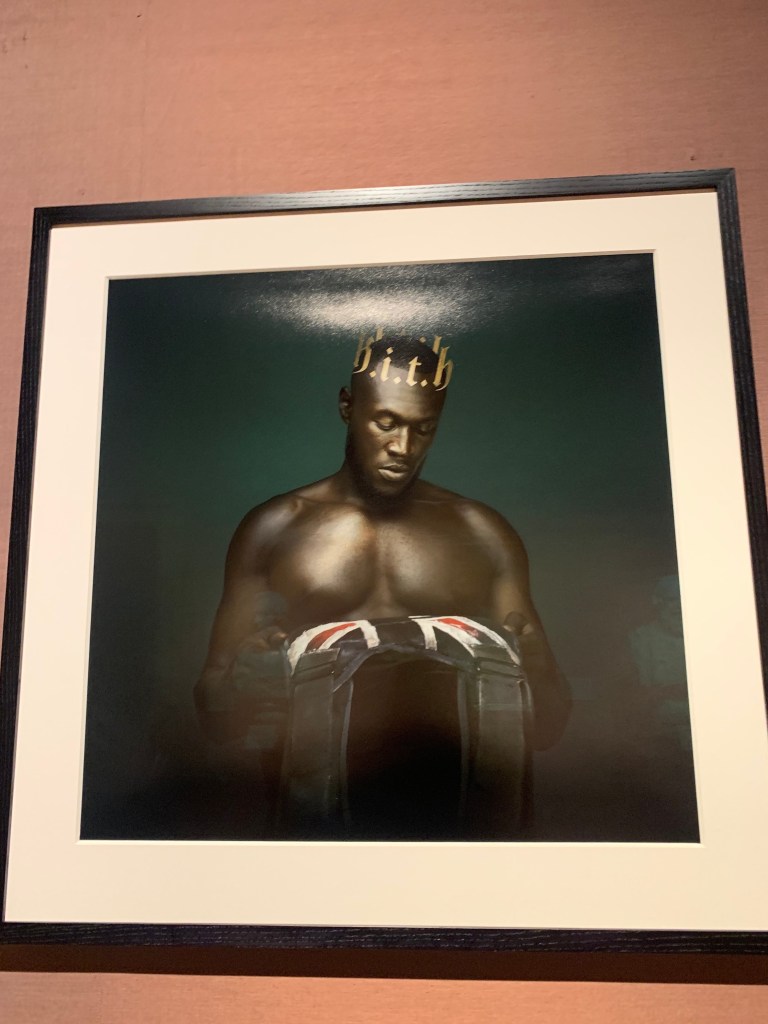
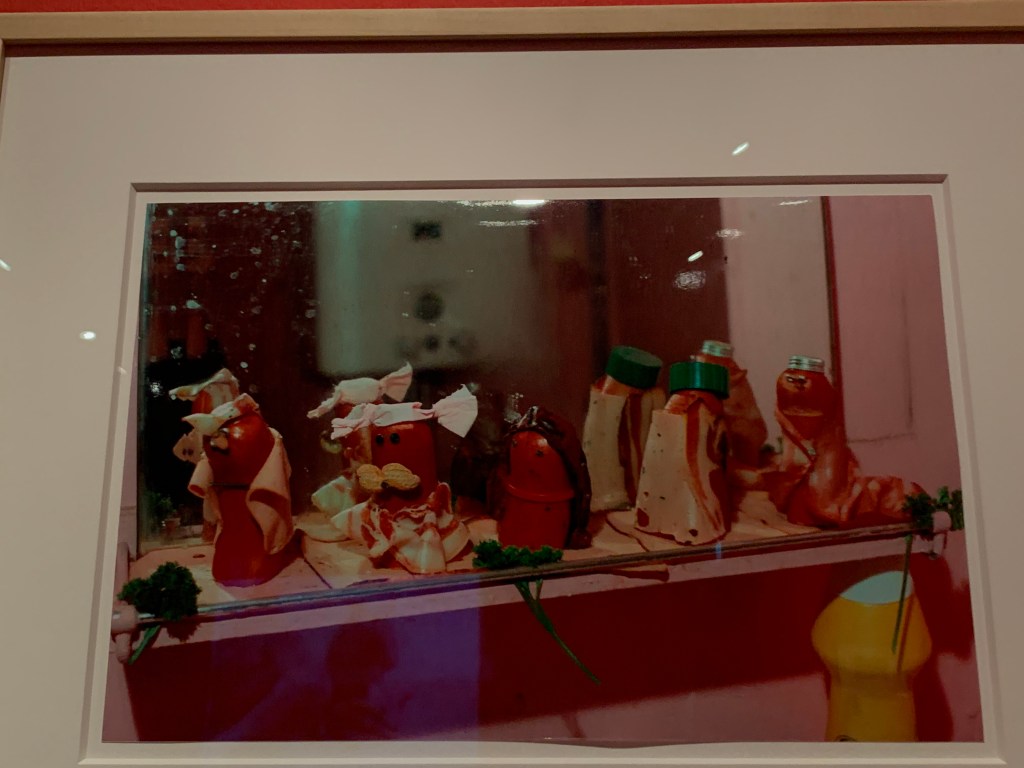
These are some pieces I admired, this one I particularly grabbed my attention, as I thought it was a creative and humorous piece.
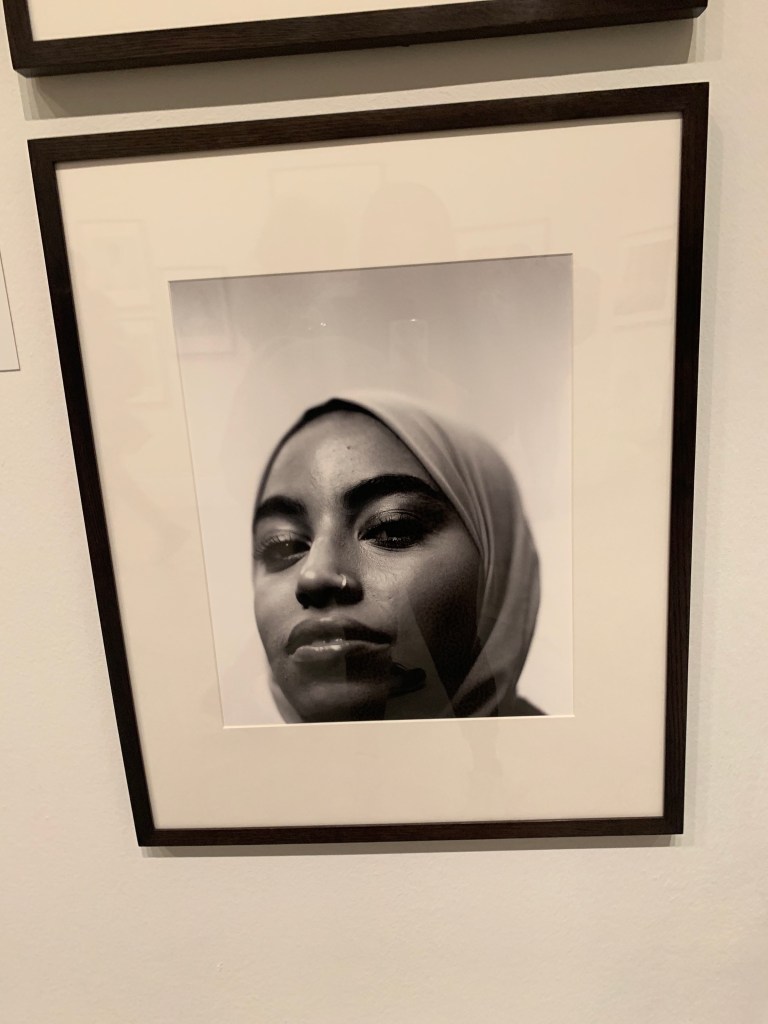
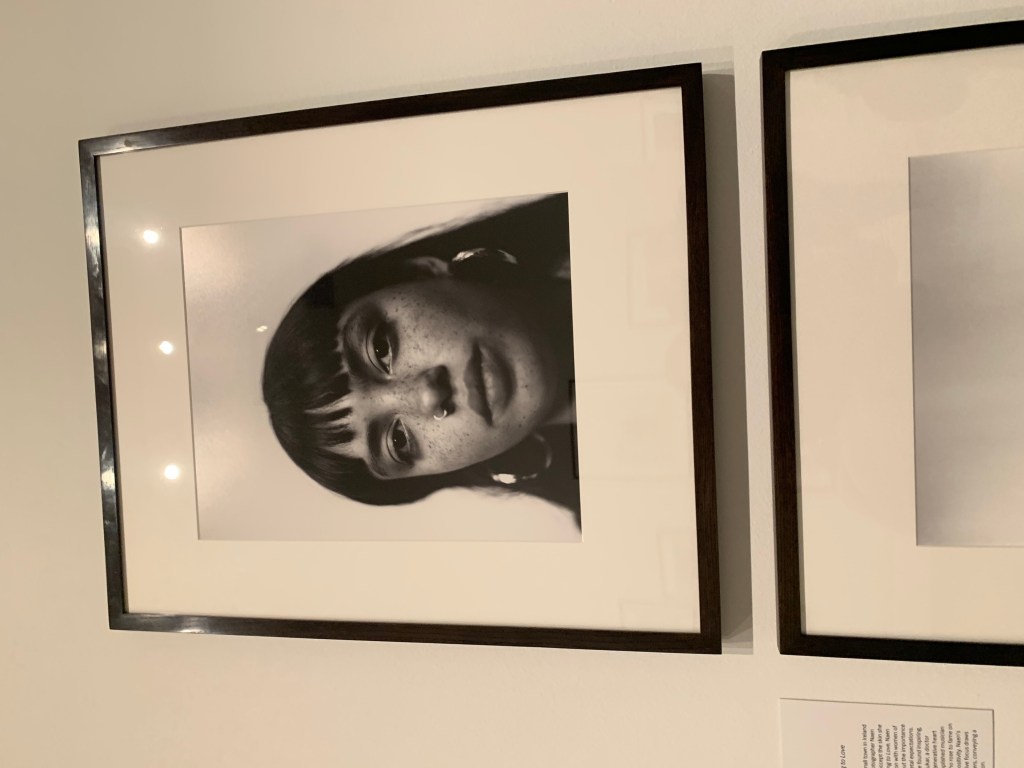
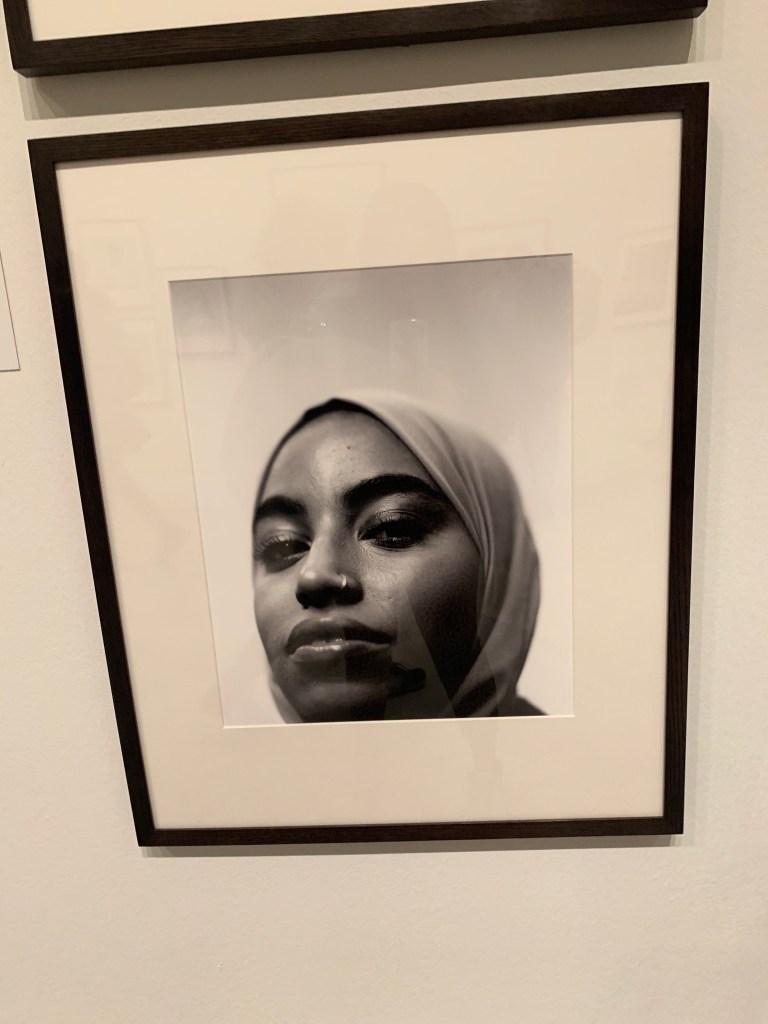
This portraits inspired me as they focused on the faces of the models it was a close up angle, which maybe I would like to interpret into my work. I also admired that they were black and white, majority of the pieces within the exhibition were colour, therefore both of them caught my eye. I have not decided whether I want my portraits to be black and white or if I want them in colour.

Lewis Morley Research –

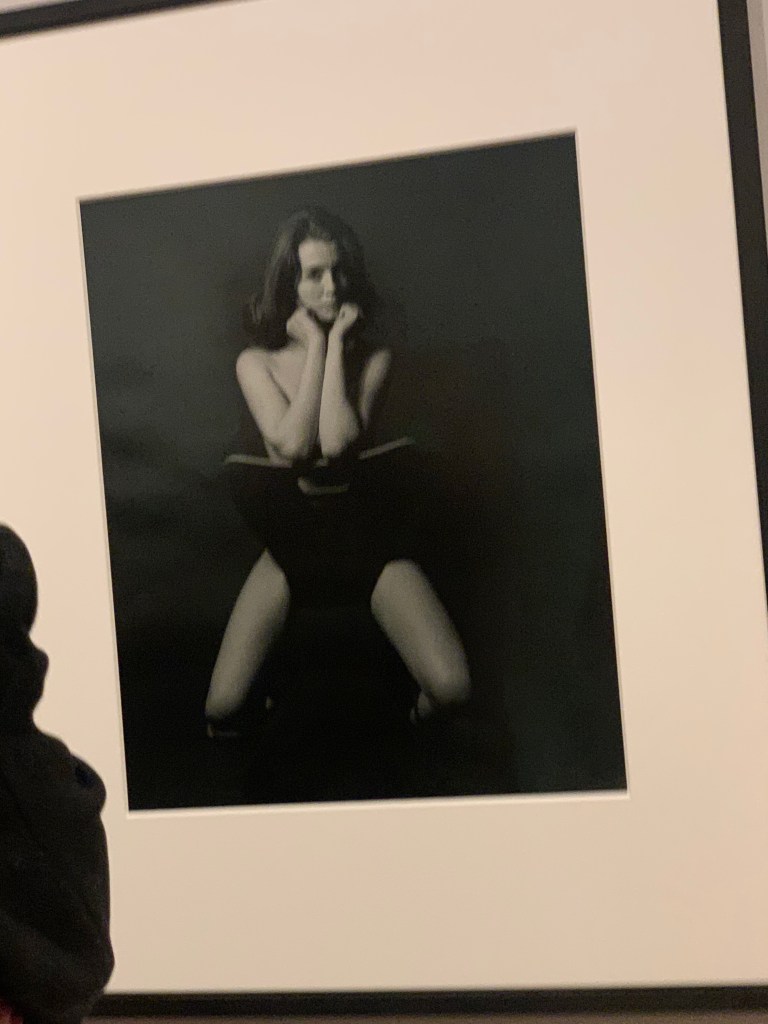
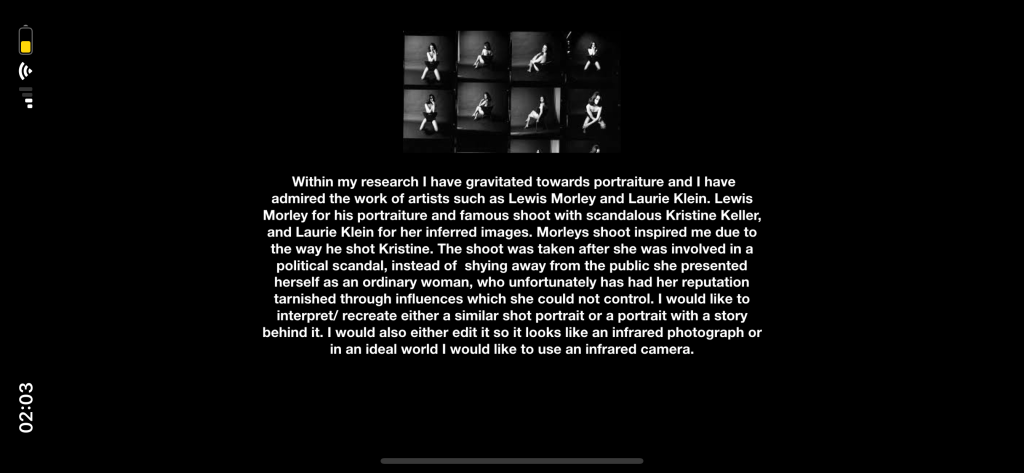
Within my research I have gravitated towards portraiture and I have admired the work of artists such as Lewis Morley and Laurie Klein. Lewis Morley for his portraiture and famous shoot with scandalous Kristine Keller, and Laurie Klein for her inferred images. Morleys shoot inspired me due to the way he shot Kristine. The shoot was taken after she was involved in a political scandal, instead of  shying away from the public she presented herself as an ordinary woman, who unfortunately has had her reputation tarnished through influences which she could not control. I would like to interpret/ recreate either a similar shot portrait or a portrait with a story behind it. I would also either edit it so it looks like an infrared photograph or in an ideal world I would like to use an infrared camera. 

Shooting with 35 mm film

For this session I was quite excited to shoot in 35 mm film. I have some experience in shooting with film from my a levels. However, it was on of my learning outcomes for this module ( to develop and refresh my skills with shooting on film). Just like the lesson on shooting with a DSLR, we were given film cameras each with black and white film and instructed to take some images around the campus. We were given instructions on how to put the film roll in and out as a few people struggled. The camera I had used was a Ricoh KR – 10 (35mm).

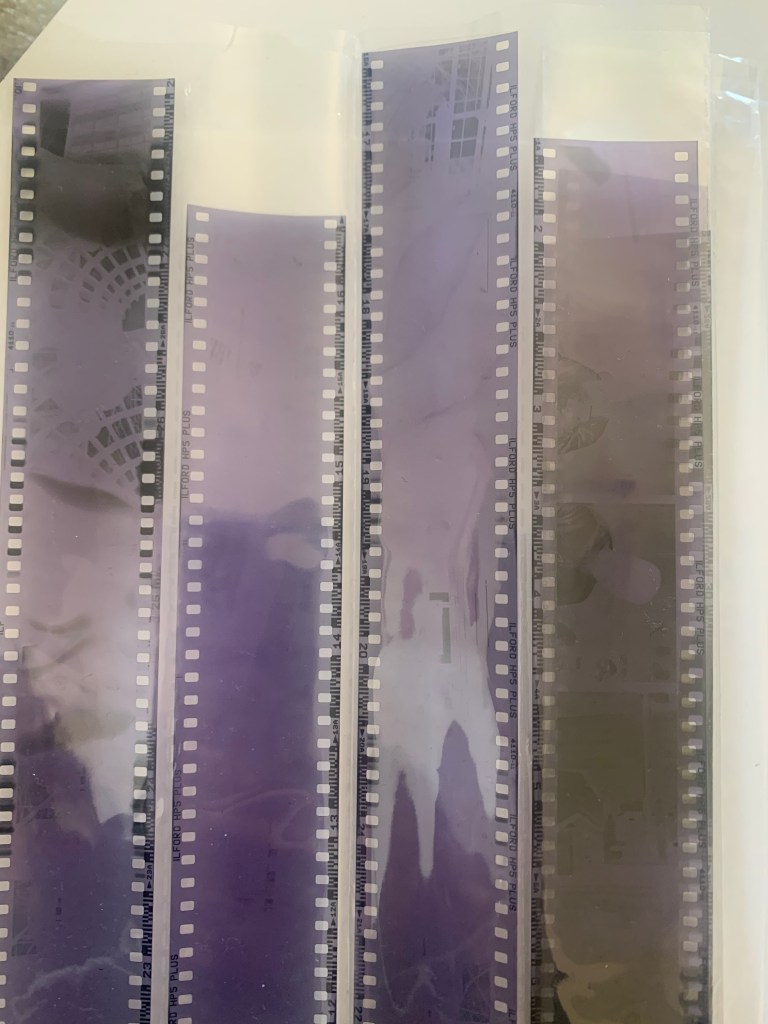
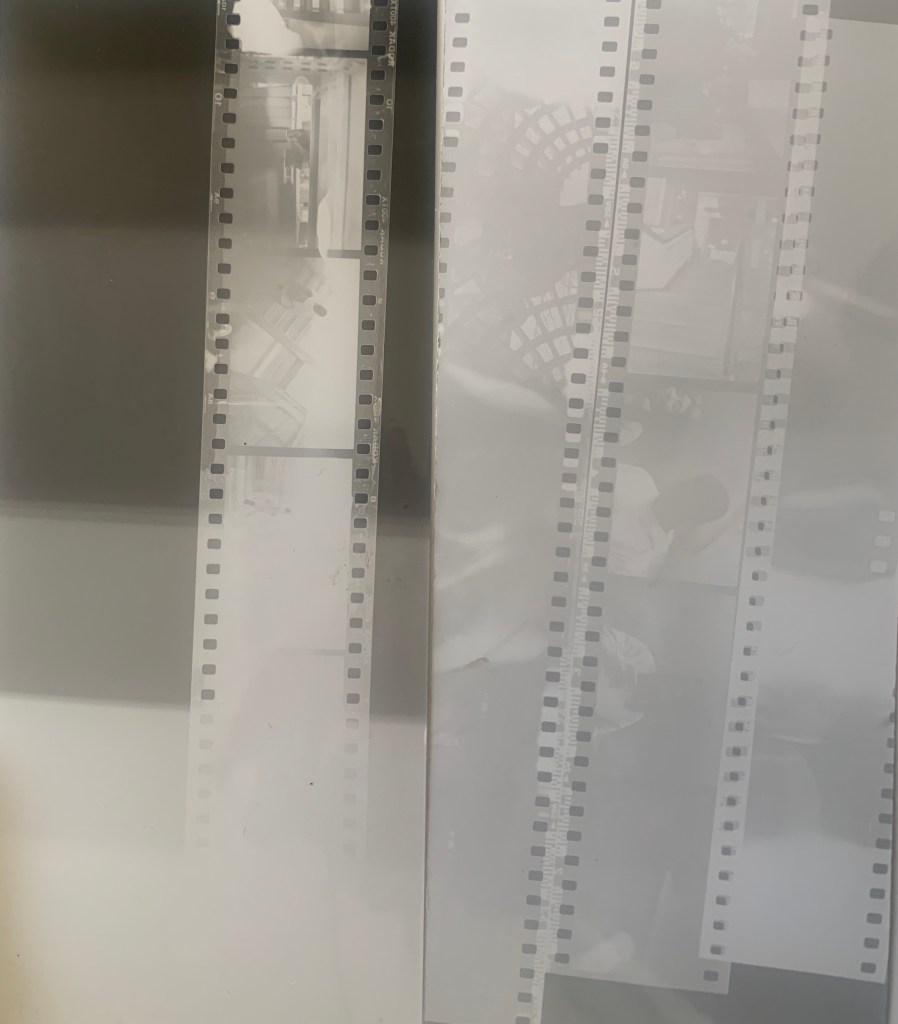
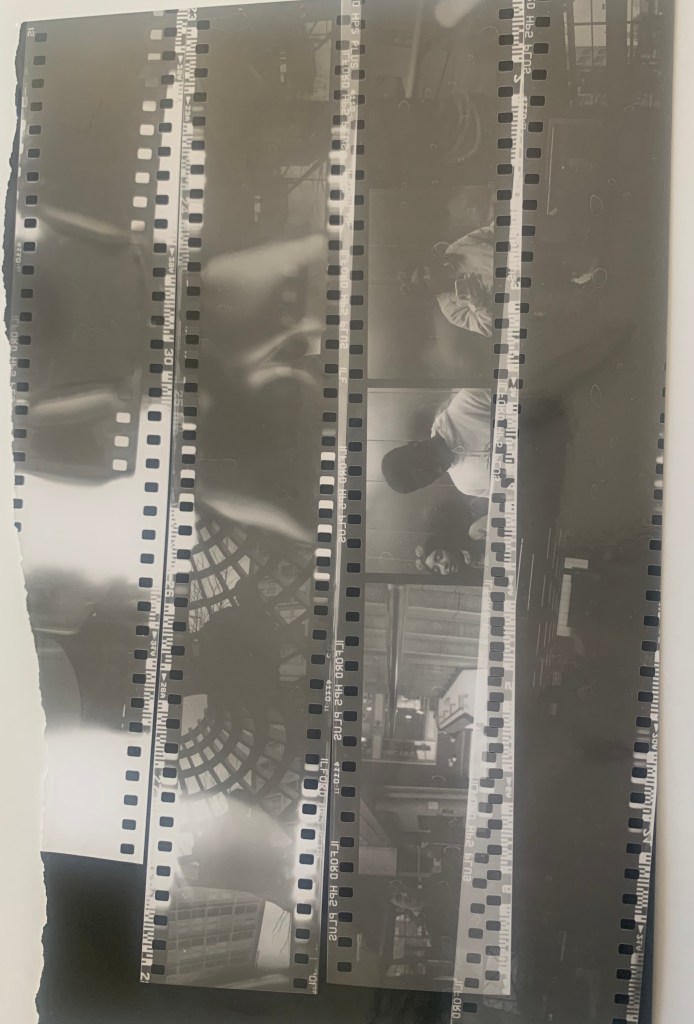
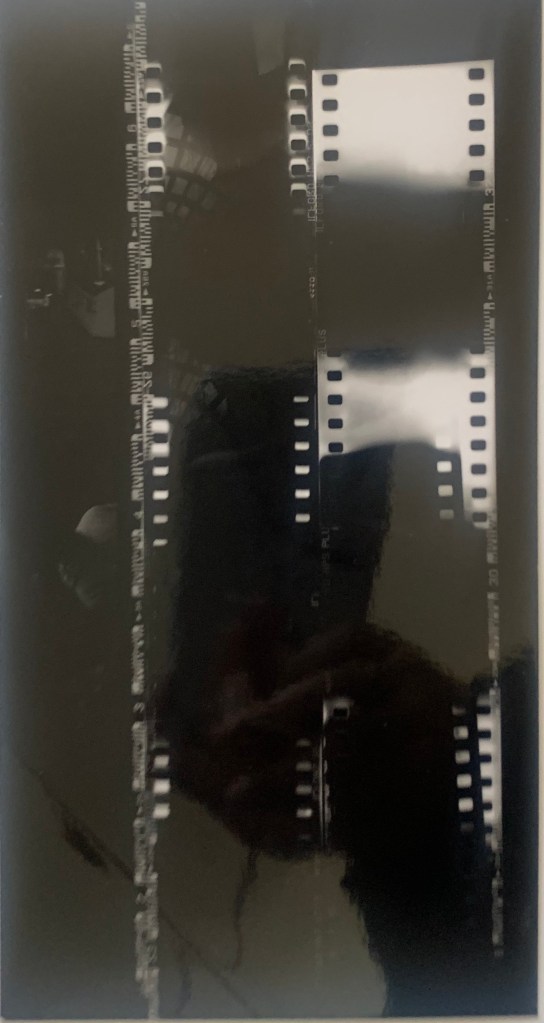
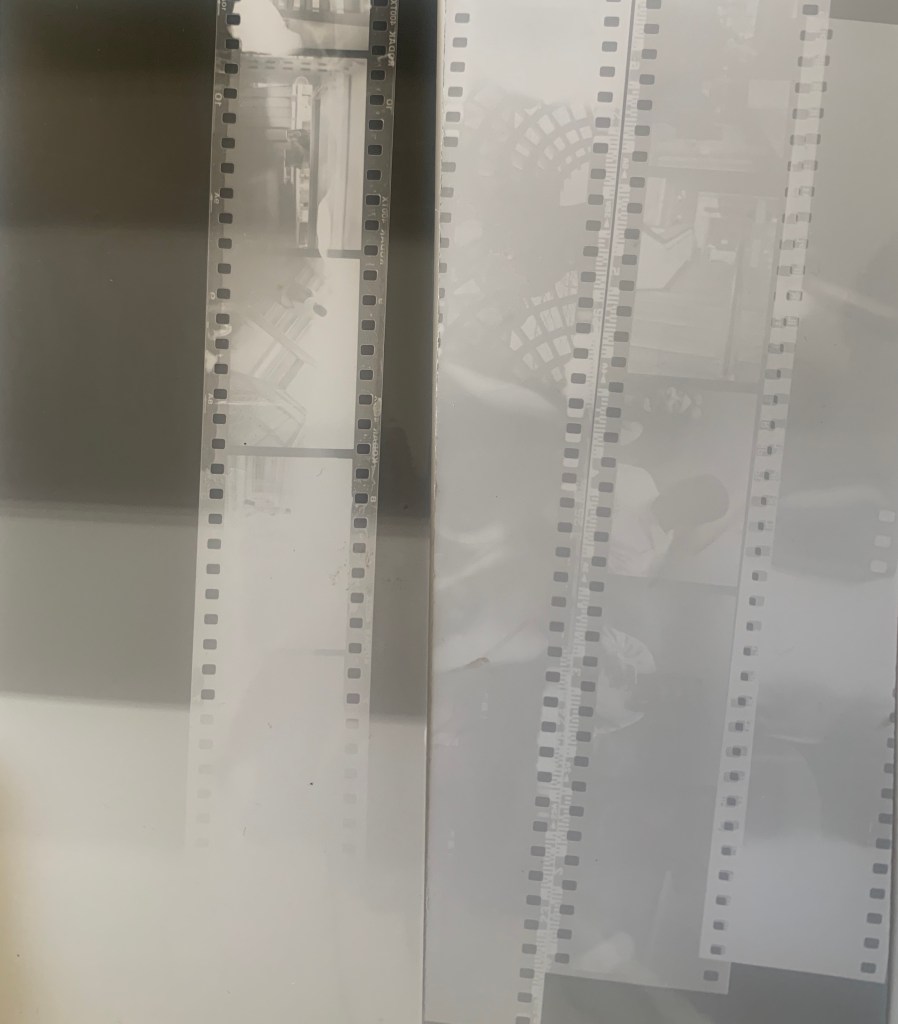
Processing the film, this task I found a bit challenging as I accidentally ended up exposing the film roll and the film ended up not fully show the image. However, it was a learning curve but also made me establish that even though there can be problems with film it could actually have a interesting and cool effect.

Scanning the Film, I was unable to attend this session as I was unwell however, I was given the Ilford Booklet which guided me if I had to do it again. As I could not attend I thought how else could I achieve this and researched that there are apps that can scan the film strips and do the same job as an ordinary scanner. The app I found was called filmBox.

Overall Results, were that I was happy with my results, however if I had the chance to do this again I would e careful with unwinding the film out and maybe leaving the film in the developer a bit longer to get the best result. I would like to explore shooting in film more as I really enjoyed the practical side of it. However, for my final project proposal because it fits with the theme, I think I would use a digital medium as I feel more stronger with that format. However, the post production is something I would like to challenge myself with. Below I have inserted my results, as you can see, there are some that did not turn out well. However, it still has an interesting affect.

Making a presentation – what we had to do

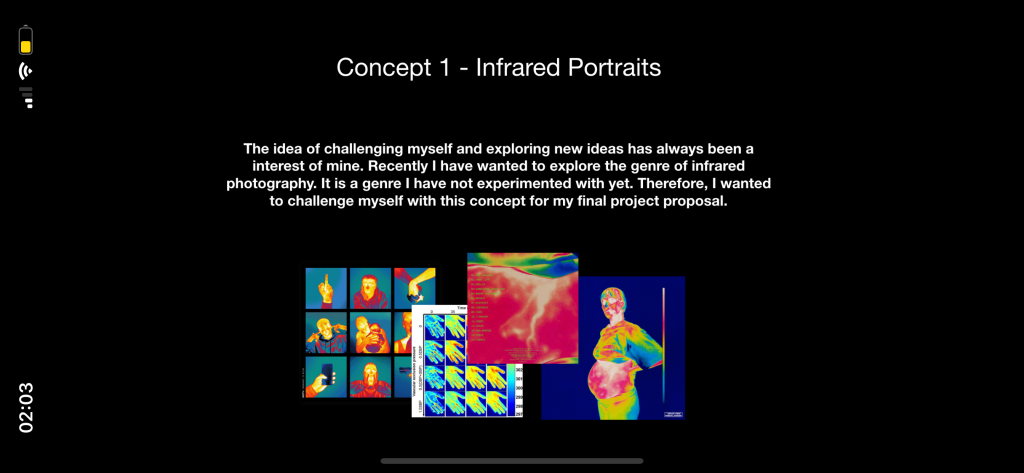
MID POINT. for our presentation we had to display a version of our proposal as if it was the actual one, just so the tutor could see what our ideas were and where we were at within this module. I felt that I prepared mine quite well and that I answered all the questions we had to do. However, I had two ideas and needed to narrow it down to one. I struggled uploading my powerpoint due to WordPress mentioning that uploading videos was a premium aspect. Therefore, I uploaded screen shots of my powerpoint below.

Feedback – From my presentation

Overall I answered and explained everything we were told to do, below I have inserted the feedback I have received.

The thermal images idea was a stronger idea in comparison to the photomontage idea, as well as being different to others in the group.

Maybe considering different ways of achieving my thermal images/ portraits. I could use photoshop and explore colour grading, focus more on the use of a thermal images. On the other hand I could pick a thermo camera, or a low resolution camera. I should search places that have them as they can be hard to get and expensive if I wanted to go for a thermo camera. To consider the choice of temperature, what interested me in it, and look at rainbow gradient.

Thermal imaging, research

APPS- I thought I could use to achieve the look as an infrared image was, the app was called HYPERSPECTIV. Some examples of my experimental work from this app were I had the option to turn down the exposure which meant the effect was darker and you could see. the different colours more. Just like an actual image taken by a thermo camera.

Thermal Camera Uses in Safety & Law Enforcement

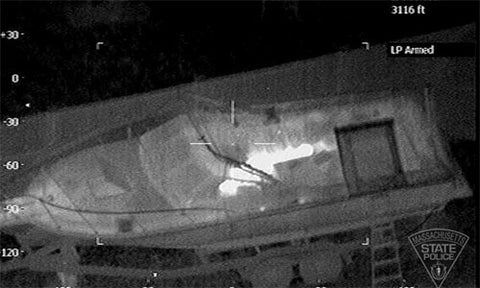
1. Surveillance. Thermal scanners are often used by police helicopters to see hiding burglars or track someone fleeing a crime scene.

Police helicopter thermal image

2. Firefighting. Thermal cameras allow you to quickly identify if a spot fire or stump is actually out, or just about to reignite.

3. Search & Rescue. Thermal imagers have the benefit of being able to see through smoke. As such, they are often used to find out where people are in darkened or smoke-filled rooms.

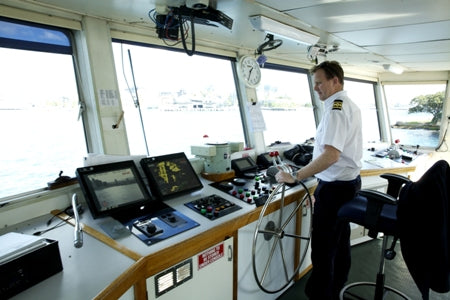
4. Maritime Navigation. Infrared cameras can clearly see other vessels or people in the water at night-time. This is because, in contrast to the water, boat engines or a body will give off a lot of heat.

Sydney ferries FLIR infrared

5. Road Safety. Infrared cameras can see people or animals beyond the reach of vehicle headlights or streetlights. What makes them so handy is that thermal cameras do not require any visible light to operate. This is an important distinction between thermal imaging and night vision (which is not the same thing).

BMW infrared night vision display

6. Drug Busts. Thermal scanners can easily spot households or buildings with a suspiciously high temperature. A house with an unusual heat signature may indicate the presence of grow-lights being used for illegal purposes.

7. Air Quality. Thermal cameras can detect which household chimneys are in operation (and therefore using wood for heating). The same principle can be applied to industrial smoke-stacks.

8. Gas Leak Detection. Specially calibrated thermal cameras can be used to detect the presence of certain gases at industrial sites or around pipelines.

9. Preventative Maintenance. Thermal imagers are used for all kinds of safety checks to reduce the risk of fire or premature product failure.

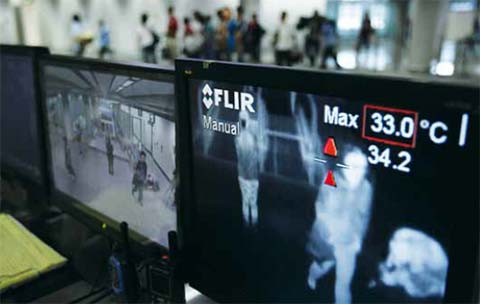
10. Disease Control. Thermal scanners can quickly check all incoming passengers at airports and other locations for elevated temperature. Thermal cameras can be used to detect fevers during global outbreaks such as SARS, Bird Flu and coronavirus(COVID-19).

Airport FLIR thermal scanning for fevers

11. Military & Defense Applications. Thermal imaging is of course also used in a wide range of military hardware, including aerial drones. Although now just one use of thermal imaging, military applications are what originally drove much of the initial research and development into this technology.

12. Counter-Surveillance. Covert surveillance equipment such as listening devices or hidden cameras all consume some energy. These devices give off a tiny amount of waste heat that is clearly visible on a thermal camera (even if hidden inside or behind an object).

Counter surveillance with a thermal camera

Thermal image of a listening device

Thermal Scanners to Find Wildlife & Pests

13. Unwanted Pests. Thermal imaging cameras can find out exactly where possums, rats or other animals are camping out in a roof space.

14. Animal Rescue. Thermal cameras can also find stranded wildlife (such as birds or pets) in hard-to-access areas.

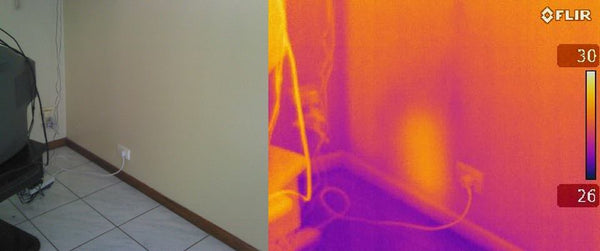
15. Termite Detection. Infrared cameras can detect areas of potential termite activity in buildings. As such, they are often used as a detection tool by termite and building inspectors.

Termite packing in wall thermal image

16. Wildlife Surveys. Thermal cameras are used by ecologists to conduct wildlife surveys and other animal research. It’s often easier, quicker, and kinder than other methods such as trapping.

17. Hunting. Similar to military applications, thermal imaging can also be used for hunting (infrared camera rifle scopes, monoculars, etc).

Infrared Cameras in Healthcare & Veterinary Applications

18. Skin Temperature. IR cameras are a non-invasive tool to detect variations in skin temperature. Skin temperature variation can, in turn, be symptomatic of other underlying medical issues.

19. Musculoskeletal Problems. Thermal imaging cameras can be used to diagnose a variety of disorders associated with the neck, back and limbs.

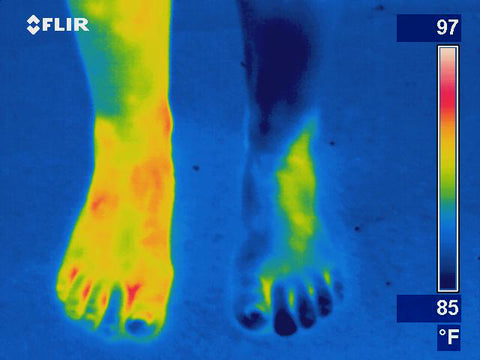
20. Circulation Problems. Thermal scanners can help detect the presence of deep vein thromboses and other circulatory disorders.

Infrared camera circulation issues in legs

Image showing leg blood flow circulation issues.

21. Cancer Detection. Infrared cameras have been shown to clearly indicate the presence of breast and other cancers.

22. Infection. Thermal imagers can quickly locate potential areas of infection (indicated by an abnormal temperature profile).

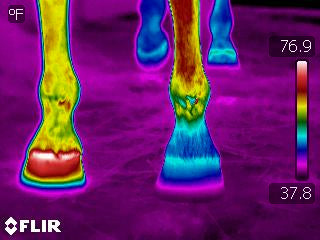
23. Horse Treatment. Thermal cameras can be used for diagnosis of tendon, hoof and saddle problems.

Thermal image of horse hooves

Thermal Imaging for Electricians & Technicians

24. PCB Defects. Technicians and engineers can check for electrical defects on printed circuit boards (PCB’s).

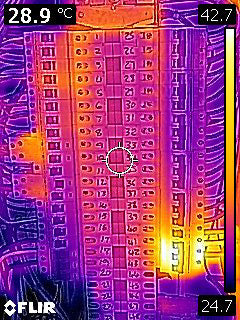
25. Power Usage. Thermal scanners clearly show which circuits on a switchboard are consuming the most power.

Electricity switch board thermal camera image - FLIR C2

26. Hot or Loose Electrical Connectors. Thermal cameras can help find defective connections or ‘hot joints’ before they cause irreversible damage to equipment or stock.

27. Phase Supply. Thermal imaging cameras can be used to check for unbalanced phase supply (electrical load).

28. Underfloor Heating. Thermal scanners can show if electric underfloor heating is working properly and/or where a defect has occurred.

29. Overheated Components. Overheated substations, transformers and other electrical components all show up very obviously in the infrared spectrum. Higher-end thermal cameras with adjustable lenses are used by electricity utilities and others to quickly check overhead power lines and transformers for issues.

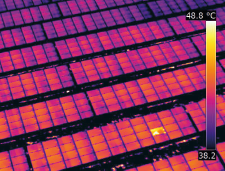
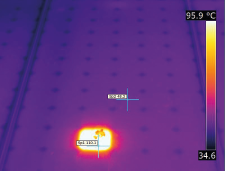
30. Solar Panels. Infrared cameras are used to check for electrical defects, micro-fractures or ‘hot spots’ in solar PV panels.

Solar array problem
Solar cell problem

Aerial drone thermal image of a solar farm showing a defective panel (left) and a similar test done close-up on an individual solar module showing a problematic solar cell (right).

Thermal Cameras for Mechanical Inspection & Preventative Maintenance

31. HVAC Maintenance. Thermal imaging is used to check issues with heating, ventilation and air conditioning (HVAC) equipment. This includes the coils and compressors on refrigeration and air conditioning systems.

32. HVAC Performance. Thermal scanners show how much heat is being generated by equipment inside a building. They can also show how the air conditioning ducting could be improved to deal with this, for example, in server rooms and around comms racks.

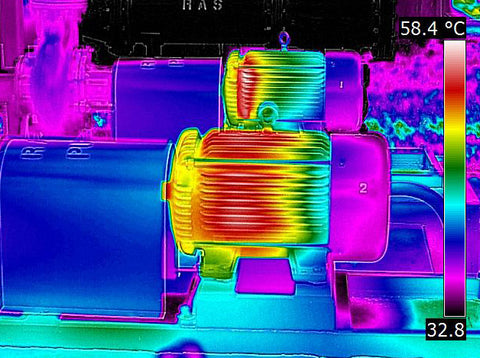
33. Pumps & Motors. Thermal cameras can detect an overheated motor before they burn-out.

FLIR T640 Motor Check

34. Bearings. Bearings and conveyor belts in factories can be monitored with a thermal camera to identify potential issues.

35. Welding. Welding requires the metal to be heated uniformly to melting temperature. By looking at the thermal image of a weld, it is possible to see how the temperature varies across and along the weld. 

36. Motor Vehicles. Infrared cameras can demonstrate specific vehicle mechanical issues such as overheated bearings, engine parts with uneven temperatures, and exhaust leaks.

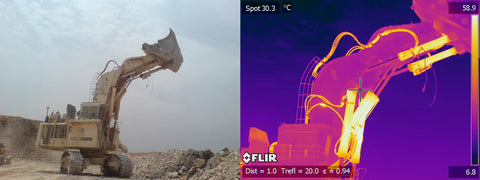
37. Hydraulic Systems. Thermal imagers can identify potential failure points within hydraulic systems.

Mining Equipment Hydraulics

Thermal inspection of hydraulics on mining equipment.

38. Aircraft Maintenance. Thermal imaging is used to conduct fuselage inspection for de-bonding, cracks, or loose components.

39. Pipes & Ducts. Thermal scanners can identify blockages in ventilation systems and pipework.

40. Non-Destructive Testing. Infrared non-destructive testing (IR NDT) is a valuable process for detecting voids, delaminations, and water inclusion in composite materials. 

41. Hydronic Heating. Thermal imagers can check the performance of in-slab or wall-panel hydronic heating systems.

42. Greenhouses. Infrared vision can be used to review issues in commercial greenhouses (eg. plant and flower nurseries).

43. Leak Detection. The source of a water leak is not always obvious, and it can be expensive and/or destructive to find out. For this reason, many plumbers have purchased our FLIR thermal cameras to make their job a whole lot easier.

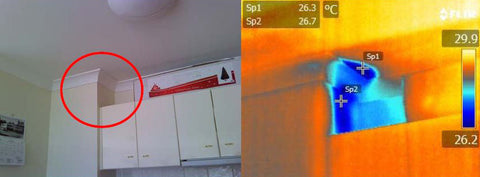
Water Leak in an Apartment Thermal

Thermal image showing a water leak (likely from neighbour above) in an apartment kitchen.

44. Moisture, Mold & Rising Damp. Infrared cameras can be used to find the extent and source of damage caused to a property by moisture-related issues (including rising and lateral damp, and mould). 

45. Restoration & Rectification. IR cameras can also determine if restoration works have effectively solved the initial moisture problem. 

46. Insurance Claims. Thermal camera inspections are often used as an evidence base for insurance claims. This includes the various mechanical, electrical and safety issues outlined above.

47. Tank Levels. Thermal imaging is used by petrochemical companies and others to determine the level of liquid in large storage tanks. 

Infrared Images to Detect Energy, Leakage & Insulation Issues

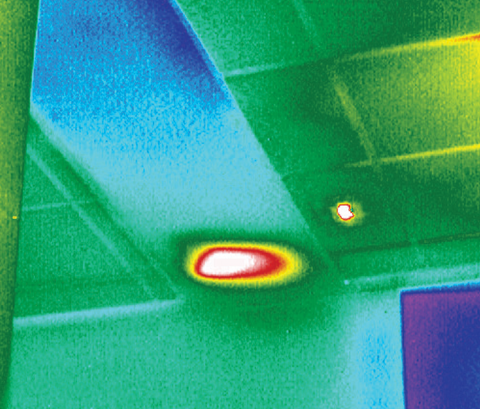
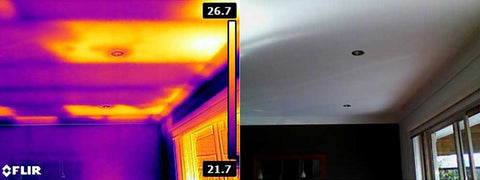
48. Insulation Defects. Thermal scanners can review the effectiveness of, and find gaps in, ceiling and wall insulation.

FLIR E8 Missing Ceiling Insulation

49. Air Leakage. Thermal imaging is used to check for air leaks. This can be in air conditioning or heater ducting as well as around window and door frames and other building elements.

50. Hot Water. Infrared images show how much energy hot water pipes and tanks are losing to their surroundings.

51. Refrigeration. An infrared camera can find defects in refrigeration and cool room insulation.

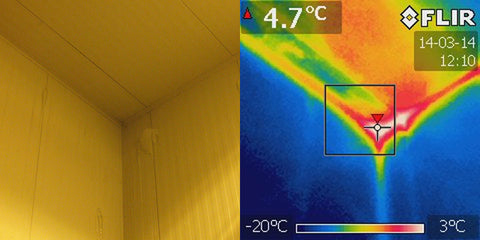
Freezer Room Insulation Infrared FLIR E5

An image taken during an energy audit with a FLIR E5 showing defective insulation in a freezer room.

52. Heater Performance. Analyse the performance of heating systems including boilers, wood fires, and electric heaters.

53. Glazing. Evaluate the relative performance of window films, double glazing, and other window coverings.

54. Heat Loss. Thermal imaging cameras allow you to see which areas of a particular room or building are losing the most heat.

55. Heat Transfer. Review the effectiveness of heat transfer, such as in solar hot water systems.

56. Waste Heat. Waste heat equals wasted energy. Thermal cameras can help find out which appliances are generating the most heat and therefore wasting the most energy.

EXPERIMENTAL WORK

Here are some examples of my experimental work below.

For this app I decided to make it moving/ into a stop motion or a GIF, I started of choosing my portrait I shot in a studio and the played with the exposure and effects in order to have similar qualities and colours like a thermo camera would. I knew I would not be able to achieve an exact duplicate of what a thermo heat cameras image would look like. However, I tried to achieve the rainbow gradient look.I particularly liked how the tones contrasted with each other. In terms of why I did not use these pieces for my final project proposal ideas, was because I originally wanted to have two or three images on a large board . So it could look like a minimalistic approach, instead of three very busy stop motions. To improve this I would have liked to shoot with a thermo camera instead and see how it would look like as a Gif or stop motion.

Experimental work 2.0

I created this infrared effect inside the video game GTA 5 on my computer. This game was used instead of a real life video as you edit the assets in the 3D world rather than editing a 2D video with after effects. The advantage of doing this is that you can actually create a heat effect coming of the 3D models of people within this simulated world. Firstly I saw you can change the visual effects on the game by installing an ‘ENB’. This is a graphical modification to the game and allows for extra features. One of the most interesting features is the heat sync mode which creates a heat effect around everyone character in the game. I modified it so it was brighter and recorded my screen while the game ran. I then uploaded the video file to after effects where I edited the contrast and colours of the video. Overall the finished product looked as close to infrared you can get without an actual infrared camera.

Final concept –

During this point, I knew due to the situation I would not be able to use an actual thermo camera and achieve my desired affect. However, it did not stop me from experimenting in a different way to get a similar effect as a heat camera would. In terms of equipment I would use, would be a Cannon 90D dslr in order to shoot my portraits. After that, I would use this app called hyperspecktiv. How I wanted to display it and present it to everyone would be I would use a2 black card with my images enlarged but also the process enlarged and have my blog on a green from a projector and I would talk about my research and influences. As well as my proposed media and equipment.

My chosen images before I place them on a2 card

FINAL PROJECT PROPOSAL/ STATEMENT OF INTENT

For my statement of intent I want to express that I have conveyed my ideas as clear as possible.

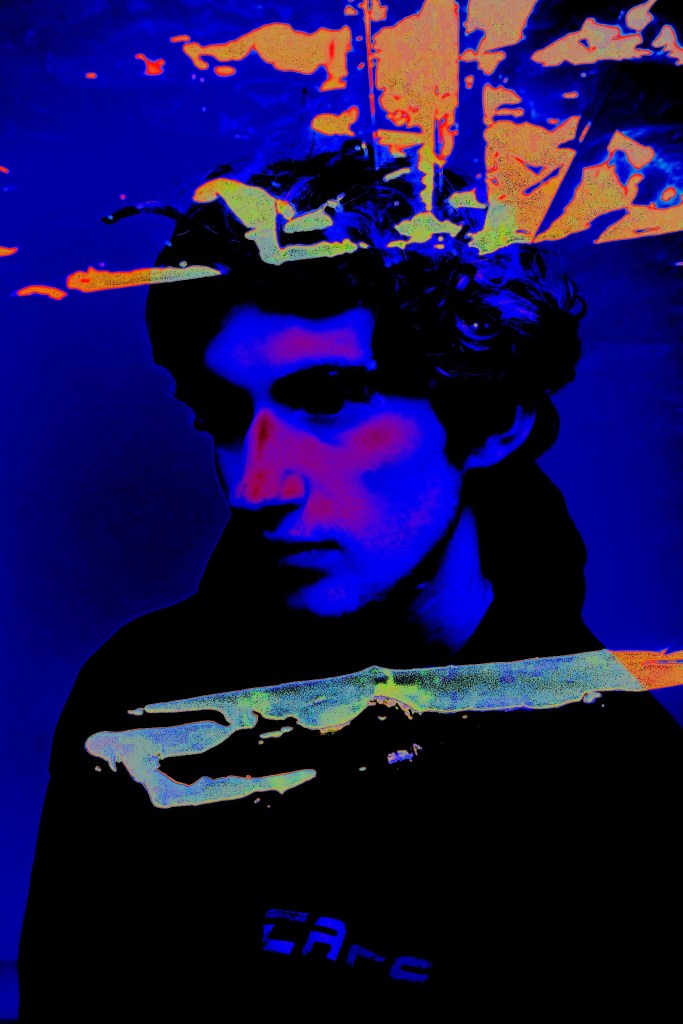
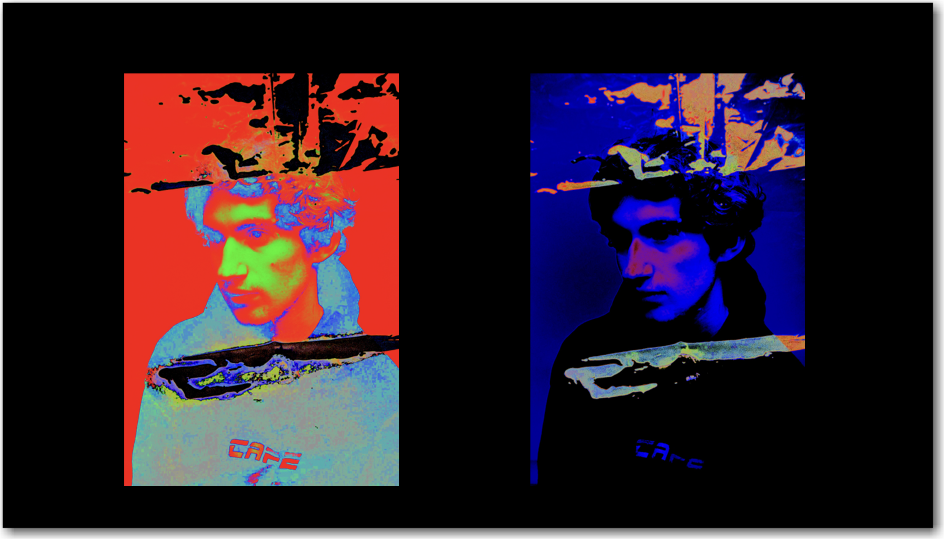
Statement of intent Humayra Ali, Thermal images Transformation synopsis. I will be using rainbow gradient visuals on a enlarged a2 black piece of card, to catch the viewers attention and create an appealing but minimalistic insight. I want to display visuals from a thermo/ heat camera inspired shoot and create a colourful engagement. With each image contrasting and equally placed on the a2 black card to appear in an effective and simple technique, making the viewer able to understand and appreciate the transformation without struggle. How I created the visuals will also appear on a a2 piece of black card, where the audience will be informed of the process, techniques and equipment used. Behind me will be my blog where I have expressed and evaluated my journey of this module. This is where I will mention my influences, my experimental work as well as my research. By the end the viewers should feel as though they can achieve a thermo camera inspired image without the thermo camera at use. As well as understand the relationship in how it transforms an image. Relationship to transformation my two images draws upon different courses of actions a thermo camera involves. In any thermogram, the brighter colors (red, orange, and yellow) indicate warmer temperatures (more heat and infrared radiation emitted) while the purples and dark blue/black indicate cooler temperatures (less heat and infrared radiation emitted). Therefore, implies how an ordinary studio image is transformed into two different types of thermo images. My thermo concept draws upon the history of uses for thermograms and thermo imagery and how there are may uses of using thermograms to transform an image. Evidence of practical exploration, started of looking at different uses of thermo cameras, (inserted above) but also different techniques to achieve a similar look. If a thermo camera is not accessible. Key References Prior to my tutorial, i have been inspired by the following materials which have aided me in choosing my proposed project. For example, Photographs from the Highsnobiety Magazine which included the artists Skepta’s album cover, influenced us due to the aesthetics, two exhibition at Tate called Nam June Paik and Dora Maar encouraged but also secured my choice of theme. The work of artists Laurie Klien and Lewis Morley have influenced me because of the meanings behind the images and how they transformed their images.

Project proposal – How I will talk it through.

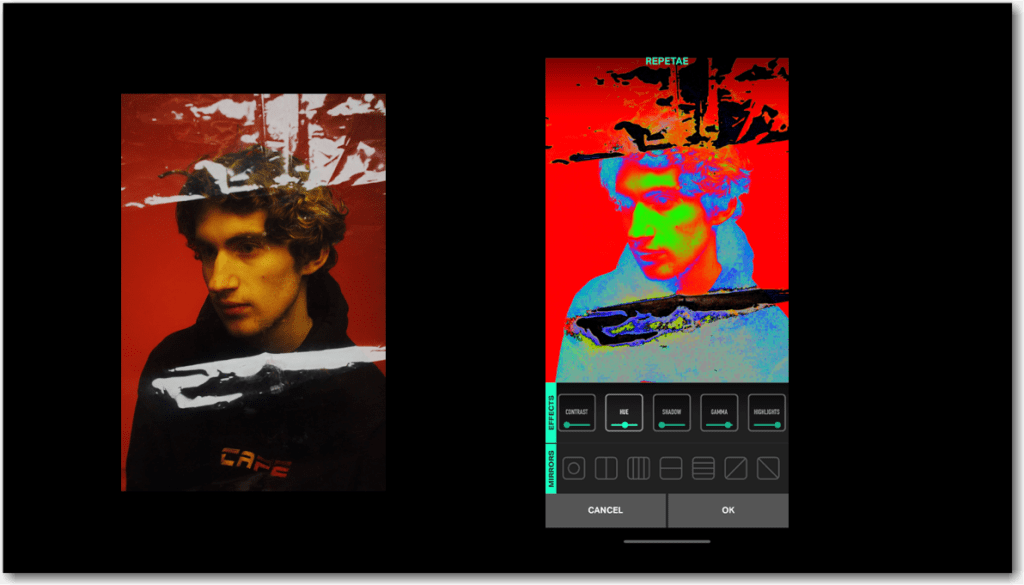
Transformation before and after process

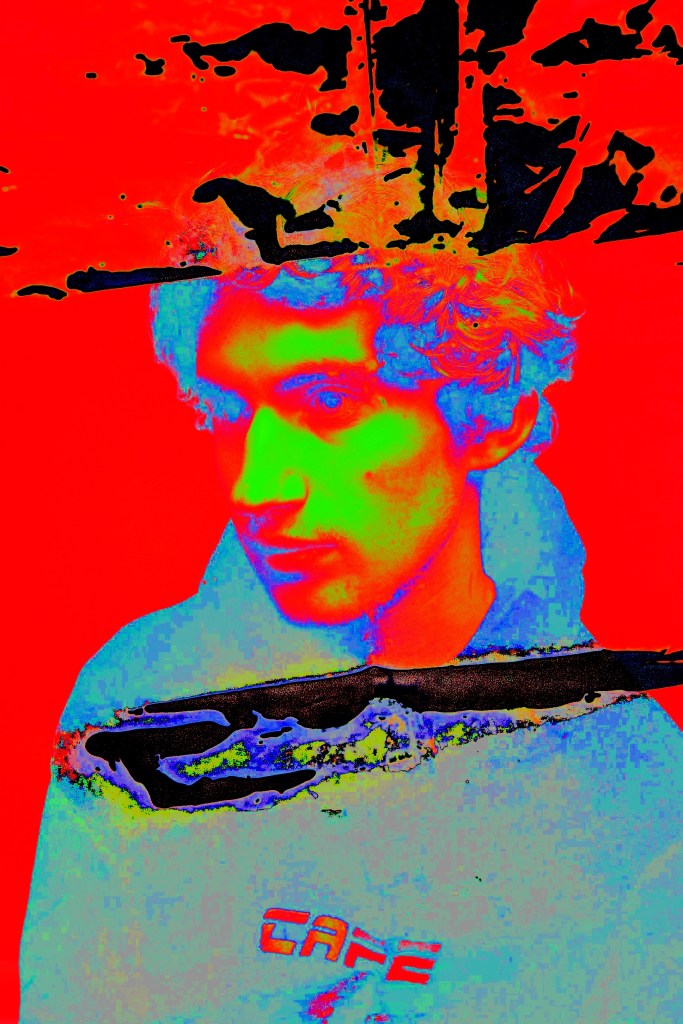
I took an image I took from a studio shoot, where I used a DSLR and thought this particular image would look interesting with a thermo camera inspired edit. As you can see above I played around with the settings of the app until I archived my desired transformed affect.

Transformation display –

Following my original idea of displaying it on a A2 board with my two chosen images, as I feel two images are more effective than one. The contrast of blue and red tones display how there are different types of thermo imagery, which can completely transform the concept of the image. Blue thermo imagery establishes that the image is cooler. Whereas red and orange tones portray where the heat is coming from.

Transformation Research and influences – I will insert my blog where I will discuss my research and influences.

Evaluation

To conclude, for this project/ module, I decided that I wanted to create a minimalistic but colourful piece focusing on the concept of thermal imagery as I have never explored it before, plus I felt it had a more relevant and contemporary feel towards people due to a few artists using it in their album covers. The process of getting the final completed was challenging due to the circumstances, however I tried to use the resources I had in the best way that I could. Regarding the actual dynamic of how the classes took place I really enjoyed them and felt I was engaging in them more in comparison to the others. Due to the circumstances of Covid – 19 all our taught sessions had luckily finished before it, and all that was left were tutorials. I felt that I knew what I wanted to achieve from the beginning however, I did want to use a thermo camera but I was unable to track one. On the other hand I am happy with my overall outcome and what I have achieved and learnt within this module. Plus, that I am interested in this area within the media and could be a possible route to explore in the future.

WEB DESIGN/MEDIA

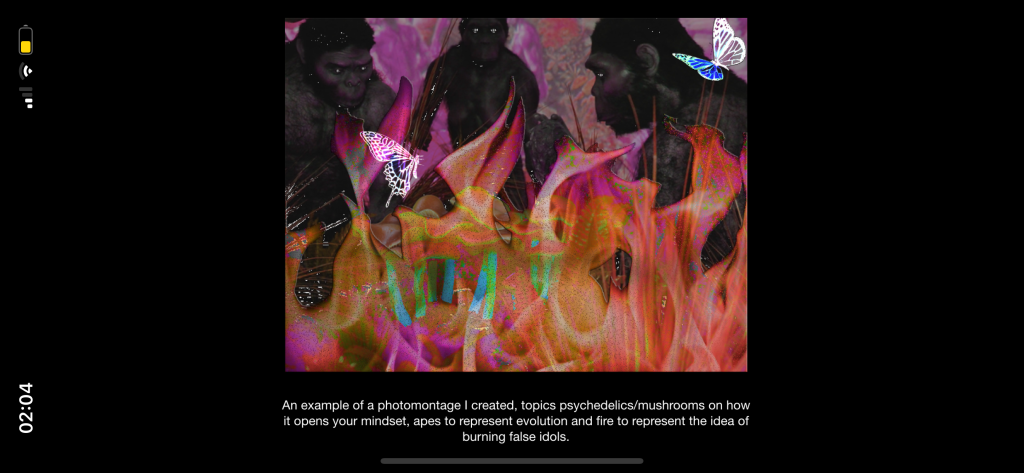
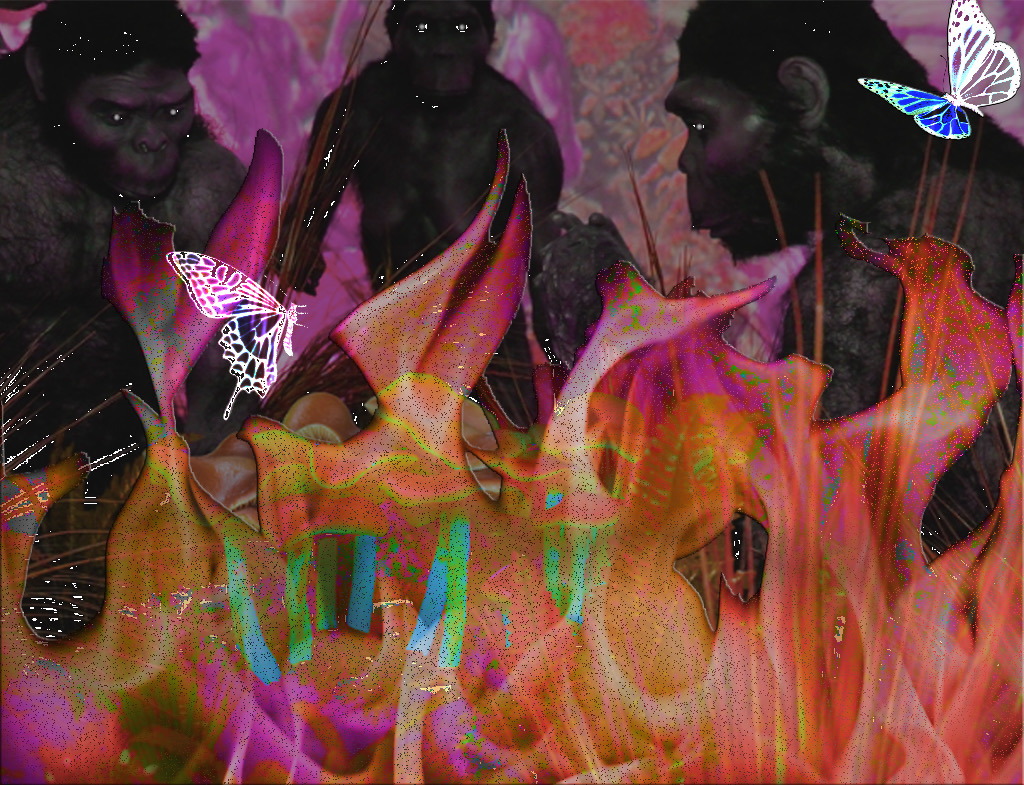
WORKSHOPS (On the time table it said it was part of web Design so I will be including them on this section of the blog) – The first workshop we did was an introduction to after effects and also using photoshop. I really enjoyed this workshop as I felt Arran was able to focus and help everyone individually. With this workshop we stated off creating images that could move but first we had to make a collage/ or image that had a story behind it. I have inserted mine below..

I wanted to include the concept of evolution ( apes, also thought the butterflies were eye-catching) and the influence of the environment ( mushrooms and fire).

The second workshop consisted of learning basics of Colour grading, whilst using the programme DaVinci Resolve for this workshop It opened my eyes to actually realising that all films use colour grading, to me it was almost like a filter for each shot which makes so much difference to the film. To me this session was just a starter/ taster so I didn’t feel I gained a lot of knowledge but I definitely would like to explore this more in my own time ad I enjoy editing.

First brief – Was an online one which I struggled to set up at first, however managed to figure it out, from this session we were told that we had to either work in groups or alone and that the end product for this was to create a website/ blog that portrays a story/ any story to an audience. We were given the task to research a story and techniques we could use for our blogs.

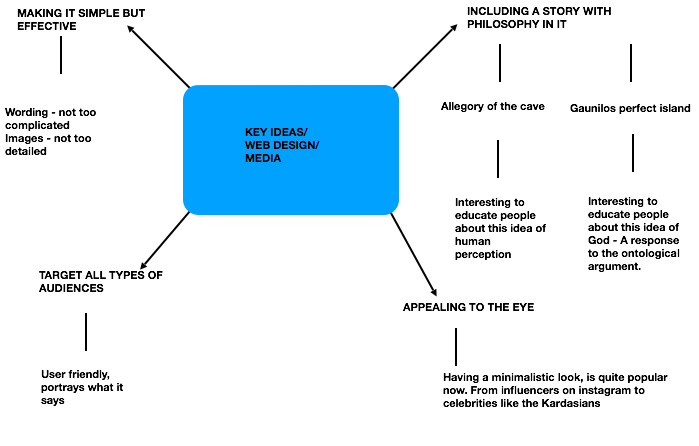
At first I decided to create a mind map as I always think its a great way in writing down your first initial thoughts down, they might change during the process. However, it is always good to have a starting point. Below I have inserted a simple mind map I created with my first notes/ and thoughts.

PLATOS CAVE RESEARCH – How it relates to us, the deeper understanding of the allegory

  • I have always been interested in religion and philosophy since I can remember due to my upbringing but also my a level choices, which made me want to use a story/ allegory for my web/ blog design instead of a typical legend/ myth or a fable. What interests me with these types of stories/ allegories is that it has a relevance to life and society now.
  • Plato claimed that knowledge gained through the senses is no more than opinion and that, in order to have real knowledge, we must gain it through philosophical reasoning.

The cave

  • Imagine a cave, in which there are three prisoners.
  • The prisoners are tied to some rocks, their arms and legs are bound and their head is tied so that they cannot look at anything but the stonewall in front of them.
  • These prisoners have been here since birth and have never seen outside of the cave.
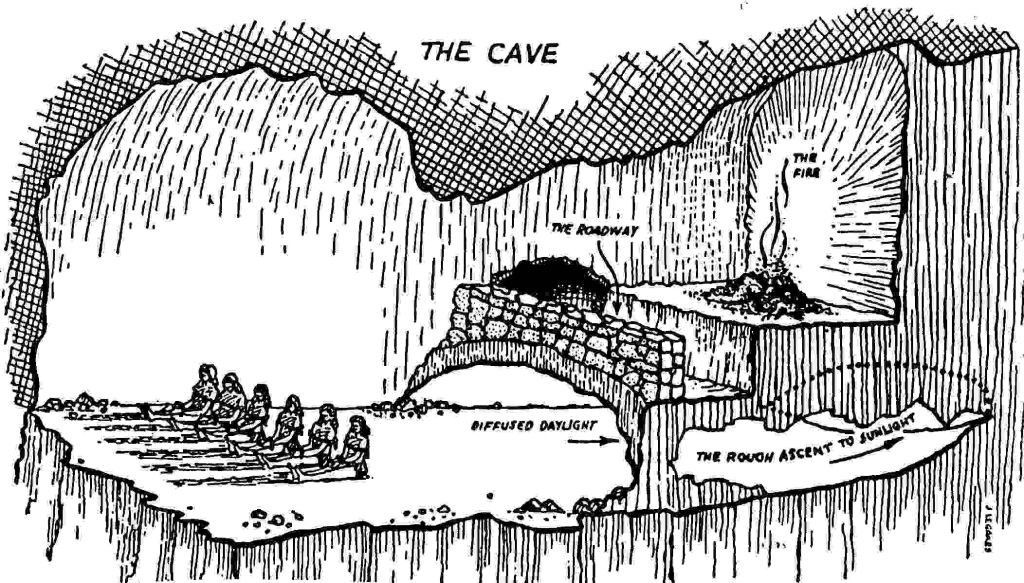
  • Behind the prisoners is a fire, and between them is a raised walkway.
  • People outside the cave walk along this walkway carrying things on their head including; animals, plants, wood and stone.

The cave In Plato’s theory, represents people who believe that knowledge comes from what we see and hear in the world – empirical evidence. The cave shows that believers of empirical knowledge are trapped in a ‘cave’ of misunderstanding.

Shadows

  • Imagine that you are one of the prisoners. You cannot look at anything behind or to the side of you – you must look at the wall in front of you.
  • When people walk along the walkway, you can see shadows of the objects they are carrying cast on to the wall.
  •  If you had never seen the real objects ever before, you would believe that the shadows of objects were ‘real.’

The Shadows represent the perceptions of those who believe empirical evidence ensures knowledge. If you believe that what you see should be taken as truth, then you are merely seeing a shadow of the truth.

The Game

  • Plato suggests that the prisoners would begin a ‘game’ of guessing which shadow would appear next.
  • If one of the prisoners were to correctly guess, the others would praise him as clever and say that he were a master of nature.

The Game represents how people believe that one person can be a ‘master’ when they have knowledge of the empirical world. Plato is demonstrating that this master does not actually know any truth, and suggesting that it is ridiculous to admire someone like this.

The Escape

  • One of the prisoners then escapes from their bindings and leaves the cave.
  • He is shocked at the world he discovers outside the cave and does not believe it can be real.
  • As he becomes used to his new surroundings, he realizes that his former view of reality was wrong.
  • He begins to understand his new world, and sees that the Sun is the source of life and goes on an intellectual journey where he discovers beauty and meaning
  • He see’s that his former life, and the guessing game they played is useless.

The escaped prisoner represents the Philosopher, who seeks knowledge outside of the cave and outside of the senses. The Sun represents philosophical truth and knowledge. His intellectual journey represents a philosophers journey when finding truth and wisdom.

The Return

  • The prisoner returns to the cave, to inform the other prisoners of his findings.
  • They do not believe him and threaten to kill him if he tries to set them free.

The other prisoners reaction to the escapee returning represents that people are scared of knowing philosophical truths and do not trust philosophers.

A video I watched that aided me to understand the allegory in more depth whilst I was researching.

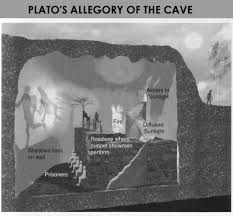
Images I liked that portrayed the Allegory of the cave (below), that I could use in my website to portray the story and my minimalist design.

GAUNILLOS PERFECT ISLAND RESEARCH –

Another example of philosophical ideology that I liked was Guanilo’s perfect island, he created this as it was a response to the existence of God/ The ontological argument.

The earliest critic of the ontological argument was a contemporary of Anselm’s, the monk Gaunilo of Marmoutier. Gaunilo did not identify any specific fault with the argument, but argued that there must be something wrong with it, because if there is not then we can use its logic to prove things that we have no reason to believe to be true.

For instance, Gaunilo argued, it is possible to construct an argument with exactly the same form as the ontological argument, that purports to prove the existence of the perfect island: the perfect island must exist, for if it did not then it would be possible to conceive of an island greater than that island than which no greater can be conceived, which is absurd.

If the ontological argument works, then, according to Gaunilo, the argument for the existence of the perfect island works too. The two arguments have the same logical form, and so they stand or fall together. The argument for the existence of the perfect island, though, is clearly spurious; we have no reason to believe that the perfect island exists. Gaunilo’s argument must be rejected. Unless the theist can point to some relevant difference between his argument for the existence of God and Gaunilo’s argument for the existence of the perfect island, then, then he will have to abandon the ontological argument for the existence of God.

A video I watched that aided me to understand the perfect island in more depth ,whilst I was researching.

Brief – Choosing our idea and how we are going to create the website.

My next brief was about how we are going to create the website we have been recommended to use sites such as Weebly, Squarespace, Wix and my chosen website WordPress. The ideas I wanted to establish were from my original ideas on my mind map, For instance the idea of the website being minimalistic due to using a complex philosophical allegory. I decided I wanted to stick to just Black and white and grey tones as I did nor really vision bright colours with this concept. The story I will be using is Plato’s Allegory of the cave as I felt more connected and more interested in comparison towards Guanlio’s idea of the perfect island.

The process of my website designing on WordPress was tricky at first as setting up to me can be the most difficult as you have not got a flow/ used to the website.

Steps I went through to create my WordPress Website:

First I had to create a new wordpress account as it doesn’t allow you to have two wordpress pages on one free account.
I then created my new wordpress page by coming up with a username, password and then the domain name. The domain name should be closely related to what the website’s purpose is and so I chose to use The Allegory of the Cave as my basis for the name. Unfortunately www.allegoryofthecave.wordpress.com was taken so I had to made a slight alteration and added an extra e to my domain. The final domain name was therefore www.allegoryofthecavee.wordpress.com.
The website was launched when I verified my email address and I was ready to go and begin creating it in the image I had in my mind. Considering this website is about one of Plato’s philosophical stories I felt it had to clearly be about him and the story. I didn’t want loads of other visual information taking away from the key image and text I am trying to show.
Step 1 was using the WordPress theme menus to find a theme that suited my webpage for it’s purpose.  Searching through the hundreds of themes there were a lot of complex ones but I managed to fine one which was elegantly simple. It is called Illustratr and is described as a minimalist portfolio theme. To me this theme seemed bold yet simple which is the look I wanted.

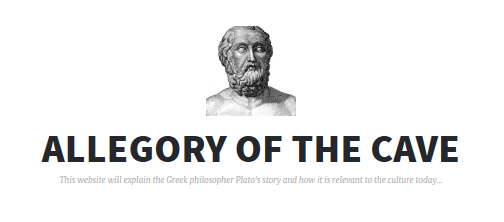
Step 2 was to choose the font I wanted, colours and what menus I would display. As this was a website just to show the story and image the extra menu bar above with ‘Home’ and ‘Contact’ wasn’t needed. However I did add a tagline below my heading explaining ‘This website will explain the Greek philosopher Plato’s story and how it is relevant to the culture today’.

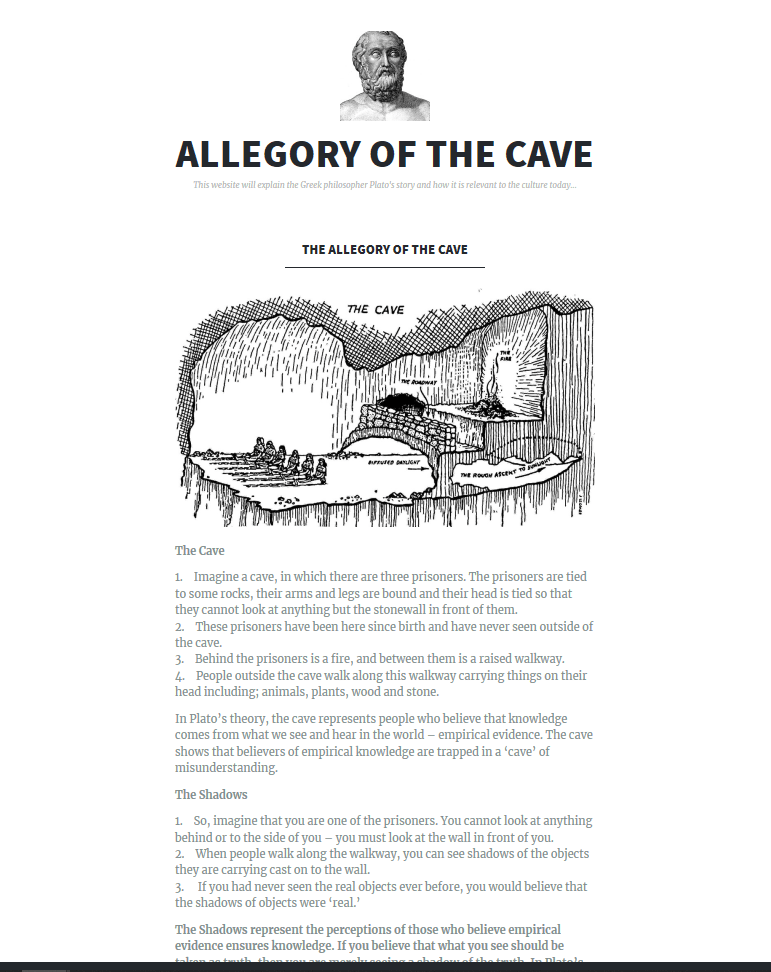
Step 3 I would need to create a new post that would appear on the main page once you logged into the website. The post was titled ‘The Allegory of the Cave’ then I added a depictive drawing of the Cave below. I wanted to keep the website with the colour scheme of black, white and grey as it gave it a nice simplistic athetotic. In this post I wrote my information on the story.

Step 4 I uploaded a depiction of Plato to be the WordPress Logo and used it as my header image. This is because WordPress has this weird menu where you can’t use your header image as any size but luckily with this theme the logo position is in the top centre so I utilized this option instead. The site icon was same as the logo so on the tab on your internet browser you can see a small little Plato. 

Overall I feel this website is simple but it gets the job done and doesn’t distract you away from the key information. In conclusion I am happy with my finished product.

Final product –

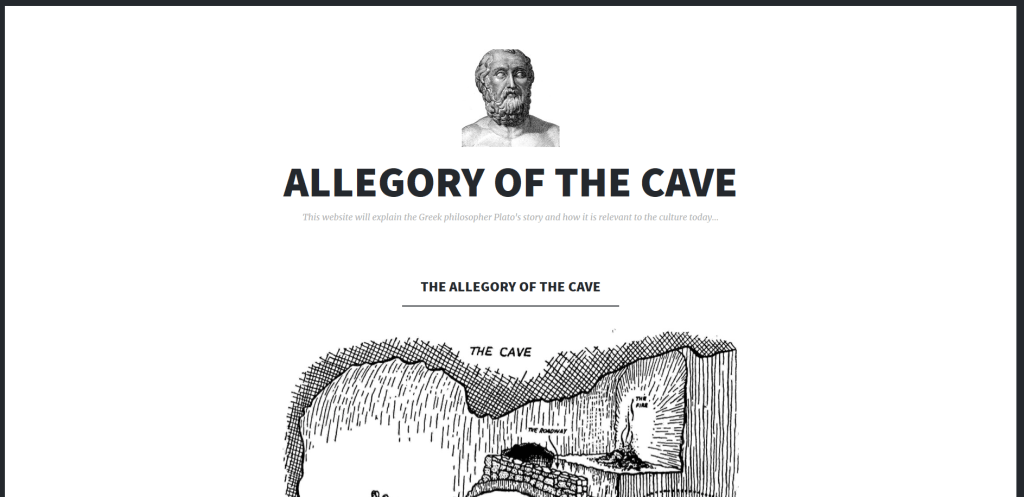
I have interred a screen shot of my blog to show the layout and I have also inserted the link to the actual final website I have created below.

Screen shots

Final Product – Website link

https://allegoryofthecavee.wordpress.com/

Evaluation

To conclude, for this project/ module, I decided that I wanted to create a minimalistic website focusing on a philosophical allegory or story focusing on human perception and knowledge. As I felt it has a more relevant and contemporary feel towards people then it does to legends and myths. The process of getting the final website completed was a fast paste one as of the circumstances, and was challenging as I decided to work on my own. Plus, the online classes were also confusing at first but there were only a few so it was alright in the end. I found this easy …. but the actual managing and creating of the website very difficult at first as I have not had much experience with website and blog making. However, in the end it was just a case of trial and error until I was happy with the result. Regarding the actual dynamic of how the classes took place it was interesting at first nut understanding the circumstances it was adaptable, the only thing it lacked was I did not feel I was being taught new things and that it was the same concepts and instructions from previous blog/web sessions in previous modules. On the other hand, through this module I have learnt that I am interested in this area within the media and could be a possible route to explore in the future.

Moving image – Production docs/ evaluation

Evaluation – To conclude this moving image module, the group I was working with and I wanted to focus on having fun and experimenting as we have never done much narrative films before, especially when given a script that is not yours. We also tried to work around each others schedule and focus on communicating within the group as at times it was challenging being out of your comfort zone and working with people you haven’t before.

The process of getting our final production management packs were stressful at times as members were not able to communicate due t0 the circumstances ( Covid – 19). However, I must say I still think made due with what we had and the circumstances.

Regarding the group dynamic and work ethic that took place during the project, I think some individuals from the group brought more to the table than others. Not everyone showed up to everything or prioritised the work when they should have. However, there was also the start of the virus which I can understand why.

Moving image – Filming day

The group was informed to go to the blue shed as thats where we would have our next brief as well as film in there. However, due to a few people in our group who could not make it, it set us back an hour or two, we decided as a group that the people who were unable to make it to be the producers and help within the treatment and final project management plan. I t had become a challenge to complete everything due to the set back. However, we thought it would be better to find a new scene and do a new shot list instead of rescheduling.

The new shot list below –

The equipment used –

cannon C100

Tripod

Red head light – large lights x 3

Dedo light – small lights x 3

Mic + Boom

Dummy/ fake upper body

Table and chair

Phones

Knife ( butter knife)

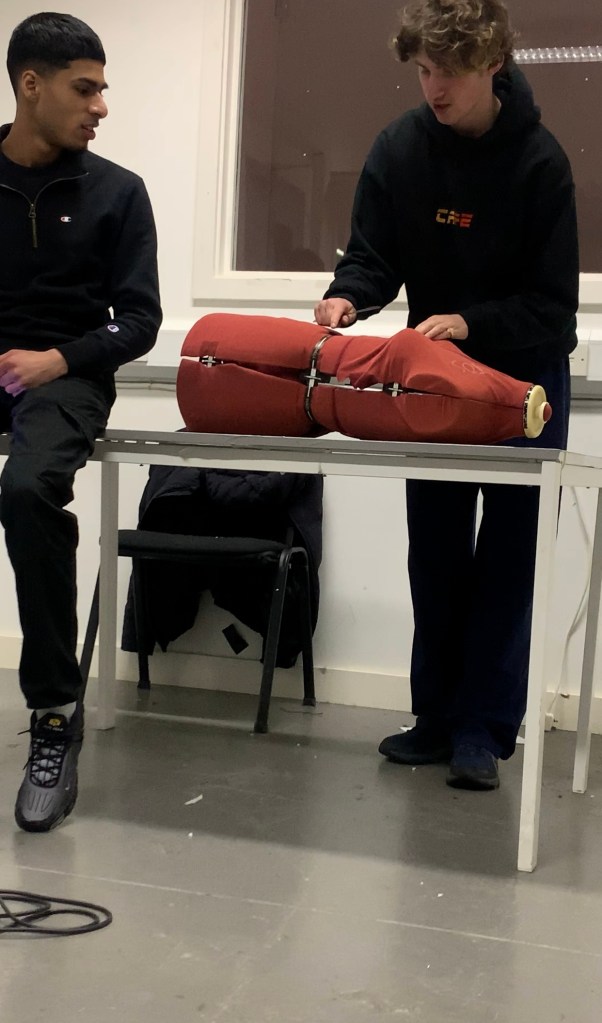
I shot a behind the scenes video in order to show the other members who did not turn up. Thought I would insert a picture of it here.

After our shoot, I the director was happy for the actors ( Ben and Arran) and the cinematographer (Ismail) to edit till the next session where we had to watch the film back.

Moving image

Brief – During our first brief we were informed that in groups we would be discussing what types of narratives there are and what narratives we would like to do. As well as at the end of this module we have to produce a pre production package.

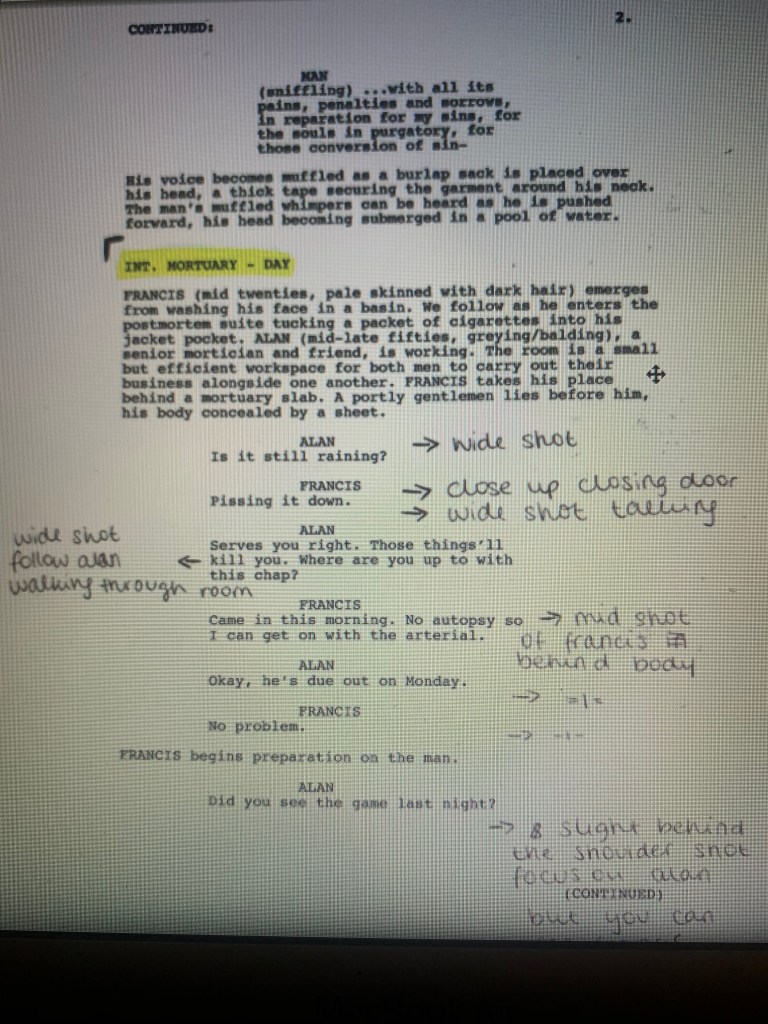
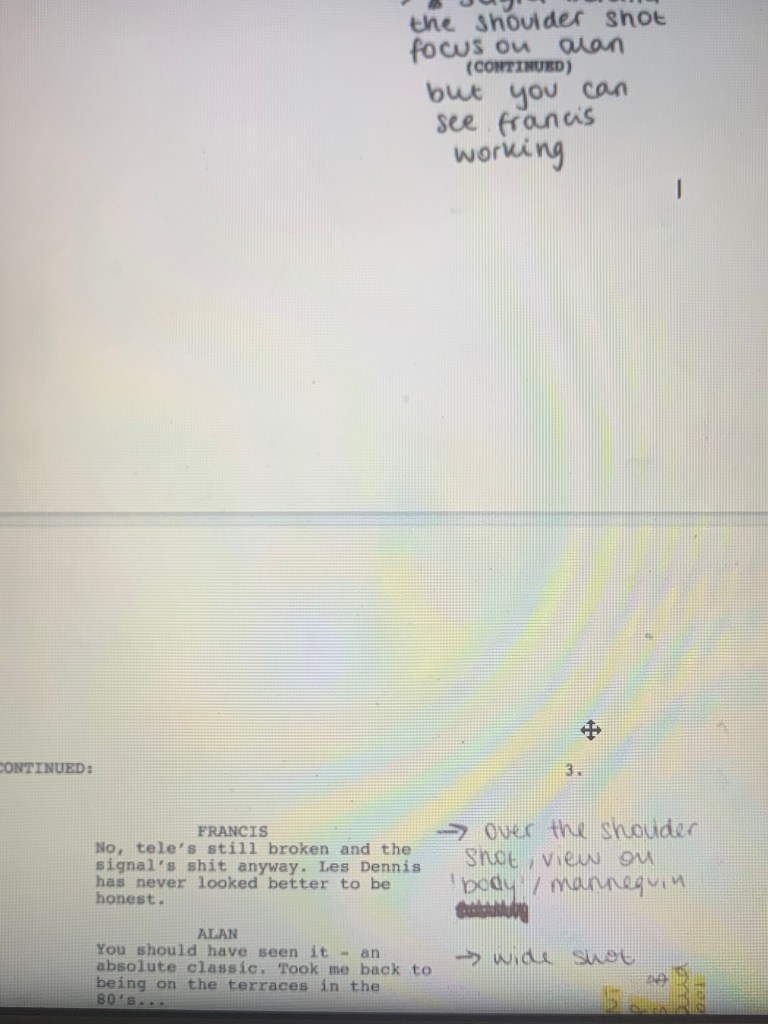
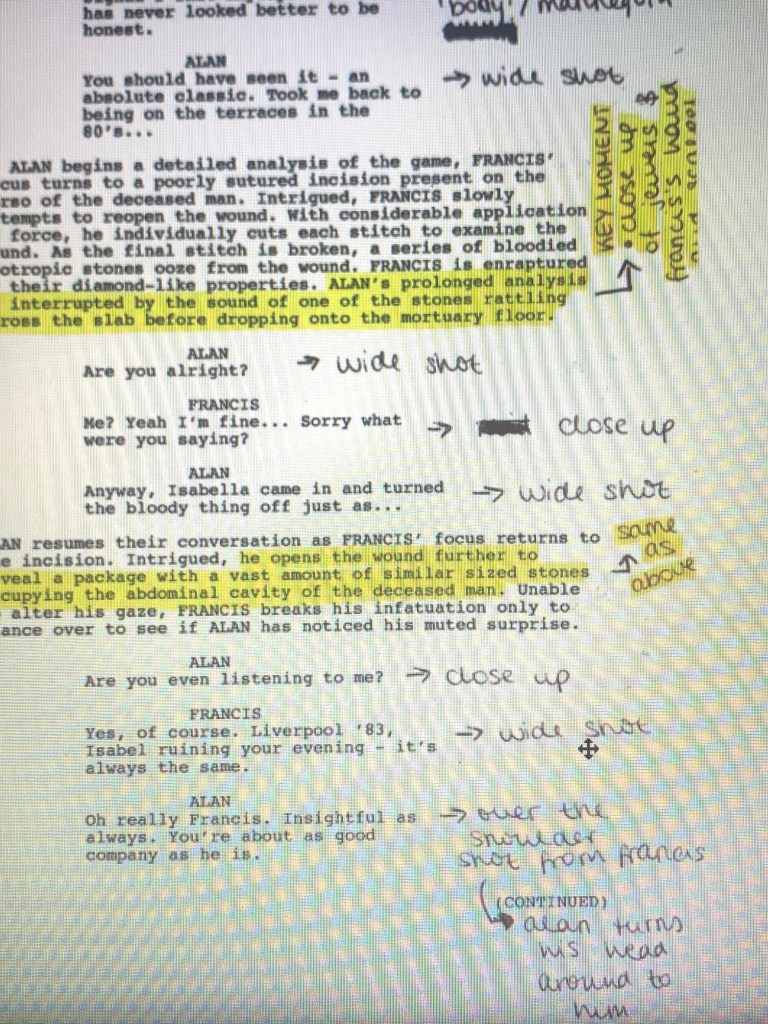
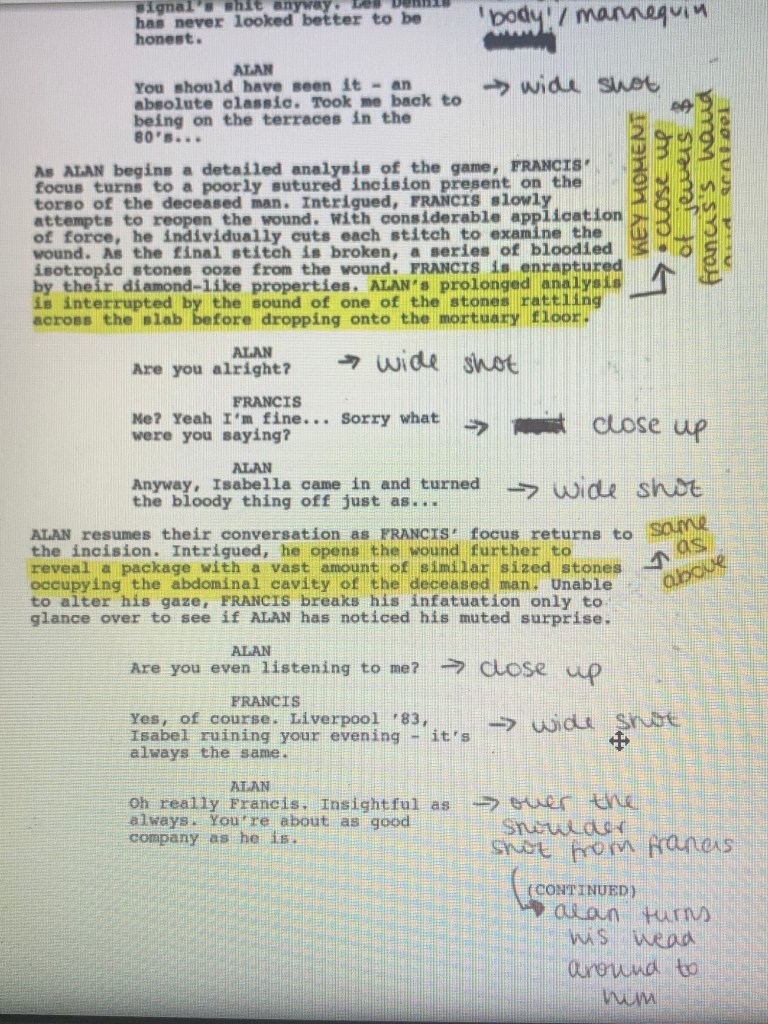
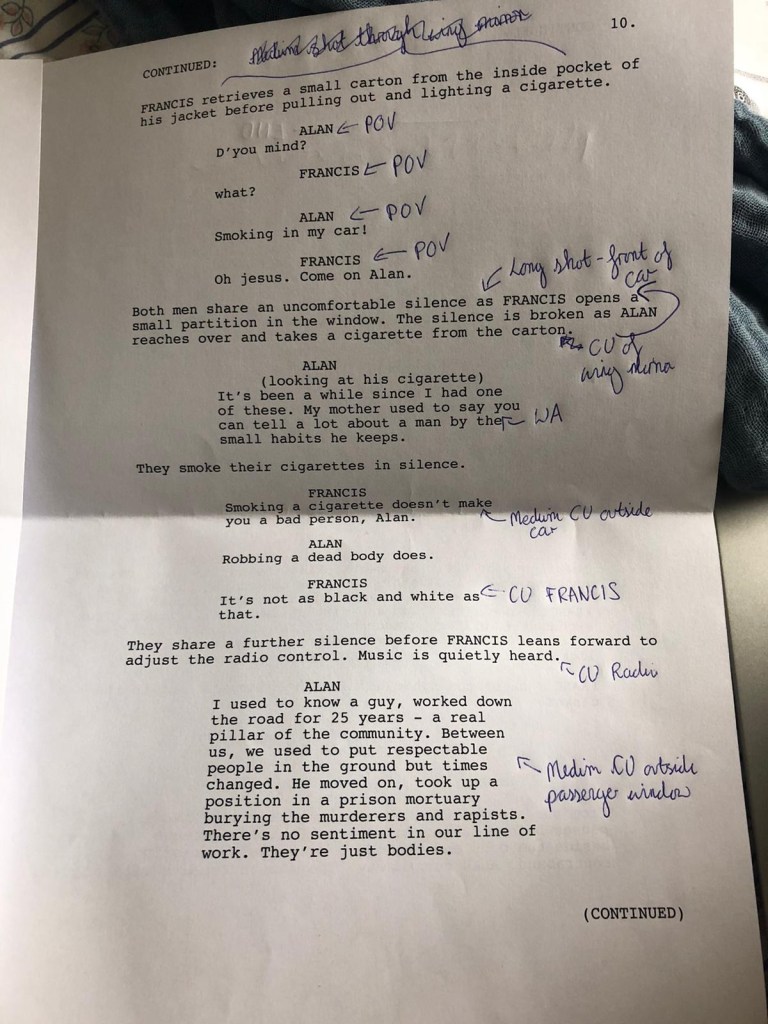
During the first lesson of moving image the first task we had was with a few people around us we had to discuss different types of shots and angles and what they could possibly be focusing on. I knew some examples as to doing a levels which aided me in this session. My shot list consisted of 1. Extreme close up 2. close up 3. birds eye view 4. over the shoulder 5.wide angle 6.dutch angle 7. pov 8. medium close up 9.medium shot 10. long shot

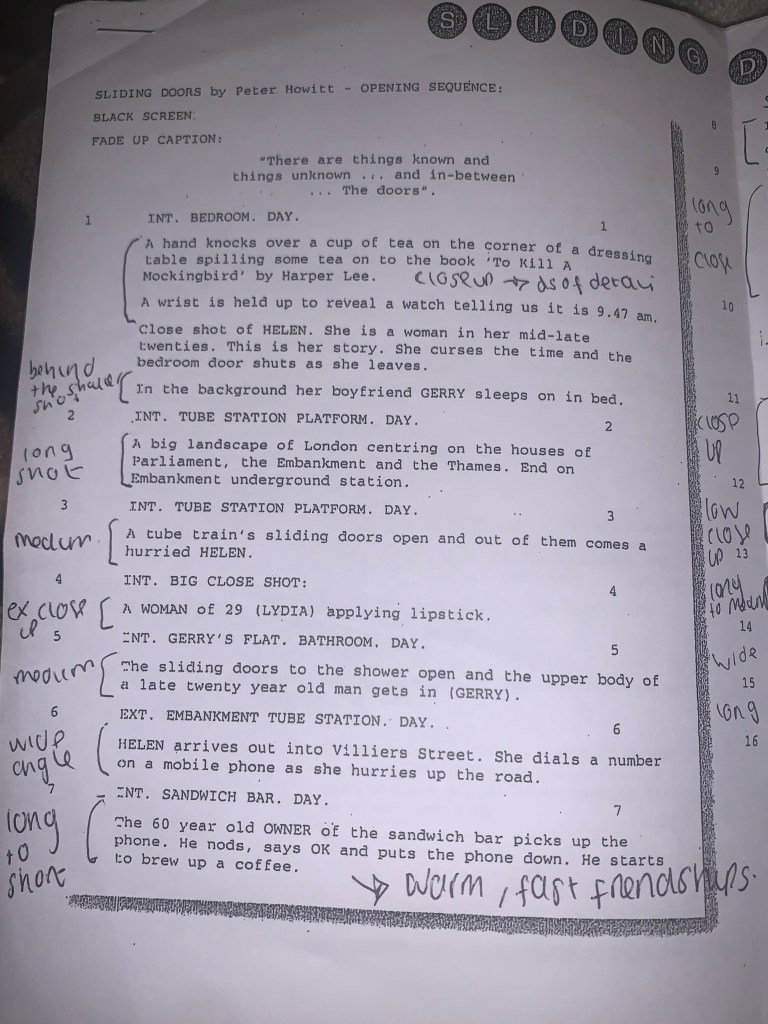
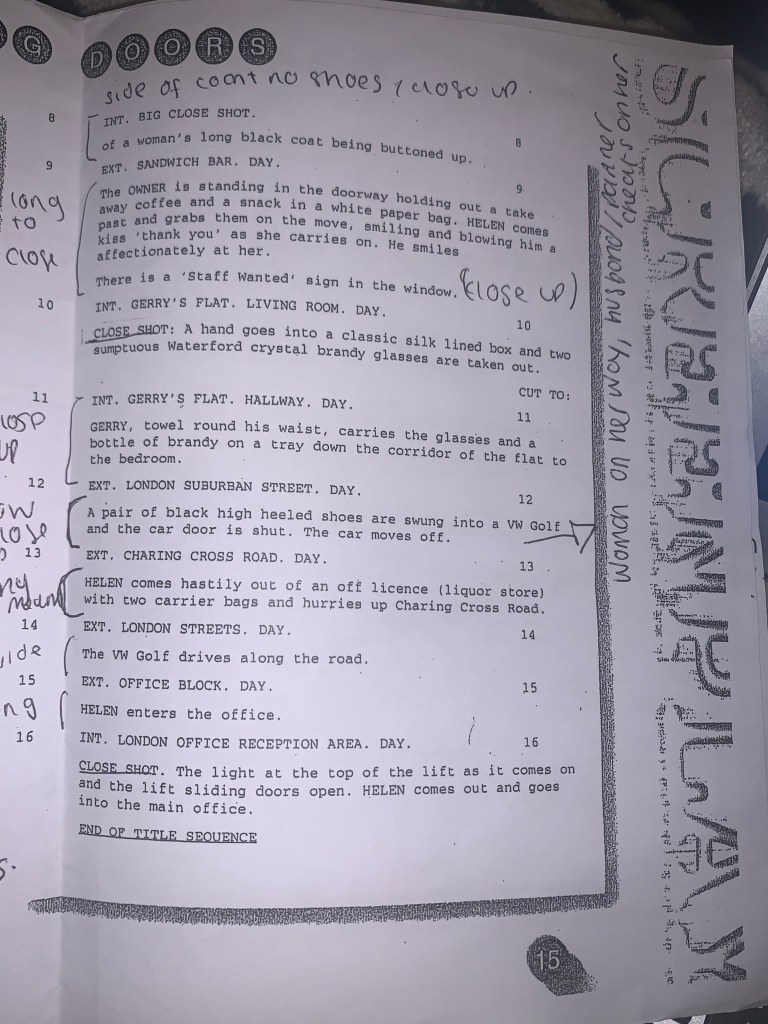
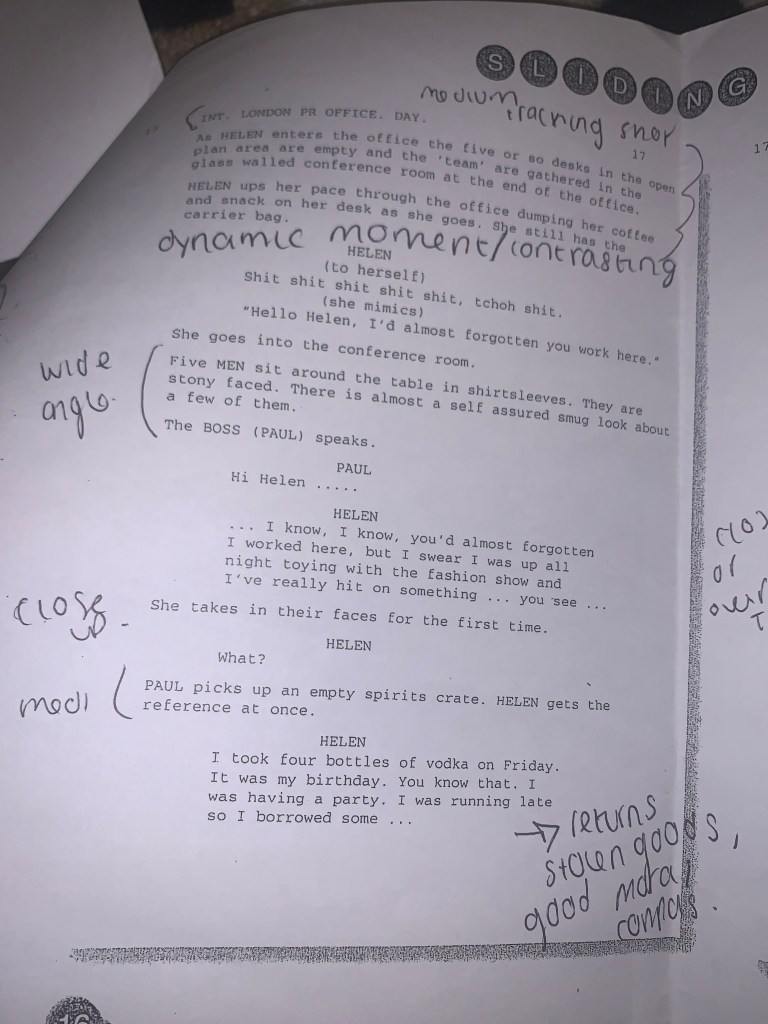
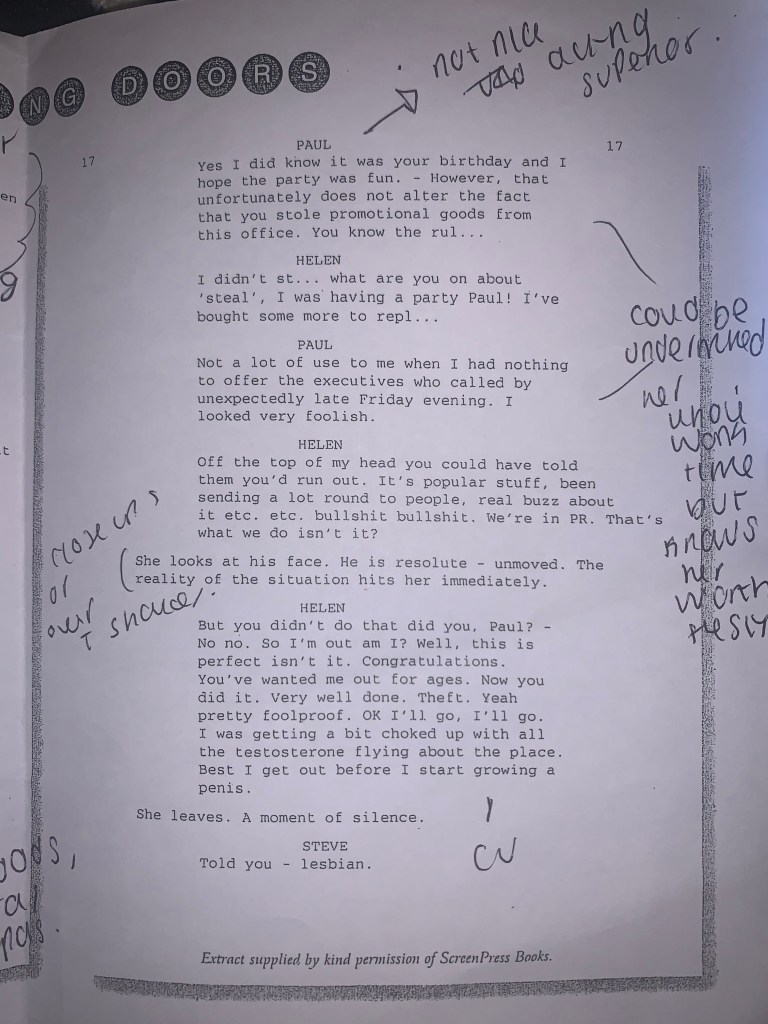
After discussing our examples of shot lists we were given an example of a script called Sliding doors, which we had to decide our own shot list and angles for. However, sliding doors is a film I have watched in the past and enjoyed. So it was a bit of a spoiler for me as I knew what shot/ angles they did in the film, but, I did decide to do the shot list differently to the film. (Below are images from the scenes we got given from the script, and the examples of shots we would do)

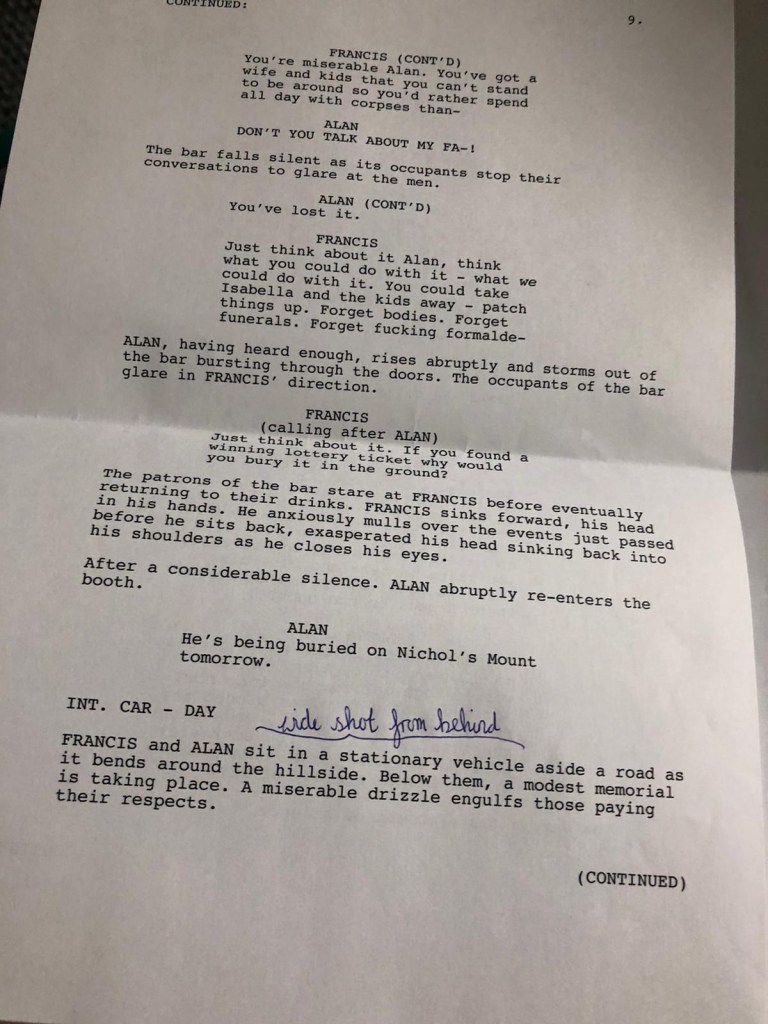
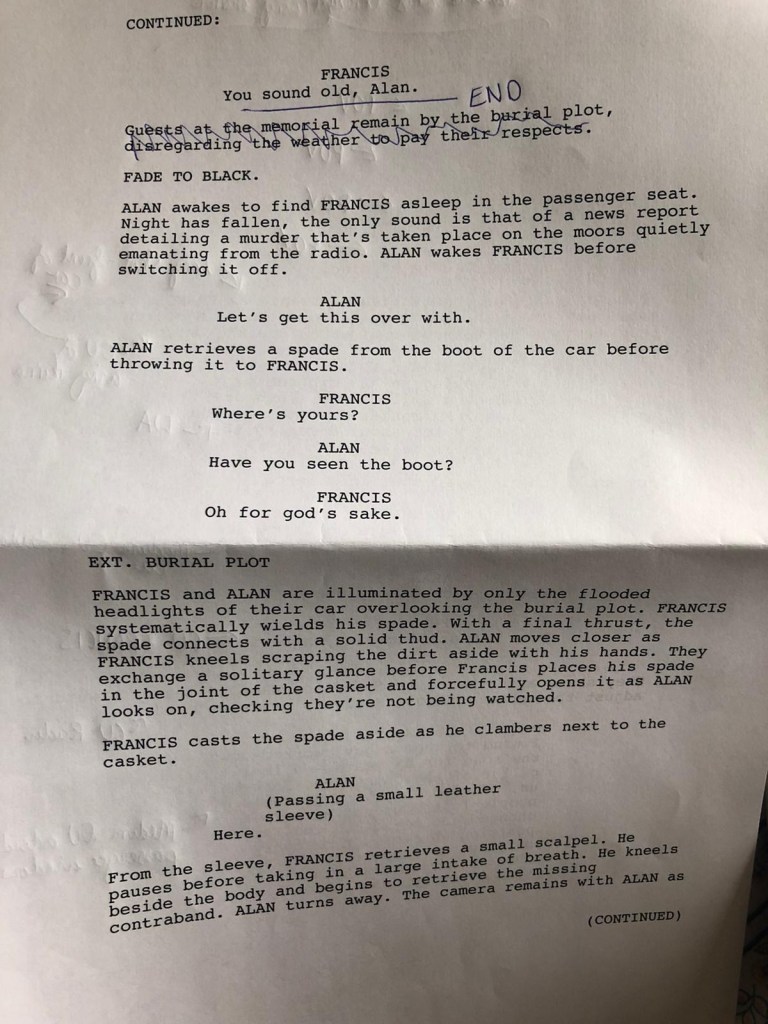
After this we were told that we had to shoot a scene from a film called Clay next week, which I have never heard of but it was mentioned that it was created by a previous student. After reading the script as a group we then were told that we had to decide what scene we were going to shoot and the production roles. Our chosen scene was from page 9 to page 10. I have inserted the shot list below, with the production roles list too.


Production roles –

Director – Humayra

Assistant Director = Kelly

Producers = Ella & Amber

Lighting = Charlotte 

DOP = Ismail

Sound = Sebastian

Sound Assistant = Weiyun

Actor 1 (Alan) = Arran

Actor 2 (Francis) = Ben

Gallery Visit Taylor Westing +The photographers Gallery.

Before this trip I had the thought that I wanted to gain some inspiration, as I was starting to struggle with what I wanted to do in a studio. This is because I felt my creativity was limited within a studio and I wanted to see if I could explore what I had in from of me further. From this trip I managed to gather some inspiration as well as deciding what was for me and what was not. For example, the Photographers gallery held an exhibition which was all to do with food. In my opinion I did not feel inspired or thought it was relevant for this particular model. However, I considered that it might aid me in the future.

These are some pieces I admired, this one I particularly grabbed my attention, as I thought it was a creative and humorous piece.
Despite this exhibition, I also decided to attend the Taylor westing Exhibition and thought it fitted more within this module and what I was searching for in terms of inspiration in portraiture.

Artist Research

NAM JUNE PAIK EXHIBITION AT TATE MODERN

What I learnt from this ? During this exhibition I was enlightened towards Nams approach to things and how he embraced, predicted and visioned society, such as mass media and new technology. I especially enjoyed his 1971 TV Eye glasses piece, the use of overlapping different mediums/images, almost like a collage. Which has made me consider that it could be interesting overlapping images or using different materials to shoot an image.

Criteria

I have decided to create a list on what I need to achieve awards the end of this module (still image).

1. Final concept have to be three colour portraits using a DSLR Camera (preferably in a studio) 2. Have to shoot in Raw, this is because the quality is better and you have more to work with in terms of post production. 3. Have an independent blog, which should include three or more photographers/ artist research. Plus, how it aids your project outcome in depth. ( considering things like aperture, exposure, background, technical skills and what you are trying to portray).

From this module I want to refresh and further develop my technical skills on lighting, using DSLR cameras as well as post production.

Essay –

In his book Against the Anthropocene, T. J. Demos critically surveys the visual culture of popular science websites, remote sensing and SatNav imagery, Eco-activist mobilisations, and experimental artistic projects that represent climate change. With reference to Demos’ critique, examples of visual media that represent climate change and ideas of the Anthropocene in terms of the ideological definition of our relationship with nature.

Earth’s most recent geological epoch is acknowledged as the Anthropocene. The word originates from the Greek terms for human (‘anthopo’) and new (‘cene’) ( Katie David 26/11/19). The anthropocene, is caused by a significant impact of humans on earth’s geology and ecosystems, which is now causing serious global warming changes to the environment and atmosphere. The attention within the media about climate change has increased, such as climate activist organisations, remote sensing and SatNav imagery, popular science websites and experimental artistic projects that represent climate change. Therefore, some may say the media represents this as an issue and is being discussed and addressed. However, others may disagree and say there isn’t enough communication within the media and that these impacts are for the most part unintentional. ( Rowan Howard – Williams abstract) American cultural critic T. J. Demos also critically surveys the visual culture examples and establishes them in his book as ‘a disastrous method of approaching climate change,’ ( T. J. Demos 2017 pg 7). As well as a reason he critiqued popular visual media sites that represent climate change. Within this essay I will be further discussing examples of contemporary visual media and their take on climate change as well as ideas of the Anthropocene in terms of the ideological definition, whilst referencing  the critiques of Demos. 

The Climate Coalition is an example of visual media. It is the UK’s largest climate activist organisation. The climate coalition was first founded in 2007 and it started off bringing together organisations from across the UK to create a unified voice on climate change. Their first matter of business was calling for a climate law which annual emission cuts. By 2008 their act was successful, and the government committed to cutting emissions by at least 80% by 2050. Their perspective on climate change is that the global average temperature has already risen 1 degree since pre-industrial levels and climate risks such as global warming (due to major exposure to air pollution and the use of fossil fuels)are increasingly apparent.  Therefore, in order to prevent climate change in the UK, they have created progress reports. This implicates that the Climate Coalition is mainly focusing on preparing and tackling England for climate change. By them managing to reduce climate change and by calling successful climate laws, it implicates that their relationship with nature is becoming positive. Due to their willingness, actions as well as having a determination of changing the way of the epoch and making the world a better place. Plus, someone who would disagree with this viewpoint would be Ursula Biemann. Biemann is an artist, video essayist and researcher based in Zurich. Who ‘invested her work in exploring the uneven resource distribution, climate change, and ecologies of oil and water as principles of planetary organisations of power’. (Ursula Biemann & Paulo Tavares Forest Law, 2017) She created a video installation and documents of forest law, reflecting on the cosmopolitics of Amazonia, and the consideration of natures rights. Biemann focused on the dressing the expansion of large scale extraction and activity in western Amazonia, as there was a significant increase in multinational corporations between states over the control these natural resources. This meant that it lead to conflicts being raised such as invoking global climate destabilisation, loss of biodiversity and toxic pollution over the forest. Which has a massive affect on climate change and the Anthropocene? Due to this Ursula Biemann and her team wanted their ‘ Forest Law’ to reflect the conflict but also influence people to believe in change. That as humans we have the determination of changing the way of the epoch. However, it can also be acknowledged that examples of the climate coalitions are being ignored by military state and corporate states, and that the relationship between humans and nature is less symbiotic. Plus, is rather beneficial towards humans. This is because, as humans we gain resources whilst nature continues to be eradicated due to climate change and human activity. Just like Smiths interpretation on ‘ that nature has always been a product of human kind’. (Smith N 1984.) An example to support this viewpoint, would be the Potash mine in 2017 and the Saw mils in Nigeria in 2016. The potash Mine was ‘renamed Bethune Potash mine in May 2017. The project features two of the top ten deepest mines in the world’ ( Article Mining technology pg 1). The mine is expected to consist of 160Mt of Potash which has a grade of 29% potassium chloride and 18% of potassium oxide and an overall of 981Mt of Potassium chloride. As a result of Potash Mines and the significant amount of potassium resources, there is a massive issue with pollution and the potential impact of forced labour and the salinisation on human heath. Mining and industrial interests have been legitimising toxic discharges into rivers for a while and they are an immediate source of danger and harm. This implicates that the anthropopocene involves the extraction and use of resources such as minerals, simultaneously glossing over the ethical and moral connections.I have interpreted T. J. Demos perspective on these viewpoints and that no matter how the Anthropocene is presented or the formation of climate coalitions. The universalisation caused by this, enables the ‘military-state-corporate apparatus to disavow responsibility for the differentiated impacts of climate change’ ( T. J. Demos, 2017, P.19). This implicates, that no matter what climate coalition you join or how you present your prevention of climate change towards the media. Corporate and military states will deny any responsibility or support it and make us complicit towards climate change as we are constantly using resources and taking from nature. Therefore, the anthropocene is seen as the ideological definition, which is that the earth’s geology and ecosystems are causing climate change due to the impact of humans. Wether or not it is mankind are trying to stop this there is still the factor of corporate and military states enabling this. Which is corrupting humans and their relationship with nature and as a result humanity and their impact they will have to suffer? 

Another point to be discussed is that, it appears that there are different perspectives on the view of what the relationship is between humans and nature. For example, there is the opinion that nature is the product of humanity. However, there is also the opinion that humans have no possession over earth whatsoever. Most importantly, whatever the viewpoint humans support, there is still the underlying issue of climate change. Thomas Gainsborough was an English portrait and landscape painter, draughtsman and printmaker, and is to be considered one of the most important British artists of the second half of the eighteenth century. It is lead to believe, that his 1750 famous piece called ‘Mr and Mrs Andrews’ establishes the viewpoint that the relationship between man and nature is that Mr and Mrs Andrews have power over the land or nature. My interpretation of the image of the Andrews is that they are very wealthy. This is due to the clothing they are wearing and how they are positioned within the image. Their position in the image implicates that the couple have power over the land, it has been altered to their needs, nature is a possession and is being controlled. This example of art does not necessary represent climate change, but is represents the situation prior urbanisation and industrialisation. It also establishes human attitude to our natural world and how easily nature is manipulated or manifested in order to have more use to humans. Therefore, it is no surprise that due to the blindness of humanity towards nature we do not view climate change or the Antropocene due the major affects we have caused. Demos believed that these major affects where Green house gas levels have not been seen for over a million years until now, temperatures are increasing, we have made a hole in the ozone layer, we are losing biodiversity and that sea level is rising and ocean acidification is a real threat. So he would interpret this as a  disastrous method of approaching climate change we are altering the earths natural cycles and if humanity does not save earth instead of controlling nature mankind will wipe out. An example of someone who supports the perspective that there is a problem with controlling nature and nature should not be controlled is Jean – Jacques Rousseau’s. Jean was a Genevan philosopher, writer and composer who came up with a theory of social contract in 1754. According to Rousseau’s theory of social contract humans leave an anarchic state towards nature this is because they are voluntarily transferring their personal rights to the community in return for security of life and property and the that the laws are corrupting humans, earth does not belong to us it is sublime. This implicates that the attitude of humanity is blind to see the negative effects already towards nature due to humans impact on nature and that without nature we would not be benefiting a comfortable life. Therefore we should be appreciating earth better, as well as finding more ways within the media to prevent the impact of the Anthropocene becoming more dangerous. 

Tate Britains promotional trailer ‘The Great day of his wrath’ is another example of visual art within the media, that gives a perspective of the relationship between humankind and nature, and what the future could lead to if we continue to ignore climate change. The trailer was created for artist John Martins exhibition at the museum. Primarily, for John Martins infamous piece called ‘Apocalypse’ which is a controversial but significant painting focused on destruction and catastrophe. The piece portrays earth itself being torn apart, the ultimate vision of a catastrophe. It is quoted from the artists description and it mentions “there was a great earthquake…and every mountain and island were moved out of their places; and the kings of the earth, and the great men, and the rich men, and every bondsman, and every freeman, hid themselves in the dens, and in the rocks of the mountains… For the great day of His wrath is come; and who shall be able to stand?”(Revelation, 6:12-17). This quote implicates that there is a relationship between nature and humanity. The relationship between nature and humanity within this piece, is ‘the kings on earth’ are humans who treated nature unkindly, and are now excepting the grand and terrifying aspects of nature. This is due to mankind’s treatment towards nature. Such as viewing nature is a product to mankind. As a result of this ‘the great earthquake… and mountains were moved out of their place…,’ this meant humanity will not be able to stand or survive. Just like the image, which shows men curled up hurt or dead. This is relevant as, Tate Britains promotional trailer was aiming to establish this perspective. Plus, the aesthetics where that the relationship between the humans and how nature has grand and terrifying aspects such as the power to destroy us. This passive trailer gives the message of what could happen if we do not take action towards things like climate change and stop viewing nature as a possession to people. Demos would see this trailer as it establishing visuality towards climate change. However, would question how does the visuality and politics enter the Anthropocene.

To conclude this essay, there has been an increase in the media towards climate change or also acknowledged as the Anthropocene, which implies that it is being taking seriously and is a significant matter. However, theorists such as T. J. Demos would say the current media examples do not justify the entire issue and critiques them as negative examples of displaying and representing climate change and the ideological deffiniton of the Anthropocene. 

Katie Davids https://www.nhm.ac.uk/discover/what-is-the-anthropocene.html

Potash mine article  https://www.mining-technology.com/projects/legacy-potash-project-saskatchewan/

 T J Demos https://mitpress.mit.edu/books/against-anthropocene

Tate Britain Article https://www.tate.org.uk/art/research-publications/the-sublime/anne-lyles-sublime-nature-john-constables-salisbury-cathedral-from-the-meadows-r1129550

 Ursula Bieman  https://repository.upenn.edu/cgi/viewcontent.cgi?article=4646&context=edissertations